
Income Tax Prosecution Cannot Survive Once Assessment Is Set Aside On Merits: Gauhati High Court
Rajnandini Dutta
8 Sept 2026 4:50 PM IST
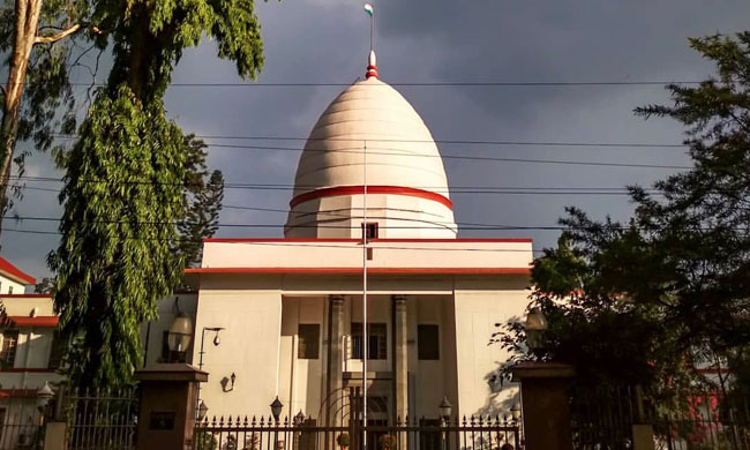
The Gauhati High Court on 2 September held that an income tax prosecution cannot continue when the assessment on which it is based has been set aside on merits, and that separate complaints against company directors for the same alleged offence are not maintainable when the company itself has not been arraigned as an accused.
Justice Robin Phukan allowed three petitions filed by Flamingo Breweries Private Limited and its two directors and quashed the criminal complaints pending before the Judicial Magistrate First Class, Kamrup (M), Guwahati. The Bench observed:
“Once the appellate order negates the falsity of the underlying assessment, and the assessment order is set aside by CIT(A) or ITAT on merit, the prosecution does not survive. And the assessee can move the Magistrate/High Court under Section 482 Cr.P.C or an equivalent provision to quash the complaint/prosecution.”
The case arose from the income tax assessment of Flamingo Breweries for the assessment year 2016-17. The company had declared an income of Rs. 8.01 lakh, but the Assessing Officer determined its taxable income at Rs. 35.66 lakh.
The Income Tax Department alleged that the company had failed to comply with statutory notices, had not produced correct accounts and had made false statements in its income tax return. It subsequently filed three criminal complaints under Sections 276D and 277 of the Income Tax Act, 1961.
Flamingo Breweries challenged the assessment. The Commissioner of Income Tax (Appeals) granted partial relief after finding that the Assessing Officer had wrongly treated the company as a retail liquor outlet instead of a wholesale warehouse.
The Income Tax Appellate Tribunal later set aside the appellate order and remanded the matter to the Assessing Officer for fresh consideration, allowing the company to produce its accounts and other evidence. In the fresh assessment, the Assessing Officer determined the company's net profit at Rs. 11.87 lakh.
Before the High Court, the petitioners argued that the original assessment formed the foundation of the criminal complaints and that the cases could not continue after the assessment had been set aside. They also argued that separate penalty proceedings had been initiated and that continuing the criminal cases would amount to double jeopardy.
The Income Tax Department opposed the petitions, arguing that assessment and criminal prosecution are independent proceedings and that the alleged offences continued to exist despite the reassessment.
The High Court rejected the double jeopardy argument, holding that assessment and penalty proceedings are civil in nature and that criminal prosecution can proceed independently.
However, relying on the Supreme Court's decisions in K.C. Builders v. Assistant Commissioner of Income Tax, G.L. Didwania v. Income Tax Officer and Radheshyam Kejriwal v. State of West Bengal, the Bench held that prosecution cannot survive when the factual foundation of the allegations has been conclusively negated on merits. It clarified that the mere pendency of an appeal or a technical exoneration does not automatically bring criminal proceedings to an end.
It also held that the presumption of culpable mental state under Section 278E of the Income Tax Act operates before the criminal court during prosecution or trial and cannot be invoked by the Assessing Officer before filing a complaint.
Further, the Bench found that the separate complaints against the two directors were based on the same assessment but did not arraign Flamingo Breweries as an accused. Relying on the Supreme Court's decision in Aneeta Hada v. Godfather Travels & Tours (P) Ltd., the Court held that such complaints were not maintainable and described their filing as an abuse of authority.
Accordingly, the High Court allowed all three petitions and quashed the criminal complaints pending before the Judicial Magistrate First Class, Kamrup (M), Guwahati.
Appearances: Mr. S. Borthakur and Mr. V. Rajkhowa, Advocates, for the petitioners. Mr. D. Borah, Senior Standing Counsel, and Mr. J. Chopra, Standing Counsel, Income Tax, for the respondent.