
Income Tax Authorities Can Condon Delay Despite CBDT Time Limit: Andhra Pradesh High Court
Mehak Dhiman
17 Aug 2026 2:59 PM IST
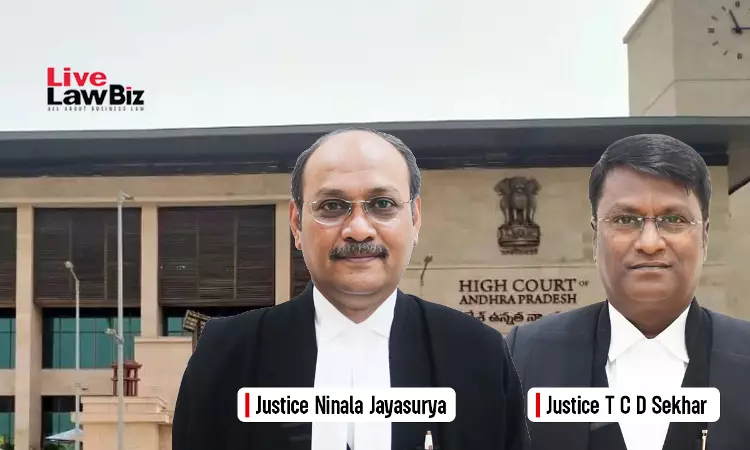
The Andhra Pradesh High Court has held that tax authorities cannot reject an application for condonation of delay merely because it was filed beyond the time limit prescribed by a CBDT circular.
The court held that the authorities have discretion under the Income Tax Act to consider genuine hardship while deciding such applications.
A Division Bench comprising Justice Ninala Jayasurya and Justice T.C.D. Sekhar observed that Section 119(2)(b) of the Income Tax Act allows tax authorities to accept certain exemption, deduction, refund, or other claims even after the prescribed deadline where doing so would help avoid genuine hardship.
The provision, the bench observed, was intended to be applied liberally. “the intention of the legislature was to take a liberal approach, whenever an application is filed under the above provision of law,” it observed.
The case arose from applications filed by Sri Vani Educational Society, a registered educational society, seeking condonation of delay in filing Form-10B. The tax proceedings for the three assessment years ultimately resulted in a total demand of ₹4,79,92,300 against the society. The dispute was whether the applications seeking condonation of delay could be rejected solely because they were filed beyond the time limit prescribed through a CBDT circular.
For the 2019-20 assessment year, Form-10B was filed 13 days late. The society attributed the delay to its Chartered Accountant, G.R. Sathyanarayana, who had suffered a heart ailment and undergone treatment at Care Hospital, Musheerabad, Hyderabad, during October 2019.
For 2020-21 and 2021-22, Form 10B was filed within the extended dates. The society attributed difficulties in filing its returns on time for those years to the COVID-19 pandemic.
The society then approached the Income Tax authorities under Section 119(2)(b), seeking condonation of the delay in filing Form-10B. In simple terms, the provision allows the authorities to admit certain tax claims after the prescribed period where doing so would avoid genuine hardship.
It covers claims for exemptions, deductions, refunds and other relief under the Income Tax Act. It also permits such claims to be considered after the prescribed period and dealt with on their merits in accordance with law.
The applications were rejected on January 7, 2025. The authorities held that they had not been filed within the prescribed time and that the society had not shown what had prevented it from filing Form-10B.
The high court disagreed with this reasoning. It noted that Section 119(2)(b) does not prescribe a specific time limit for condoning delay. The authorities therefore have discretion to consider the difficulties faced by taxpayers while deciding such applications.
The bench also examined the time limit prescribed through CBDT circulars. It held that such circulars are binding on tax authorities, but they do not bind the high court when it exercises jurisdiction under Article 226 of the Constitution.
“the circulars issued by Central Board of Direct Taxes would be binding on the authorities, however the same is not binding on this Court, especially while exercising jurisdiction under Article 226 of the Constitution of India,” the bench observed.
It further held that fixing a time limit through the circular was not tenable because it would run contrary to Section 119(2)(b).
The court also held that the power under Section 119(2)(b) extends to condoning delays in filing returns or appropriate applications. Rejecting the society's applications merely because they were beyond the prescribed time was therefore not sustainable.
The high court accordingly set aside the orders dated January 7, 2025 and allowed the applications under Section 119(2)(b). The authorities were directed to allow Form 10B to be filed along with the returns and process it in accordance with law.
The demand notice issued against the society was also set aside. The writ petitions were allowed, with no order as to costs.
For Petitioner: Advocate Ramineni Sudheer
For Respondents: Advocate T. Niranjan, Deputy Solicitor General of India, and Y.N. Vivekananda,