
Income Tax | Assessing Officer Can Complete Assessment If No Objections Before Dispute Resolution Panel: Allahabad HC
Upasna Agrawal
17 Aug 2026 9:44 AM IST
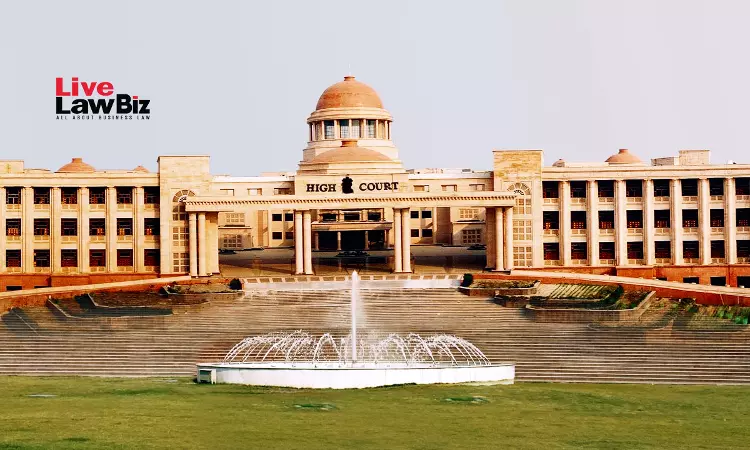
The Allahabad High Court at Lucknow has held that objections to a draft assessment order under Section 144C of the Income Tax Act, 1961, must be filed before the Dispute Resolution Panel as well as the Assessing Officer and that filing them before the Assessing Officer alone will not do.
It held that where no objections are filed before the Dispute Resolution Panel, the Assessing Officer may finalise the assessment on the basis of the draft order itself.
Section 144C of the Income Tax Act, 1961 lays down a complete procedure that applies once a draft assessment order is issued. Section 144C(2)(b) provides for objections to the draft, and Section 144C(3) allows the assessment to be completed on the basis of the draft where no objections are filed.
The bench of Justice Alok Mathur and Justice Amitabh Kumar Rai held
“Section 144C(2)(b) specifically requires that objections against the draft assessment order be filed before both the Dispute Resolution Panel and the Assessing Officer. The use of the word “and” clearly indicates that compliance with both requirements is mandatory.”
“However, where no objections are filed before the Dispute Resolution Panel, Section 144C(3) enables the Assessing Officer to complete the assessment on the basis of the draft assessment order.”
Petitioner, a professional seafarer employed outside India during the period under assessment, claimed to be a non-resident under the Act. For the Assessment Year 2024-25 he filed a return claiming exemption on the remuneration earned abroad.
A notice under Section 143(2) was issued on 24.06.2025 taking up his case for faceless assessment under Section 144B, followed by notices under Section 142(1) on 03.10.2025, 02.12.2025 and 09.02.2026. Petitioner said none of these reached him because, by inadvertence, an incorrect e-mail address had been entered on the Income Tax portal. He learnt of the proceedings only on receiving the draft assessment order dated 14.03.2026, which proposed to assess his total income at Rs.79,63,350/-.
Petitioner filed objections on the e-filing portal on 27.03.2026 and obtained an acknowledgement. The assessment order followed on 21.05.2026.
Before the High Court he contended that the Assessing Officer had dealt with none of the grounds raised, that the order wrongly recorded that no reply to the draft order had been filed, and that he was not heard at any stage.
For the Income Tax Department, it was submitted that the objections had gone only to the Assessing Officer and not to the Dispute Resolution Panel, and in their absence the Assessing Officer could complete the assessment under Section 144C(3) without a reference to the Panel.
The Court noted that petitioner himself admitted that the Section 142(1) notices could not reach him because of the e-mail address he had furnished, and no objections had been placed before the Dispute Resolution Panel. It observed that where objections do reach the Dispute Resolution Panel, the Panel is obliged to examine them and issue directions, which bind the Assessing Officer.
“Apart from the above, it is also noticed that under the Income Tax (Dispute Resolution Panel) Rules, 2009 (hereinafter referred to as "Rules, 2009"), a statutory appellate remedy has been provided. Where the assessment order is passed pursuant to the directions of the Dispute Resolution Panel, an appeal lies before the Income Tax Appellate Tribunal. In cases where Section 144C is not attracted or where the statutory conditions thereunder are not fulfilled, the remedy of appeal under Section 246A of the Act, 1961 is available before the Commissioner of Income Tax (Appeals).”
Finding no procedural infirmity prima facie in the assessment order, the Court relied on Commissioner of Income Tax and others v. Chhabil Dass Agarwal, in which the Supreme Court held that where the taxing statute provides a complete statutory mechanism, the assessee should ordinarily be relegated to that remedy rather than be allowed to invoke Article 226.
Declining to entertain the petition in view of the alternative remedy, the Court dismissed it, clarifying that it had not gone into the merits and leaving petitioner free to raise all available grounds before the appellate authority.
For Petitioner(s): Advocate Vibhanshu Srivastava
For Respondent(s): Advocate Neerav Chitravanshi