
Allahabad High Court Flags Loophole In Income Tax Law On Reassessment After Taxpayer's Death
Upasna Agrawal
24 July 2026 3:20 PM IST
While holding that a reassessment notice under Section 148 of the Income Tax Act cannot be issued in the name of a dead assessee, the Allahabad High Court at Lucknow recently observed that the Act contains a legislative lacuna because it leaves the Revenue unable to initiate reassessment proceedings where an assessee dies before a valid reassessment notice is issued.
Holding that the gap could result in escaped income going untaxed and prejudice the public exchequer, the court observed that the loophole ought to be plugged by Parliament.
The court allowed the writ petition and quashed the notice issued under Section 148 in the name of the deceased assessee, along with all consequential reassessment proceedings.
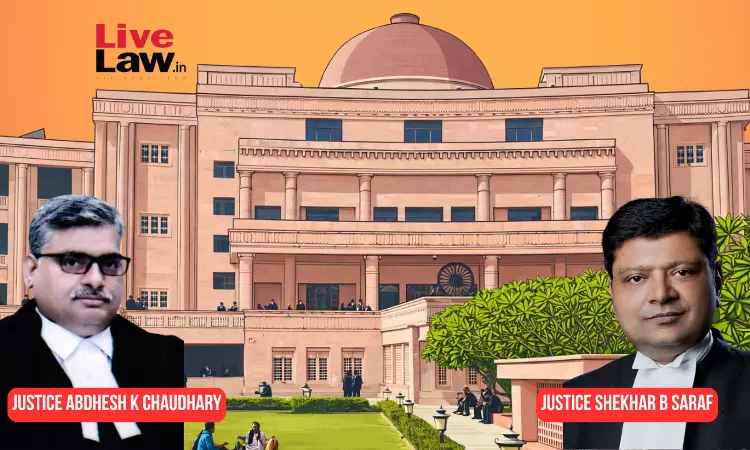
A bench of Justice Shekhar B. Saraf and Justice Abdhesh Kumar Chaudhary observed,
"The arguments raised by the department have to be negated by the Bench simpliciter, due to a lacuna in the law that proscribed proceedings against the estate of the deceased in the manner discussed above. There is no doubt that the loophole in the law has caused prejudice to the department and possibly loss to the public exchequer. However, keeping in view the general principles of separation of powers under the Constitution of India, this Court has not ventured into reading down any provision and/or adding to a provision of a taxing statute keeping in mind the principles established in law by the Hon'ble Supreme Court with regard to the interpretation of taxing statutes."
"We are of the view that the present loophole that exists is one that is required to be plugged by the Parliament with regard to the Act and other taxing statutes, where similar provisions have been enacted.", it added.
Observing this, the court directed the Senior Registrar to forward a copy of the judgment to the Ministry of Finance so that the government may deliberate on the issue and Parliament may, if considered necessary, address this through an appropriate amendment.
The assessee, who had been named in a search on the Omaxe group to have made an unaccounted cash transaction, died on January 7, 2024. Notice under Section 148 was issued in his name on March 28, 2025 for Assessment Year 2021-22, and reassessment culminated in an order and demand dated March 24, 2026 passed in the name of his widow, Asha Dubey, as legal heir.
Dubey approached the High Court against the show cause notice and consequential proceedings on the primary ground that proceedings under Section 148 of the Act could not be initiated in the name of her deceased husband. It was also argued that proceedings could not be saved under other provisions of the Act after the information of assesee's death had been communicated to the Department.
The Department defended the notice under Section 148 and the consequential reassessment proceedings on the grounds that it had not been informed of the assessee's death before issuance of the notice.
Rejecting the argument, the court held, “A notice under Section 148 for reopening past years assessment is a jurisdictional notice that must be issued in the name of the correct person and not against the dead and such issuance of notice against a dead person is void ab initio rendering all the consequential proceedings as null and void.”
The court also held that Section 159 of the Act could only be invoked to save the proceedings if the proceedings had been initiated when the assessee was alive. However, since the show cause notice was issued after his death but in his name, Section 159 was not applicable.
“The fact of issuance of notice against a dead person is a jurisdictional error that cannot be cured resorting to Section 292B of the Act.”, it held.
“The estoppel created under Section 292BB applies to original assessee and not to other individuals as the estoppel created under the statute operates within the fringes of its jargon and not beyond it for conferring jurisdiction.”, it added.
It further held that proceedings could not be saved under section 150 of the Act as the “order” on the reassessment proceedings was passed after the limitation for the relevant assessment year had expired.
The court quashed the show cause notice issued in the name of the dead assessee and all consequential proceedings. However, keeping in view the separation of powers, it declined to read down or add to any provision of the taxing statute.
“We are of the view that the present loophole that exists is one that is required to be plugged by the Parliament with regard to the Act and other taxing statutes, where similar provisions have been enacted.”
The court accordingly directed the Senior Registrar to transmit a copy of the judgment to the Ministry of Finance, Government of India, so that the government may deliberate on the loophole and Parliament may, if considered necessary, remove the lacuna by appropriate amendment.
For Petitioner: Kartikey Dubey, Ramesh Chandra Mishra
For Respondent: A.S.G.I., Kushagra Dikshit, Paavan Awasthi