
"Fishing Inquiry": Bombay High Court Upholds Quashing Of Income Tax Revision Against Impact Foundation
Rajnandini Dutta
8 May 2026 9:50 AM IST
The Bombay High Court has dismissed the Income Tax Department's appeal against Impact Foundation (India), holding that revisionary proceedings under the Income Tax Act could not be sustained merely because the Commissioner believed the assessing officer should have conducted further enquiry.
“The ITAT has therefore rightly come to the conclusion that the CIT (Exemptions), could not have initiated proceedings with a view to start de novo or a fishing inquiry in matters or orders which are already concluded, unless he was able to hold that the AO's view on the issue was unsustainable in law”
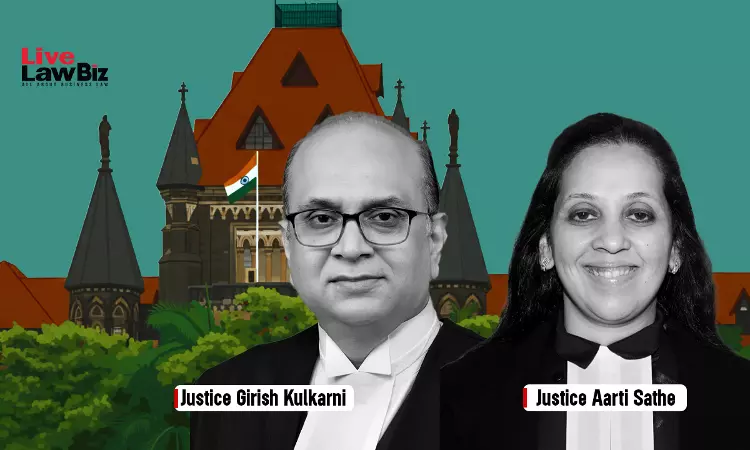
A Division Bench of Justice G. S. Kulkarni and Justice Aarti Sathe held that where the assessing officer has examined an issue and taken a plausible view, the Commissioner cannot invoke revisionary powers simply because he holds a different opinion.
“If the AO has conducted inquiries and applied his mind, and had taken a possible view of the matter, then the CIT (Exemptions), on the basis of another possible view could not pass orders under Section 263 of the Act, merely because he has a different opinion in the matter.”
Impact Foundation (India), a non-profit organisation registered under Section 12AA of the Income Tax Act, had filed its return declaring nil income and claimed exemption under Section 11.
Its case was selected for scrutiny, following which notices under Sections 143(2) and 142(1) were issued. During the assessment proceedings, the assessee furnished details electronically from time to time. The assessing officer ultimately accepted the returned income at nil.
Subsequently, the Commissioner of Income Tax (Exemptions) initiated revision proceedings under Section 263, alleging that the assessee had claimed utilisation of ₹6 crore out of accumulated funds of ₹14.51 crore without proper documentary proof, and that the assessing officer had failed to verify the claim.
The Commissioner proposed a fresh examination, including third-party verification.
The assessee responded that the ₹6 crore had been used for sanitation projects and strengthening civil society initiatives. It also furnished the utilisation break-up, board resolutions and Form 10 details.
The Income Tax Appellate Tribunal allowed the assessee's appeal, finding that the assessing officer had already examined the issue.
The Revenue challenged that order before the High Court.
Rejecting the appeal, the High Court found that the assessee had already furnished details regarding utilisation of accumulated funds, board resolutions, and Form 10 (the statutory form for accumulation of charitable income) during the original assessment proceedings.
It held that this was not a case of complete absence of enquiry.
The Court also held that the Commissioner had not independently conducted any enquiry to show that the assessing officer's view was legally unsustainable, and merely believing that additional verification ought to have been carried out was insufficient.
The bench also accepted the assessee's objection to invocation of Explanation 2 to Section 263, noting that the show-cause notice had not disclosed that the provision would be relied upon.
Relying on the Supreme Court's ruling in Shreeji Prints Pvt. Ltd., the Court held that invoking the Explanation without putting the assessee to notice was legally unsustainable.
Accordingly, the High Court upheld the tribunal's order and dismissed the Income Tax Department's appeal.
For Appellant: Advocate Pritish Chatterjee
For Respondent: Advocate Dharmesh Shah along with Dhaval Shah