
Rajasthan High Court Quashes Jepee Construction's ₹6.93 Crore Tax Addition Over Short Response Time
Rajnandini Dutta
7 Oct 2026 1:56 PM IST
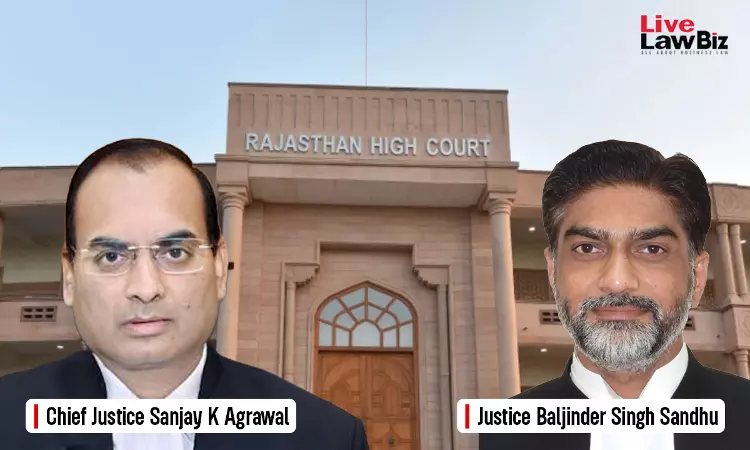
On 6 October, the Rajasthan High Court held that less than three days to respond to a substantial tax addition is not a reasonable opportunity of hearing and set aside an assessment order passed by the National Faceless Assessment Centre against Jepee Construction Pvt. Ltd., involving an addition of about Rs. 6.93 crore.
A Division Bench comprising Chief Justice Sanjay K. Agrawal and Justice Baljinder Singh Sandhu found that the assessment order wrongly recorded that the company had not filed a response, despite its reply having been sent by email and acknowledged by the Centre. It observed:
“Such an extremely short time cannot be said to be a reasonable opportunity for submitting response to the notice.”
The dispute arose from a notice issued under the faceless assessment procedure on 11 March 2024 at around 5.16 PM, requiring the company to submit its response by 10 AM on 14 March.
Jepee Construction submitted that it had prepared its reply and attempted to upload it within the prescribed time, but the “Submit Response” button on the Income Tax Department's e-filing portal did not open. It immediately raised a grievance with the Department and thereafter sent its detailed reply and supporting documents by email.
The National Faceless Assessment Centre subsequently confirmed that the documents had been forwarded to the Assessment Unit. The company also submitted a physical copy to the jurisdictional Assessing Officer. Despite this, the assessment order recorded “no compliance” or “no proper compliance”.
The High Court found these findings contrary to the record and held that serious prejudice had been caused by making a substantial addition without considering the company's reply and supporting documents.
It relied on the Supreme Court's decision in Canara Bank & Ors. v. Debasis Das & Ors., which held that the principles of natural justice require adequate notice and sufficient time to present a case before an adverse order having civil consequences is passed.
Further, the Bench rejected the Revenue's argument that the writ petition should not be entertained as the assessment order could be challenged through a statutory appeal. It held that the writ petition had been entertained on the allegation of violation of natural justice and interim protection had already been granted.
Accordingly, the High Court set aside the assessment order and remanded the matter to the Assessing Authority for a fresh decision after giving the company a reasonable opportunity of hearing and considering the reply and documents already filed. It clarified that it had not expressed any opinion on the merits of the tax dispute.
For Petitioner: Lokesh Mathur, with Prashant Kumar Balout and Sakshi Mody
For Respondents/Income Tax Department: K.K. Bissa