
No Penalty Where Claim Is Based On Binding High Court Law Later Reversed By Top Court: Bombay High Court
Rajnandini Dutta
17 April 2026 3:48 PM IST
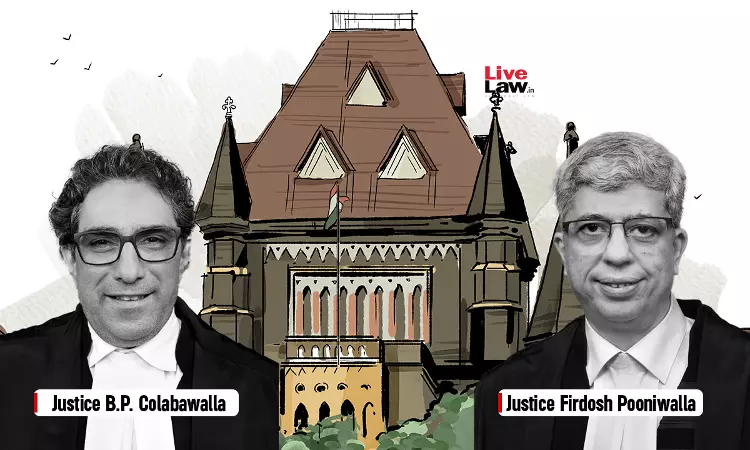
The Bombay High Court on 30 March held that if a taxpayer made a deduction claim based on a binding High Court judgment, penalty under Section 270A of the Income Tax Act cannot be imposed subsequently, merely because the claim was later disallowed following a Supreme Court ruling.
A Division Bench of Justices B. P. Colabawalla and Firdosh P. Pooniwalla held that penalty is not automatic and does not arise where a taxpayer makes a bona fide claim based on the prevailing legal position. It noted:
“When a claim is made relying upon a binding judicial precedent, then certainly such an issue cannot invite any penal consequences, just because the view was subsequently reversed.”
GM Modular Private Limited filed its return for Assessment Year 2019-20 declaring income of over Rs. 70 crore. While processing the return under Section 143(1), the Department disallowed Rs. 26.72 lakh towards delayed deposit of employees' contribution to PF/ESI.
Subsequently, while completing assessment under Sections 143(3) read with 153A, the Assessing Officer repeated the same disallowance and later levied a penalty of Rs. 4.67 lakh under Section 270A alleging under-reporting of income.
GM Modular challenged the penalty before the Principal Commissioner under Section 264. The authority summarily rejected the revision application without assigning reasons, prompting the taxpayer to approach the High Court.
The High Court rejected the Revenue's objection on maintainability. It held that a taxpayer may choose between an appeal and a revision, subject to statutory limitations, and therefore the revision application was maintainable.
On merits, the Bench held that no “under-reported income” existed since the disallowance had already been made at the stage of intimation under Section 143(1)(a), and the subsequent assessment merely reiterated the same addition. The statutory conditions for invoking Section 270A were therefore not satisfied.
The Court further held that when the return was filed, the issue stood covered in favour of the taxpayer by the Bombay High Court ruling in CIT v. Ghatge Patil Transports Ltd. The subsequent reversal of law by the Supreme Court in Checkmate Services Pvt. Ltd. v. CIT could not retrospectively render the earlier claim mala fide so as to attract penalty.
The Bench also observed that penalty provisions are discretionary and not mandatory, and debatable issues cannot ordinarily attract penalty. Since different High Courts had taken divergent views, the matter was clearly debatable.
Accordingly, the High Court set aside both the revision order and the penalty order, and allowed the writ petition.
Appearance for the Petitioner: Adv. Dharan V. Gandhi, a/w Ms. Aanchal Vyas, for the Petitioner.
Appearance for the Respondent: Adv. Sushma Nagaraj, a/w Adv. Abhinav Palsikar, for the Respondent.