
Bombay High Court Denies Income Tax Deduction For Payments To Promote Endosulfan Manufacture
Rajnandini Dutta
28 Nov 2026 12:09 PM IST
The Bombay High Court has held that contributions made to promote the continued manufacture of Endosulfan cannot be claimed as ordinary business expenditure under Section 37(1) of the Income Tax Act, which allows deductions for expenses incurred wholly and exclusively for business purposes.
The court found that the payments were intended to build public support for the pesticide and persuade government authorities to support its continued manufacture.
“The endeavour of the assessee and other members of the EMFW Association was to build a narrative conducive to the manufacture of Endosulfan,” the court observed, rejecting the company's claim that the contributions were made to protect its business interests.
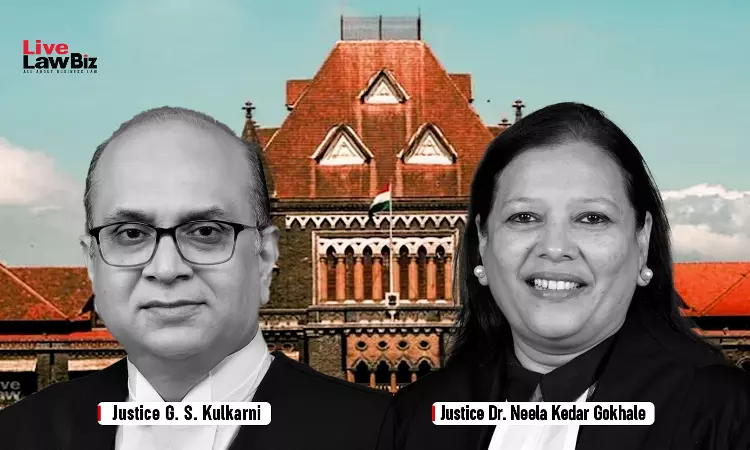
A bench of Justice G.S. Kulkarni and Justice Dr. Neela Gokhale also noted that the company had failed to produce documents before the assessing officer to establish how the money was spent. The judgment was delivered by Justice Dr. Neela Gokhale.
The company, successor-in-interest to Excel Crop Care Limited, had claimed deductions for subscription payments during assessment years 2009-10, 2010-11, and 2011-12. The amounts claimed were approximately ₹28.59 lakh, ₹3.45 crore and ₹28.58 lakh, respectively.
For assessment year 2009-10, ₹12.35 lakh was paid to the Endosulfan Manufacturers and Formulators Welfare Association (EMFW Association). The remaining ₹16.24 lakh went to other trade bodies, including the Bombay Chamber of Commerce, Crop Care Federation, Crop Life India and the Indian Chemical Council. The judgment records that these bodies had no connection with Endosulfan or the EMFW Association.
The company maintained that the EMFW Association was formed to protect the collective business interests of Endosulfan manufacturers. It claimed that the association conducted scientific studies, educated farmers on the pesticide's safe use, defended litigation and made representations before government and international forums.
The assessing officer disallowed the subscription expenditure, holding that it was not incurred for the company's business but to convince government officials and departments to promote Endosulfan. The Commissioner of Income Tax (Appeals) later allowed the claim, finding that it was the association, rather than the company, that interacted with government officials.
The Income Tax Appellate Tribunal reversed that decision and restored the disallowance. It also disallowed the ₹16.24 lakh paid to unrelated trade bodies, although neither the assessing officer nor the Commissioner had recorded an adverse finding against that expenditure.
Before the High Court, the company argued that Endosulfan was being manufactured, sold and exported lawfully during the relevant assessment years. It contended that the Supreme Court's subsequent interim ban could not retrospectively change the character of expenditure incurred in earlier years.
The High Court considered the Supreme Court's May 13, 2011 interim order, which banned the production, use and sale of Endosulfan across India while concerns about its effects on human health and the environment were examined.
The High Court noted that the company's contributions to the EMFW Association were intended to persuade government authorities to take steps to reverse the ban and support continued manufacture. It also pointed out that the contributions were calculated according to the quantity of Endosulfan produced by association members. For assessment year 2009-10, the rate was ₹3 per kg of actual technical production, while for 2011-12 it was ₹1.50 per kg.
The court compared the contributions to payments made to political parties to influence policy decisions. Referring to earlier judicial decisions on such contributions, it observed that a direct link must be established between the payment and the business carried on by the assessee.
It further noted that the company had not placed its memorandum of association or any other documents before the assessing officer to establish that the money was spent on a campaign in favour of Endosulfan. There was also no material to show that the expenditure had been incurred to resist or contest the proceedings before the Supreme Court.
“The true position appears to be that the expenses which are claimed as deductions have a direct and proximate connection with an act which is in contravention of the law,” the court observed.
The court also rejected the distinction drawn by the Commissioner between the company and the EMFW Association. It described the finding that the association, rather than the company and its members, was responsible for approaching government officials to counter adverse publicity against Endosulfan as superficial.
The High Court dismissed the appeals. It held that the separate claim concerning ₹1.60 crore in prior-period expenditure for assessment year 2010-11 had become academic in view of its findings on the subscription expenditure.
For Appellant: Advocate Dharan V. Gandhi
For Respondent: Advocate Suresh Kumar