
Bombay High Court Admits Limited 115JB Questions In ACC Case, Holds Settled Issues Not Appealable
Rajnandini Dutta
17 April 2026 2:31 PM IST
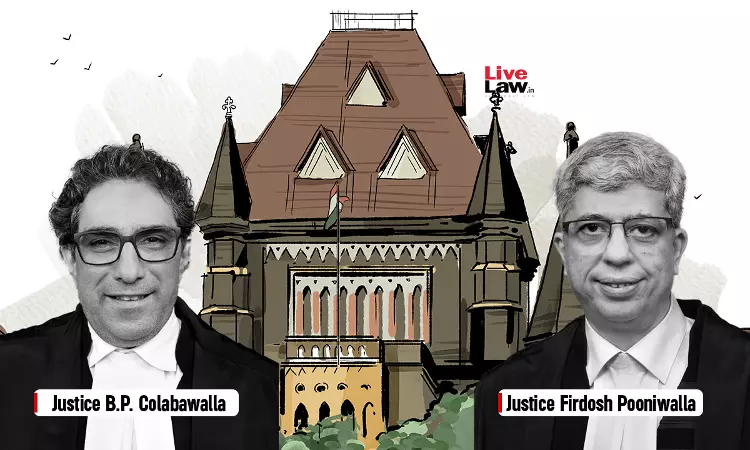
The Bombay High Court on 16 March partly admitted an appeal filed by the Department against ACC Limited, holding that several issues raised by the Revenue were already covered by binding precedents and therefore did not give rise to any substantial question of law.
A Bench of Justices B.P. Colabawalla and Firdosh P. Pooniwalla, however, admitted the appeal on four questions concerning computation of book profits under Section 115JB of the Income Tax Act, 1961. They held:
“The appeal is therefore admitted on questions (iv) (reframed), (vi), (ix) and (x). The appeal may be heard along with Income Tax Appeal No. 1658 of 2016 for the Assessment Year 2002-03.”
The Revenue raised multiple issues including taxability of State capital subsidy, foreign tax paid in Saudi Arabia, road construction expenditure, sales tax subsidy, provision for bad debts, gratuity provision, trial run receipts, share premium write back and wealth tax provision.
On the issue of State Capital Investment Subsidy received from West Bengal Industrial Development Corporation, the Court noted that the controversy was no longer res integra in view of the earlier decision in Bajaj Auto Ltd v DCIT. It therefore held that no substantial question of law arose on that issue.
A key issue concerned corporate tax paid in Saudi Arabia and whether the same could be added while computing book profits under Section 115JB. The Tribunal had deleted the adjustment by relying on Apollo Tyres Ltd v CIT. The High Court affirmed this view and reiterated that the Assessing Officer has limited powers while examining book profits under the MAT provisions. The Court noted:
“The Assessing Officer does not have the jurisdiction to go behind the net profit shown in the profit and loss account except to the extent provided in the Explanation to Section 115JB of the Act.”
Since the Saudi tax had not been debited to the profit and loss account, the Court held that no addition could be made.
The Bench also rejected the Revenue's challenge regarding deduction of Rs.39 lakh incurred for construction of Jukehi Road at Kymore. The road belonged to the Government of Madhya Pradesh and ACC Limited constructed it only to facilitate its business operations. Relying upon earlier Supreme Court precedent in ACC's own case, the Court held that no capital asset had come into existence in favour of the taxpayer.
On wealth tax provision, the Court followed CIT v Echjay Forgings (P) Ltd. and held that wealth tax is not contemplated under clause (a) of the Explanation to Section 115JB. Therefore, no addition was permissible. It observed:
“Under the said clause, payment of wealth-tax is not contemplated. Therefore, the net profit shall not be increased by the amount of wealth-tax paid by the assessee.”
Similarly, while dealing with gratuity provision, the Court held that actuarially determined gratuity liability is an ascertained liability and cannot be added back under Section 115JB. The judges stated:
“The assessee has made the provision for gratuity on the basis of actuarial calculations. Hence, it cannot be said that the provision for gratuity is not an ascertained liability.”
Accordingly, the High Court admitted the appeal only on four issues: sales tax subsidy in book profits, provision for bad and doubtful debts, trial run production receipts, and certain subsidy/foreign exchange related additions under Section 115JB.
Appearance for the Appellant: Adv. Suresh Kumar
Appearance for the Respondent: Adv. Saurabh Soparkar, Sr. Advocate (through V.C.), a/w Adv. Atul K. Jasani, for the Respondent.