
Andhra Pradesh High Court Quashes ₹6.23 Lakh Tax Demand Over Expired DTVSV Payment Deadline
Mehak Dhiman
15 Sept 2026 1:46 PM IST
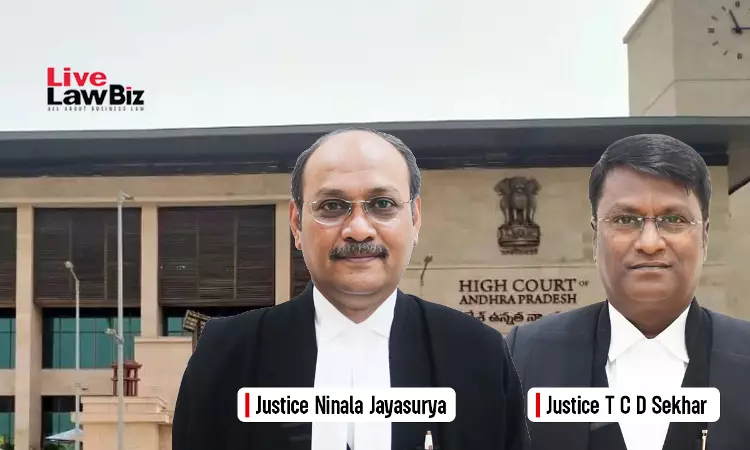
The Andhra Pradesh High Court on 24 August held that the Income Tax Department cannot require a Direct Tax Vivad Se Vishwas Scheme (DTVSV) declarant to meet a payment deadline that had expired before the Department issued the revised payment certificate.
A Division Bench comprising Justices Ninala Jayasurya and T.C.D. Sekhar set aside a Rs. 6,23,708 demand raised against N. Venu Gopal Reddy, a works contractor, and directed the Income Tax authorities to issue the final order under the scheme. The judges observed:
“It is humanly impossible to comply with such a condition inasmuch as the petitioner cannot set the clock back.”
Reddy had faced a tax demand of Rs. 29.60 lakh following an assessment. After the DTVSV Scheme was introduced, he withdrew his pending appeal and opted to settle the dispute under the scheme.
He filed a declaration in Form-1 on 23 December 2020. The Department initially issued Form-3 on 29 January 2021, determining the amount payable. Reddy subsequently pointed out discrepancies in the computation and sought their rectification.
The Department issued a revised Form-3 on 29 October 2021, determining the amount payable at Rs. 23,36,812. However, the revised certificate required the amount to be paid by 30 September 2021. Reddy paid Rs. 23,36,812 on 30 October 2021 and submitted Form-4 on the same day, intimating the Department of the payment.
Subsequently, the Department issued a demand notice dated 12 April 2023 seeking Rs. 6,23,708 on the ground that the payment was made after the deadline specified in the revised Form-3. It also passed an order under Section 220(2A) of the Income Tax Act charging interest on the alleged delayed payment.
Reddy challenged the proceedings before the High Court, arguing that the Department could not require payment by 30 September 2021 when it had issued the revised Form-3 only on 29 October 2021.
The Department did not dispute the issuance of the revised Form-3 but argued that Reddy had admittedly made the payment only on 30 October 2021 and had therefore failed to comply with the prescribed timeline.
The High Court rejected this contention. It noted that the revised Form-3 was issued after the authorities had acknowledged errors in the earlier computation. Having issued the revised certificate on 29 October 2021, the Department could not require Reddy to make payment by 30 September 2021.
It also examined Sections 5(1) and 5(2) of the Direct Tax Vivad Se Vishwas Act, 2020, which require a declarant to pay the determined amount within the prescribed period and intimate the payment to the designated authority.
The Bench found that Reddy had paid the determined amount on 30 October 2021, immediately after the revised Form-3 was issued, and had intimated the Department through Form-4 on the same day. It held:
“...Admittedly, the petitioner had paid the amount within the time stipulated under Section 5(2) of the said Act, therefore it is incumbent on the part of the respondent authorities to pass order stating that the petitioner/declarant has paid the amount, instead the respondent authorities resorted to coercive action against the petitioner by issuing demand notice dt.12.04.2023, which is equally unsustainable under law.”
The judges set aside the demand notice dated 12 April 2023 and the order dated 15 September 2023. It directed the Income Tax authorities to pass the requisite order under Section 5(2) of the DTVSV Act and issue Form-5 to Reddy within six weeks.
Accordingly, the High Court allowed the writ petition with no order as to costs.
For the Petitioner: Vivek Chandra Sekhar S.
For the Respondents/Income Tax Department: Y.V. Anil Kumar, Central Government Counsel, and Y.N. Vivekananda, Senior Standing Counsel.