
No Rectification For Debatable Points Under Section 254(2) Of Income Tax Act: Allahabad High Court
Upasna Agrawal
18 May 2026 2:29 PM IST
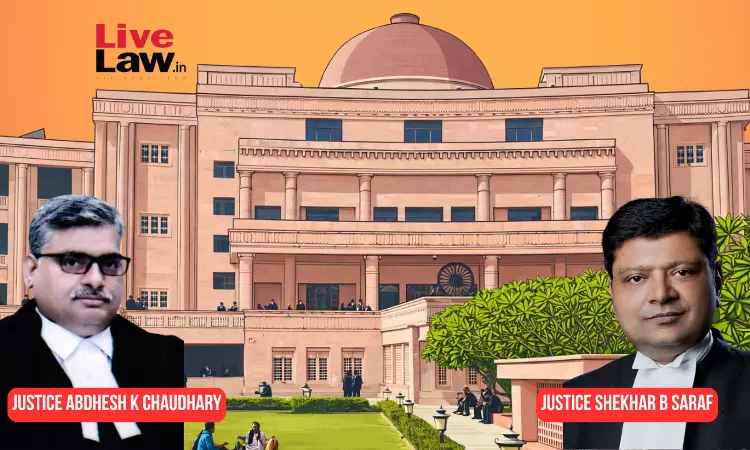
The Allahabad High Court on 6 May held that only mistakes apparent from the record can be rectified under Section 254(2) of the Income Tax Act, 1961, and that debatable issues fall outside its scope.
A Division Bench of Justices Shekhar B. Saraf and Abdhesh Kumar Chaudhary dismissed the appeal filed by Abusaad Ahmad, upholding the Income Tax Appellate Tribunal's refusal to rectify its earlier order rejecting condonation of delay. It held:
“In order to attract the power to rectify under section 254(2) of the Act it is not sufficient if there is merely a mistake in the orders sought to be rectified. The mistake to be rectified must be one apparent from the record. A decision on the debatable point of law or undisputed question of fact is not a mistake apparent from the record. The plain meaning of the word 'apparent' is that it must be something which appears to be so ex facie and it is incapable of argument or debate. It therefore, follows that a decision on a debatable point of law or fact or failure to apply the law or a judgment to a set of facts cannot be corrected by way of rectification.”
The case arose after the Income Tax Appellate Tribunal, Lucknow Bench “A”, rejected Abusaad Ahmad's appeal for condonation of a 867-day delay in filing. The Tribunal found the explanation (that the order passed by the Commissioner of Income Tax (Appeals) was received by a driver who failed to forward it to the appellant) unsatisfactory.
The appellant then filed a rectification application against the Tribunal's order refusing condonation of delay, which was also rejected. He subsequently approached the High Court challenging only the rejection of the rectification application, without directly assailing the original order on limitation.
The High Court, examining the scope of Section 254(2), reiterated that rectification is confined to patent and self-evident errors and cannot be used to revisit contested findings. It observed:
“A conjoint reading of both terms “mistake” and “apparent” would mean that those mistakes which can be rectified under section 254(2) are ones that are patent, obvious and whose discovery is not dependent on argument or elaboration. As a corollary, it would mean that where an error is far from self-evident or for which elaborate discussion and argument is needed, it ceases to be an apparent error or a mistake apparent and as such cannot be a subject matter of review within the meaning of Section 254(2) of the Income Tax Act.”
The Court further noted that the term “mistake” is inherently subjective and must be understood as one discernible from the record without detailed reasoning or debate, and distinguished the rectification power under the Income Tax Act from the broader review provisions under the Code of Civil Procedure, holding that a mere possibility of another view does not amount to an error apparent on the face of the record.
Accordingly, the High Court found no infirmity in the Tribunal's order and dismissed the appeal.
Counsel for Appellant(s): Syed Aftab Ahmad
Counsel for Respondent(s): Neerav Chitravanshi