
High Courts

Deductions Under Different Income Tax Provisions Must Be Computed Independently: Rajasthan High Court
The Rajasthan High Court on 5 September held that deductions available under different provisions of the Income Tax Act must be computed independently, and the restriction against double deduction can be applied only while allowing the deductions. A Division Bench of Justices Pushpendra Singh Bhati and Praveer Bhatnagar allowed Secure Meters Ltd.'s appeal and set aside the Income Tax Appellate Tribunal's finding on the computation of deductions under Sections 80-IA/80-IB and Section 80HHC for...

25-Year Pendency Cannot Allow Writ Court To Decide Disputed Facts In Tax Case: Rajasthan High Court
The Rajasthan High Court on 21 August held that the mere pendency of a tax dispute for 25 years does not permit the Court to decide disputed questions of fact in writ proceedings on the basis of pleadings and affidavits, as this would bypass the fact-finding process under the Income Tax Act. A Division Bench of Justices Arun Monga and Ashutosh Kumar declined to interfere with reassessment notices issued to Mahesh Kumar Gupta for Assessment Years 1995-96 to 1999-2000, holding that the disputed...
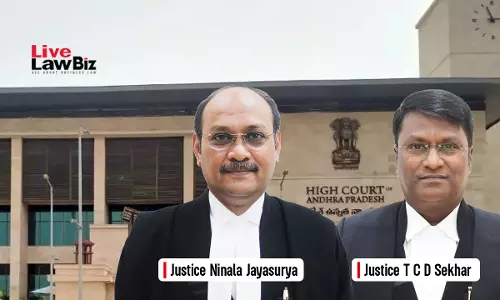
Andhra Pradesh High Court Quashes ₹6.23 Lakh Tax Demand Over Expired DTVSV Payment Deadline
The Andhra Pradesh High Court on 24 August held that the Income Tax Department cannot require a Direct Tax Vivad Se Vishwas Scheme (DTVSV) declarant to meet a payment deadline that had expired before the Department issued the revised payment certificate. A Division Bench comprising Justices Ninala Jayasurya and T.C.D. Sekhar set aside a Rs. 6,23,708 demand raised against N. Venu Gopal Reddy, a works contractor, and directed the Income Tax authorities to issue the final order under the scheme....
Bombay High Court Directs Department Not To Reassess Taxpayers Challenging Income Tax Act Sec. 147A
The Bombay High Court on 2 September directed the Income Tax Department not to proceed with reassessment proceedings against taxpayers who have challenged and pressed the constitutional validity of Section 147A of the Income Tax Act, 1961, including in petitions not presently listed with the main batch of cases. A Division Bench of Justices B.P. Colabawalla and Farhan P. Dubash passed the interim order in a batch of petitions led by Bharat Petroleum Corporation Limited. The judges extended the...
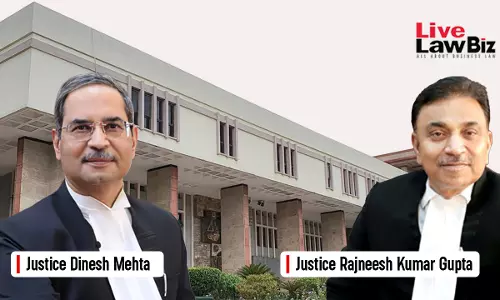
'No Pressing Hurry': Delhi High Court Sets Aside Income Tax Order For Curtailing Assessee's Reply Time
The Delhi High Court has set aside an order passed under Section 148A(d) of the Income Tax Act, 1961, after finding that the Assessing Officer (AO) curtailed the assessee's statutory opportunity to respond and subsequently ignored the reply that had been filed before the order was passed.The Division Bench of Justices Dinesh Mehta and Rajneesh Kumar Gupta observed that the assessee was entitled to 30 days to file its reply, whereas the AO had practically reduced the time available to it to...
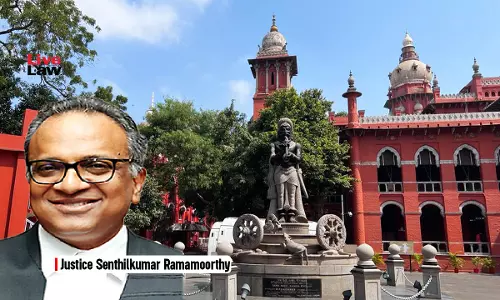
GST Authorities Cannot 'Ride Piggyback' On Adjudication Order For Income Tax Reassessment: Madras High Court
The Madras High Court has held that Income Tax authorities cannot rely solely on a GST adjudication order while conducting reassessment proceedings, cautioning that any reassessment must independently comply with the Income Tax Act.A single judge bench of Justice Senthilkumar Ramamoorthy, however, declined to interfere with the Section 148 notice issued to a granite and tiles business proprietor for AY 2023-24, as the proceedings were still at a preliminary stage.The court, however,...

Assessment Order Need Not Discuss Every Claim; Reopening Same Issue Is 'Change Of Opinion': Bombay High Court
The Bombay High Court has ruled that an income tax assessment cannot be reopened where the record shows that an issue was examined during scrutiny and the assessee's claim was accepted, even if the original assessment order did not expressly discuss the issue.The bench of Justice B.P. Colabawalla and Justice Farhan P. Dubash observed that “it is not necessary for an Assessing Officer to discuss each and every issue elaborately to disclose his satisfaction” when accepting an assessee's claim. The...
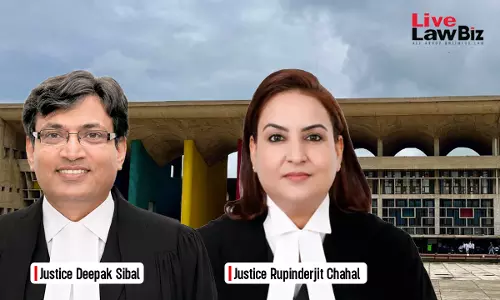
Punjab & Haryana HC Strikes Down Section 147A Income Tax Act, Finds Faceless Reassessment Framework Remains Unchanged
The Punjab & Haryana High Court has held that the retrospective insertion of Section 147A could not validate reassessment notices issued by jurisdictional Assessing Officers when the statutory provision governing faceless reassessment under Section 151A remained unchanged.A Division Bench of Justice Deepak Sibal and Justice Rupinderjit Chahal accordingly struck down Section 147A as unconstitutional, holding that the provision did not cure the legal defect identified in earlier judicial...

Bombay High Court Says Income Tax Assessment Cannot Stand On Quashed Revision Order
The Bombay High Court has ruled that an assessment order cannot survive when the revision order on which it was based has already been quashed by the income tax tribunal.Justice G.S. Kulkarni and Justice Dr. Neela Gokhale observed that the Assessing Officer could not have proceeded with the assessment after the tribunal had quashed the underlying Section 263 order. The court also rejected the Revenue's contention that the pending challenge against the tribunal's decision changed this...

Tax Paid Twice On Same Income Is 'Unjust Enrichment' By Government: Delhi High Court
Holding so, the court allowed the taxpayer to file a revised return after finding that it had inadvertently paid tax twice on the same interest income.
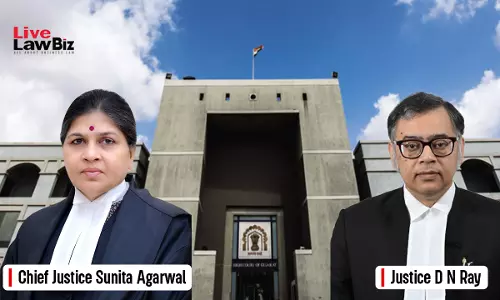
SEZ Units Cannot Be Denied Stamp Duty Exemption Due To Pre-Ordinance Lease: Gujarat High Court
The Gujarat High Court on 2 September held that an SEZ unit cannot be denied exemption from stamp duty and registration fee merely because its lease deed was executed before the Gujarat Special Economic Zone Ordinance, 2004 came into force, where the investment was made on the basis of the State Government's earlier SEZ policy promising such fiscal incentives. A Division Bench comprising Chief Justice Sunita Agarwal and Justice D.N. Ray dismissed the State Government's appeal against an order...
Individual Notice To Partners Not Needed For Firm's Tax Recovery: Madras High Court
The Madras High Court on 24 August held that individual notice to partners is not required when the Income Tax Department initiates recovery proceedings against the assets of a defaulting partnership firm. It clarified that individual notice is necessary where recovery proceedings are initiated against the personal assets of an individual partner. Justice Senthilkumar Ramamoorthy disposed of four connected writ petitions concerning the recovery of income tax dues from RJK Investments and the...