
High Courts

Calcutta High Court Quashes Pre-IBC Resolution Income Tax Proceedings Against Binani Cement
The Calcutta High Court has quashed income tax notices, orders, and proceedings relating to the period before UltraTech Cement took over management of Binani Cement under an approved IBC resolution plan. The Court held that claims not forming part of the resolution plan could not survive after its approval.The Court also directed the Income Tax Department to refund amounts adjusted against such pre-transfer tax demands, along with applicable interest.Justice Smita Das De was dealing with a writ...
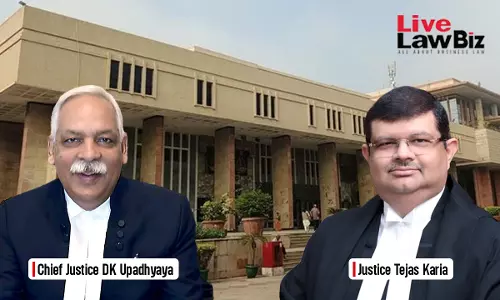
No Timeframe For Cancelling Duplicate PAN Can Cause Hardship To Taxpayers: Delhi High Court
The Delhi High Court has observed that the absence of a prescribed timeframe for deciding applications seeking cancellation of duplicate Permanent Account Numbers (PANs) may cause hardship to taxpayers, particularly in relation to filing Income-Tax Returns and availing services linked to PAN.The Division Bench of Chief Justice Devendra Kumar Upadhyaya and Justice Tejas Karia was dealing with a PIL seeking directions to the authorities to prescribe a timeframe for deciding applications for...
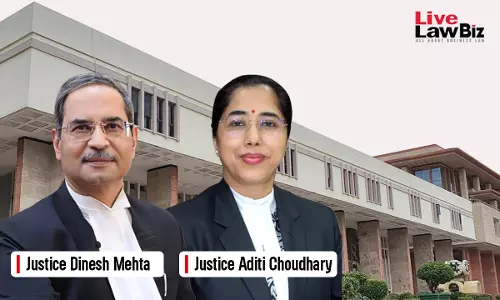
Delhi High Court Quashes Section 153C Income Tax Order, Says Satisfaction Note Was Recorded After Limitation Period
The Delhi High Court has quashed a tax assessment against a company, holding that proceedings initiated on the basis of material found during search proceedings were barred by limitation.The Division Bench of Justices Dinesh Mehta and Aditi Choudhary observed that the satisfaction note in the case was recorded on June 25, 2021, corresponding to AY 2022-23, whereas the impugned order dated March 30, 2023 concerned AY 2010-11.Petitioner argued that the impugned order had been passed beyond the...

Gujarat High Court Upholds ₹23.77 Crore Income Tax Relief For Adani Infrastructure Services
The Gujarat High Court has ruled in favour of Adani Infrastructure Services Pvt. Ltd., upholding the deletion of a ₹23.77 crore income tax disallowance. The court found that the company's interest income exceeded its interest expenditure and that the borrowed funds were advanced in a back-to-back transaction.The dispute concerned a disallowance under Section 14A of the Income Tax Act read with Rule 8D(2)(ii). Section 14A deals with expenditure incurred in relation to income that does not form...
Income Tax | Delhi High Court Quashes Section 153C Notice As Time-Barred, Relies On Ojjus Medicare Ruling
The Delhi High Court has quashed a notice issued under Section 153C of the Income Tax Act for Assessment Year (AY) 2016-17, holding that the notice was issued beyond the prescribed limitation period.The Division Bench of Justices Dinesh Mehta and Aditi Choudhary allowed the writ petition filed by Preeti Chadha, challenging the notice dated July 25, 2022, issued under Section 153C of the Act pursuant to a satisfaction note recorded by the Assessing Officer on June 16, 2022.Petitioner contended...
Delhi High Court Dismisses Insurance Broker's Plea Against Income Tax Reassessment, Cites Earlier Case
The Delhi High Court has dismissed a writ petition filed by Zoom Insurance Brokers challenging proceedings initiated under Sections 148A(3) and 148 of the Income Tax Act, 1961, observing that an identical challenge by the company for the preceding assessment year had already been rejected by a Coordinate Bench.The Division Bench of Justices Dinesh Mehta and Aditi Choudhary noted that the facts of the present case were identical to those considered in Petitioner's earlier case, except for the...

Sahara India Tax Appeals To Be Heard By Delhi ITAT Despite AO's Lucknow Jurisdiction: Delhi High Court
The Delhi High Court has allowed a batch of writ petitions filed by Sahara India group companies and directed that their pending income tax appeals be heard by the Delhi Bench of ITAT , even though the Assessing Officer (AO) having jurisdiction over the assessees was situated in Lucknow.The Division Bench of Justices Dinesh Mehta and Aditi Choudhary noted that more than 100 appeals concerning the assessee's group companies were already being heard by the Delhi Bench and that both the assessees...
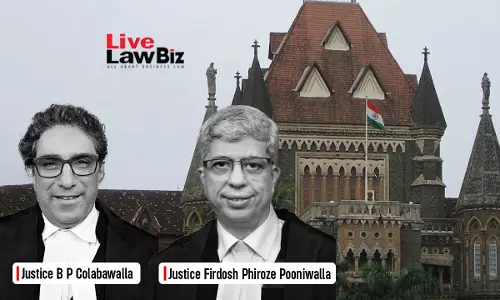
AO Must Decide Reassessment Objections Before Scrutiny Can Begin: Bombay High Court
The Bombay High Court has ruled that an Assessing Officer cannot issue a notice under Section 143(2) of the Income Tax Act to scrutinise a return in reassessment proceedings before deciding the assessee's objections to reopening the assessment.A Division Bench of Justice B.P. Colabawalla and Justice Firdosh P. Pooniwalla held that issuing a Section 143(2) notice amounts to proceeding with the assessment. The Assessing Officer must therefore first dispose of the assessee's objections to reopening...
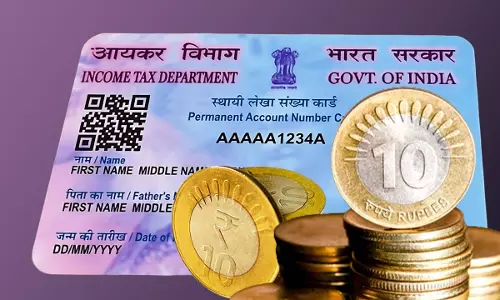
Delhi High Court Questions Income Tax Dept. Over Two PANs Issued In Same Person's Name, Seeks Records
The Delhi High Court has questioned the Income Tax Department over the issuance of two Permanent Account Numbers (PANs) in the name of the same person and directed the Department to produce the original records relating to both PAN cards.The Division Bench of Justices Dinesh Mehta and Aditi Choudhary was hearing a petition filed by Neeraj Kukreja, who claimed that he holds only one PAN and had neither applied for nor obtained the second PAN attributed to him. The Income Tax Department however...

Gujarat HC Allows Plea To Condone Delay In Filing Income Tax Return Despite Pending Appeal Against Assesment
The Gujarat High Court has ruled that the rejection of a taxpayer's application seeking condonation of delay in filing an income tax return can be examined even after an assessment order has been passed and an appeal against it is pending before the Commissioner of Income Tax (Appeals).“We do not subscribe to the objection raised by the Revenue since it is an admitted position that the Commissioner of Income-tax (Appeals) does not have the power in condoning the delay and the remedy invoked by...
'Really Troubling': Delhi High Court Orders Opening Of Taxpayer's Locker Seized For Over 30 Years
The Delhi High Court has directed the Income Tax Department to open a taxpayer's locker, which has remained seized for more than 30 years, observing that continued seizure of the locker serves no purpose after the tax dispute had already been finalised by the Income Tax Appellate Tribunal (ITAT).The Division Bench of Justices Dinesh Mehta and Aditi Choudhary was hearing a petition filed by Devi Dayal Aggarwal, who approached the Court alleging that the Assessing Officer had failed to pass an...
Delhi High Court Stays ₹17.66 Crore Reassessment After Same AO Accepted Siezed Cash Belonged To Company
The Delhi High Court has stayed ₹17.66 crore reassessment proceedings initiated against a company, noting that the same amount had already been accepted by the Assessing Officer as belonging to the company and had been offered to tax as cash sales.The Division Bench of Justices Dinesh Mehta and Aditi Choudhary was hearing a petition challenging a notice issued under Section 148 of the Income Tax Act, 1961, for Assessment Year 2024-25.The case arose from a search conducted on May 12, 2024 at the...