
High Courts
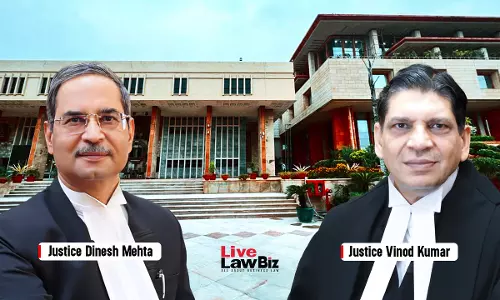
Reassessment Must Be Based On AO's Independent 'Reason To Believe,' Not Borrowed: Delhi High Court
The Delhi High Court has dismissed the Income Tax Department's appeals against NTPC Ltd., holding that reassessment proceedings cannot be initiated merely on the basis of an audit objection and that the statutory requirement of “reason to believe” must be from independent satisfaction of the Assessing Officer (AO).A Division Bench of Justices Dinesh Mehta and Vinod Kumar observed,“the provision expressly used the language 'reason to believe' and the same has been interpreted by Hon'ble the...
Delhi High Court Affirms ITAT View That Excise Duty Refund Under Kutch Incentive Scheme Is Capital Receipt
The Delhi High Court has upheld an order of the Income Tax Appellate Tribunal (ITAT) holding that excise duty refund received by Jindal SAW Ltd. under the Kutch district incentive scheme is a capital receipt and not taxable as income.While dismissing the Income Tax Department's appeal, the Division Bench of Justices Dinesh Mehta and Vinod Kumar agreed with ITAT's view that the refund was granted under the Incentive Scheme 2001 for Economic Development of Kutch District, notified by the...
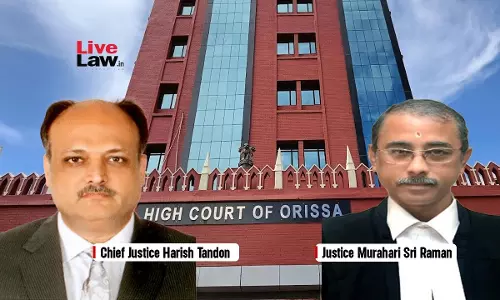
Orissa High Court Grants Fresh Hearing To Taxpayer With Neurological Illness, Quashes Ex Parte Order
The Orissa High Court on 2 February set aside an ex parte assessment order against Sri Susil Nath, the taxpayer, as he could not participate due to neurological illness.A Division Bench of Chief Justice Harish Tandon and Justice Murahari Sri Raman noted: “As it appears from the record that the invoices along with vehicle particulars issued by the Government Authority could not be placed before the said Authority in view of the circumstances beyond the control of the petitioner.” The petition...

Delhi High Court Directs Nil TDS For GoDaddy, Says Domain Registration Fees Not Taxable Under India-US DTAA
The Delhi High Court has held that domain name registration fees received by GoDaddy is not chargeable to income tax in India, in terms of the India-USA Double Taxation Avoidance Agreement.A division bench of Justices Dinesh Mehta and Vinod Kumar also criticised the Income Tax Department for refusing to grant a nil withholding tax certificate under Section 197 of the Income Tax Act, 1961, despite binding judicial precedent.“We record our displeasure about the casual rather callous manner, in...
Delhi High Court Dismisses Revenue Appeals Against ITAT Order In Mahagun TDS Dispute Over NOIDA Lease Rent
The Delhi High Court has dismissed three appeals filed by the Income Tax Department challenging orders of the Income Tax Appellate Tribunal (ITAT) that had granted relief to Mahagun developers in a long-running dispute over deduction of tax at source (TDS) on lease rent payments made to the NOIDA Authority.A Division Bench of Justices Dinesh Mehta and Justice Vinod Kumar rejected the appeals after noting that the controversy was squarely covered by its earlier ruling in Rajesh Projects (India)...

Gujarat High Court Sets Aside TDS Order For Failure To Apply 'Make Available' Test Under India–Singapore DTAA
The Gujarat High Court has recently set aside a tax deduction at source order against Solvay Specialities India, holding that the Income Tax Department failed to apply the mandatory “make available” test under the India–Singapore tax treaty. Under this test, tax authorities are required to first determine whether the foreign service provider actually passed on any technical knowledge, skill, or know-how in a way that allows the Indian company to use it independently in the future. Without...
Delhi High Court Quashes Transfer Pricing Order After TPO Failed To Share Agreements Relied Upon
The Delhi High Court has recently has held that a Transfer Pricing Officer (TPO) is bound to furnish copies of agreements relied upon for benchmarking before finalising a transfer pricing adjustment.A division bench of Justices Dinesh Mehta and Vinod Kumar observed, “It is the settled position of law that any authority is bound to provide copies of the relied upon documents.”The court was dealing with a writ petition challenging a transfer pricing order, whereby the TPO relied on third-party...
Income Tax | Mere Disagreement On Facts With Assessing Officer No Ground to Invoke Writ Jurisdiction: Delhi High Court
The Delhi High Court has reiterated that its writ jurisdiction under Article 226 of the Constitution cannot be invoked merely because a taxpayer disputes the correctness of facts or the material relied upon by the Assessing Officer in reassessment proceedings under the Income Tax Act, 1961.A division bench of Justices Dinesh Mehta and Vinod Kumar observed,“A challenge to notice or proceedings can be considered normally, in case where the notice and proceedings are without jurisdiction. Simply...
Income Tax Act | Loan Repayment Within Two-Day Of Receipt Alone Doesn't Prove Bogus Transaction: Delhi High Court
The Delhi High Court has recently held that mere repayment of a loan within a short span of time, even within two days, does not by itself establish that the transaction was a sham or a bogus accommodation entry for the purposes of Section 68 of the Income Tax Act, 1961.A division bench of Justices Dinesh Mehta and Vinod Kumar observed,“Simply because the loan has been paid within two days, it cannot be said with certitude that the loan was not a genuine loan and was only a paper entry....
S.148 Income Tax Act | Assessing Officer Not Required To Share Entire Record At Reassessment Notice Stage: Delhi High Court
The Delhi High Court has held that an Assessing Officer is not required to supply the entire material on record to an assessee at the stage of issuing a notice under Section 148A of the Income Tax Act ,1961 (re-assessment stage) observing that such a requirement would unnecessarily protract reassessment proceedings and enable assessees to manufacture defences.A division bench of Justices Dinesh Mehta and Vinod Kumar observed,“If it is held that every material has to be supplied to the assessee...
Wrong Attachment In Reassessment Email Does Not Invalidate Income Tax Notice: Delhi High Court
The Delhi High Court has held that an inadvertent attachment of another assessee's notice along with a reassessment email doesn't invalidate proceedings under Section 148 of the Income Tax Act, 1961, so long as the substance of the communication clearly indicates that the statutory notice was intended for the concerned assessee.A division bench of Justices Dinesh Mehta and Vinod Kumar thus dismissed the writ petition filed by an assessee challenging the continuation of reassessment proceedings...
S. 197 Income Tax Act| Delhi High Court Flags Date Mismatch Between Orders And Certificates Issued For Lower TDS, Asks CBDT To Address
The Delhi High Court has flagged an administrative issue in the processing of applications under Section 197 of the Income Tax Act, noting that a mismatch between the dates on orders and certificates issued for lower or nil tax deduction can create a misleading impression of delay. The court noted that while the certificate may be issued later, the order deciding the application often bears the date of filing of the application. A division bench of Justices Dinesh Mehta and Vinod Kumar...