
High Courts

Share Buyback Not Acquisition Of Property: Delhi High Court Deletes ₹16.33 Crore Tax Addition Against Globe Capital
The Delhi High Court has upheld the deletion of a Rs 16.33 crore addition against Globe Capital Market Ltd., holding that a company's buyback of its own shares does not amount to acquisition of “property” and Section 56(2)(x) of the Income Tax Act has no application to such transactions. A Division Bench of Justices Dinesh Mehta and Vinod Kumar dismissed the appeal filed by the Principal Commissioner of Income Tax, affirming the Income Tax Appellate Tribunal's decision, which had upheld relief...
CBDT Delay Condonation Circular For 'Genuine Hardship' Applies Irrespective Of Assessment Year: Delhi High Court
The Delhi High Court has held that a beneficial circular issued by the Central Board of Direct Taxes (CBDT) allowing delay condonation in cases of “genuine hardship” cannot be restricted to specific assessment years and must be applied uniformly to all bona fide cases.A Division Bench of Justices Dinesh Mehta and Vinod Kumar passed the ruling while allowing a writ petition filed by VRG Electronics Pvt. Ltd., challenging the rejection of its application for condonation of delay in filing...
Delhi High Court Upholds Reassessment, Says Defect In 7-Day Notice Under Income Tax Act Stood Cured By Corrigendum
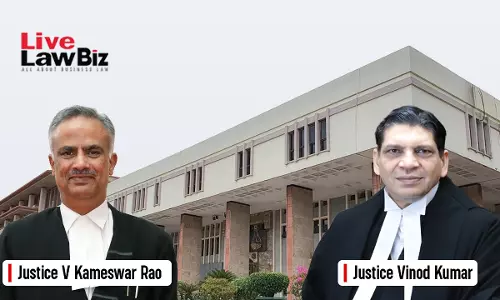
The Delhi High Court has upheld reassessment proceedings against an taxpayer for Assessment Year 2018–19, holding that the defect of granting less than seven days to respond to a notice under Section 148A(b) of the Income Tax Act stood cured by a corrigendum issued within the limitation period. A Division Bench of Justices V. Kameswar Rao and Vinod Kumar rejected the petitioner's challenge that the notice was invalid for providing only six days to respond, contrary to the statutory requirement...
Interest On Funds Linked To Business Setup Not Taxable As 'Other Income': Delhi HC In VNG Automotive Case
The Delhi High Court has recently held that interest earned by VNG Automotive Pvt. Ltd. on funds earmarked for setting up its manufacturing unit cannot be taxed as “income from other sources”, finding that the funds were not surplus but were directly linked to project obligations. The Division Bench of Justice V. Kameswar Rao and Justice Vinod Kumar said: “We find that the funds in the present case were not lying as surplus but the same were earmarked to facilitate the balance payment for...

Actor Vijay Appeals Single-Bench Ruling Of Madras High Court Upholding ₹1.5 Crore Income Tax Penalty
Actor-turned-politician Joseph Vijay has moved a Division Bench of the Madras High Court against a single-judge ruling that upheld a ₹1.5 crore income tax penalty imposed on him.The appeal, filed last month, is yet to be listed for hearing.The challenge is to a judgment by Justice Senthilkumar Ramamoorthy, who had dismissed Vijay's writ petition and upheld the penalty linked to alleged undisclosed income of Rs 15 crore for the financial year 2015–16.The single judge held that the penalty order...
Gujarat High Court Seeks Affidavit From Centre Over Failure To Make ITR Utilities Available By April 1
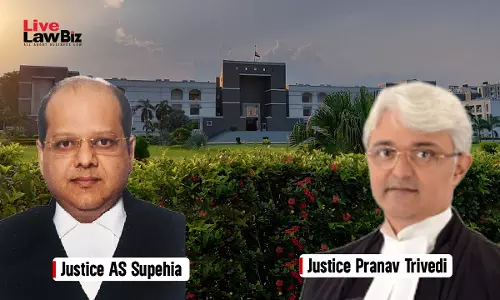
The Gujarat High Court recently directed the Union government to file an affidavit in a writ petition filed by the Chartered Accountants Association, Surat, and others, alleging continued non-compliance with its 2015 directions on the timely availability of income tax return e-filing utilities. A Division Bench of Justice A.S. Supehia and Justice Pranav Trivedi noted that despite its earlier ruling in All Gujarat Federation of Tax Consultants v. CBDT, the respondent Department had not followed...

Madras High Court Quashes IT Case Against Gautham Vasudev Menon Over Non-Filing Of His Company's Returns
The Madras High Court on Monday quashed an income tax prosecution against filmmaker Gautham Vasudev Menon for failure to file the income tax returns of his company, Photon Kathaas Productions Pvt Ltd, for the assessment year 2013-14.Justice GK Ilanthiraiyan quashed the case pending against Menon before the Additional Chief Metropolitan Magistrate. The case against Menon was initiated under Section 276 CC read with Section 278B of the Income Tax Act for non-filing of the returns of the company...
TEP-Based Income Tax Summons Can't Be Quashed Without Proof Of Mala Fide: Andhra Pradesh High Court
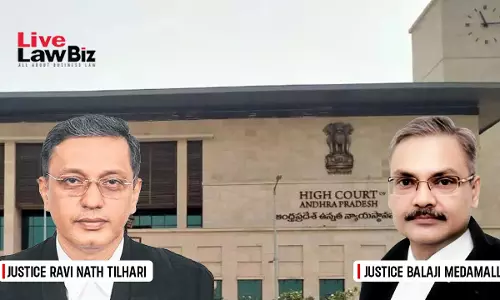
The Andhra Pradesh High Court has held that summons issued under Section 131(1A) of the Income Tax Act on the basis of a Tax Evasion Petition (TEP) cannot be quashed in writ jurisdiction in the absence of clear and convincing proof of mala fide, particularly where such allegations are raised belatedly and lack foundational pleadings or supporting material. A Division Bench of Justice Ravi Nath Tilhari and Justice Balaji Medamalli dismissed a writ petition filed by Koduru Picheswara Rao...
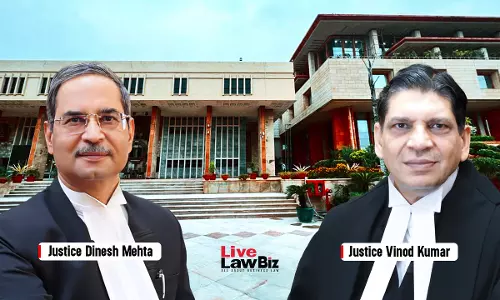
Delhi High Court Pulls Up Income Tax Department For Pursuing Tax Dues After Nine-Year Slumber, Quashes Notice
The Delhi High Court has recently pulled up the Income Tax Department for waking up after nine years to pursue tax dues, calling it “difficult nay impossible” to believe such prolonged inaction, and quashed the notice issued to APS Hydro Private Limited. A division bench of Justice Dinesh Mehta and Justice Vinod Kumar was dealing with a writ petition against a notice dated February 16, 2022, and a follow-up communication issued on May 12, 2022, by the Assistant Commissioner of Income Tax, which...

Virtual Services Treated As Rendered In India: Bombay High Court Denies NIL TDS Certificate To China-Based Entity
The Bombay High Court has refused to grant a nil withholding tax certificate under Section 197 to a China-based company, holding that services delivered through emails and video conferencing can be treated as rendered in India, while also declining to interfere as the core tax dispute is pending before appellate authorities. A bench of Justices B. P. Colabawalla and Amit S. Jamsandekar observed that “the rendition of these services, even if done virtually, equate to and is the same as a...

Delhi High Court Quashes Reassessment Against Sports Events Company As Time-Barred, Calls It Change of Opinion
The Delhi High Court has quashed reassessment proceedings against a Delhi-based sports events company, holding that the notice issued on July 30, 2022 was time-barred and that reopening the case on issues already scrutinized amounted to a mere change of opinion, rendering the entire exercise invalid.A Division Bench of Justices Dinesh Mehta and Vinod Kumar allowed the writ petition filed by the company, setting aside the reassessment notice, subsequent orders, and the ex-parte assessment order...
Delhi High Court Quashes Reassessment, Special Audit Against Huawei For AY 2013-14; Upholds Reopening For AY 2015-16
The Delhi High Court has granted partial relief to Huawei Telecommunications (India) in a batch of petitions challenging special audit directions and reassessment proceedings initiated by the Income Tax Department.A Division Bench of Justices V. Kameswar Rao and Vinod Kumar partly allowed the petitions, setting aside the special audit directions and reassessment notices for Assessment Year (AY) 2013-14, while sustaining the proceedings for AY 2015-16.The case arose from a search and seizure...