
IT Dept. Cannot Cite Website Functionality To Avoid Withdrawing Order Passed In Defiance Of Court: Gujarat High Court
Arvind Kumar Tiwari
14 Aug 2026 2:46 PM IST
The Gujarat High Court has recently quashed reassessment proceedings against a charitable trust after the Revenue told the court that its tax portal had no functionality to withdraw an assessment order once it had been passed and accounted for.
The assessment order was passed despite an interim order restraining the Assessing Officer from doing so.
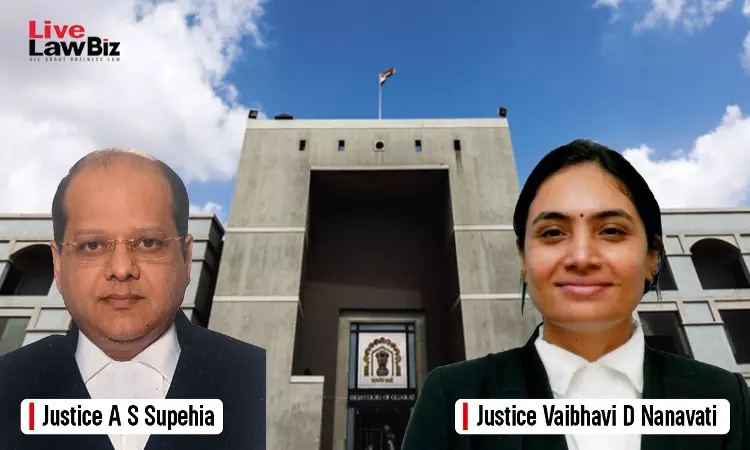
A Division Bench of Justice A.S. Supehia and Justice Vaibhavi D. Nanavati ruled,
"Revenue cannot cite the excuse of nonavailability of any functionality in the system of withdrawing the assessment order, which has been passed in defiance of the interim orders / orders of this Court. The power under section 264 of the Act is always available for the higher authorities i.e. the Commissioner to either modify or set aside the orders passed by the Assessing Officer in case, it is found that the Assessing Officer has passed the assessment order de hors the interim orders passed by this Court",
The court quashed the reopening on the ground that there was no escapement of income chargeable to tax even if the Assessing Officer's findings were accepted.
The trust's utilisation of income remained above the 85% threshold prescribed under the third proviso to Section 10(23C)(vi) of the Income Tax Act, even on the Revenue's computation.
The court was hearing a petition filed by Ahmedabad South Indian Association Charitable Trust challenging the reopening of its income tax assessment for Assessment Year 2017-18. The Trust had filed its return on October 31, 2017, declaring nil income. It had claimed exemption under Section 10(23C)(vi) of the Income Tax Act.
The original assessment was completed under Section 143(3) on December 10, 2019. The Assessing Officer did not disturb the Trust's claim for exemption.
The Department later initiated reassessment proceedings. A notice issued under Section 148A(b) questioned, among other things, ₹42 lakh paid as remuneration to Executive Director and trustee M.P. Chandran.
The notice also raised queries concerning gratuity, staff welfare expenses, fee waiver or scholarship amounts, and sponsorship expenses relating to J.G. University. The Trust furnished a detailed reply addressing the objections.
The Assessing Officer subsequently concluded that ₹3.01 crore had escaped assessment. A notice under Section 148 was issued on April 8, 2024.
The proposed disallowances included ₹75.49 lakh towards gratuity and ₹21.31 lakh towards staff welfare expenses. They also included ₹58.07 lakh towards fee waiver or scholarship and ₹1.04 crore towards sponsorship expenses relating to J.G. University.
The ₹3.01 crore figure also included ₹42 lakh paid as remuneration to the trustee.
The Trust challenged the reopening before the high court. During the pendency of the petition, the court restrained the Assessing Officer from passing the final assessment order.
Despite the restraint, an assessment order was passed on March 6, 2026. It was passed without obtaining permission from the high court.
On July 27, 2026, the court indicated that contempt proceedings could be initiated against the Assessing Officer. It directed that by the next hearing on August 3, either the assessment order would be withdrawn or it would be constrained to initiate contempt proceedings.
The Revenue then filed an affidavit explaining why the order had not been withdrawn. It stated that the Income Tax Business Application (ITBA) system had no functionality to withdraw an assessment order after it had been passed.
The Revenue also relied on a response from its ITBA systems team. According to the response, there was no provision under the Income Tax Act for withdrawing a concluded assessment order.
The systems team further stated that once the assessment order had been accounted for by the Centralized Processing Centre, it could not be reversed through the ITBA backend.
The high court rejected this explanation.
The bench referred to Section 264 of the Income Tax Act. It observed that the Principal Commissioner or Commissioner could exercise powers under the provision to modify or set aside an assessment order, provided the resulting order was not prejudicial to the assessee.
The court held that this power could be exercised where an Assessing Officer had passed an order in defiance of an interim order or other direction of the court. The absence of functionality on the tax portal could therefore not be cited as an excuse.
The trust had argued that there was no escapement of income even if the entire ₹3.01 crore proposed by the Revenue was excluded from its application of income. The court found that there would be no escapement of income chargeable to tax even if the proposed disallowance was taken into account.
The trust's computation showed that it had utilised 96.01% of its income. Even under the Revenue's revised computation, utilisation stood at 86.92%.
Both figures were above the 85% threshold under Section 10(23C)(vi). The court observed that “the threshold limit gets maintained” even under the Revenue's computation.
The court noted that the Trust's eligibility for exemption was not disputed. Since more than 85% of the income was utilised under either calculation, the court held that the reopening called for interference.
The bench also noted that the Trust had placed the relevant material before the Assessing Officer during the original scrutiny assessment.
This included documents concerning the ₹42 lakh remuneration paid to Chandran. The material also covered the gratuity, staff welfare expenses, fee waiver or scholarship, and sponsorship expenses.
For the gratuity claim, the Trust had produced, among other documents, a quotation from LIC for a gratuity policy for employees who had completed five years of service. It also produced documents concerning staff welfare expenses, including catering contracts, bills and payment details.
The Trust explained that the ₹58.07 lakh amount was towards scholarship fees and concessions. It was not staff welfare expenditure.
For the J.G. University sponsorship expenses, the Trust produced documents relating to the proposal to establish the university. These included a letter of intent and permission from the Government of Gujarat.
The Trust explained that J.G. Trust was the sponsoring body of the proposed university. It also stated that employees and professionals had to be engaged by the Trust until the university received government approval.
The court observed that these explanations were “brushed aside and not considered by the Assessing Officer.”
It also noted that the final reassessment order did not deal with the comparative utilisation figures. Those figures showed that more than 85% of the income had been utilised even under the Revenue's own computation.
The court therefore held that “the reopening of assessment calls for interference” and that the reopening needed to be set aside.
The bench also relied on Section 152(2) of the Income Tax Act. The provision allows an assessee to seek dropping of reassessment proceedings by showing that, even after taking the alleged escaped income into account, it would still have been assessed on an amount no lower than what it was rightly liable to pay.
The Trust had demonstrated that excluding the disputed amounts from its application of income would still leave its utilisation above the required threshold. The court found that there would be “no impact on taxable income.”
The bench also took note of the manner in which the March 6, 2026 assessment order had been passed. It observed that the Assessing Officer was aware of the averments in the writ petition and still passed the order despite the interim order.
“On an overall analysis of the matter and the manner in which the assessment order has been framed, we are inclined to quash and set aside the same,” the bench observed.
The high court accordingly quashed the Section 148 notice and the order dated April 8, 2024, passed under Section 148A(d). It also quashed the assessment order dated March 6, 2026.
For Petitioner: Senior Advocate Tushar Hemani,, with Advocate Vaibhavi K. Parikh
For Respondent: Maithili D. Mehta, Senior Standing Counsel