
Merely Because No Income Was Booked, Business Expenses Cannot Be Disallowed: Gujarat High Court
Arvind Kumar Tiwari
19 Aug 2026 2:45 PM IST
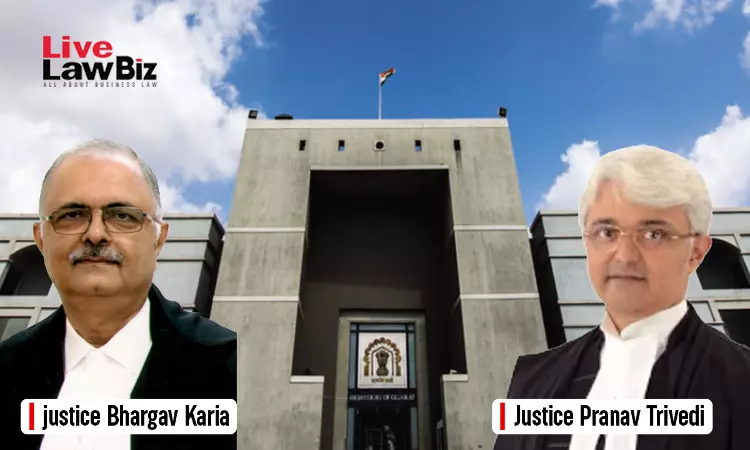
The Gujarat High Court has recently ruled that expenses incurred on business projects cannot be disallowed merely because no income was booked against them for the relevant year.
The court noted that if the Revenue's case was that no income had been booked, it had to determine whether the assessee had failed to account for that income or had not treated a particular receipt as income.
“Merely because no income has been booked against the same, it would not result into disallowance of such expenses,” a division bench comprising Justice Bhargav D. Karia and Justice Pranav Trivedi observed.
The court added that the Revenue had failed to prove that the assessee had booked income against the expenditure or had not treated a particular receipt as income.
The ruling came in a tax appeal filed by the Revenue against the deletion of a ₹6.48 crore disallowance made against Gujarat State Road Development Corporation Ltd. towards project expenses. The court dismissed the appeal after finding no legal infirmity in the tribunal's order.
The assessee was engaged in building infrastructure projects, namely roads. It had declared a total income of ₹2.54 crore for the 2011-12 assessment year.
The assessing officer later determined its income at ₹78.41 crore. This included several additions, among them ₹6.48 crore towards expenses incurred on projects for which no income had been offered.
The Commissioner of Income Tax (Appeals) deleted the additions made by the assessing officer. The Revenue then challenged the relief before the Income Tax Appellate Tribunal, Ahmedabad.
On the project expenses, the tribunal followed its own decision for the preceding assessment year. The disallowance in that year had arisen on the same issue.
The earlier tribunal ruling held that the key requirement for claiming a business expense under Section 37(1) is that it must have been incurred wholly and exclusively for the purposes of the business. It found that the expenses in question related to road and bridge construction, which was the main object for which the assessee company had been incorporated.
It held that there was no basis to disallow the expenses merely because income had not been booked against them. The tribunal observed that if the Revenue's case was that no income had been booked, its entire effort ought to have been to bring the concerned income to tax.
The Gujarat High Court found no infirmity in the tribunal's order. It noted that the expenses related to projects undertaken by the assessee and that it was not in dispute that they had been incurred wholly and exclusively for its business.
The court also considered the Rajkot-Jamnagar project. It noted that the assessee had booked income from the project, and the assessing officer had not controverted this finding. The court therefore held that the basis for disallowing the expenses relating to the project no longer survived.
“The assessee has booked the income for Rajkot-Jamnagr project, which has not been controverted by the Assessing Officer,” the court observed. It further noted that the project work had been carried out for the benefit of the public without assistance from the Government by way of grant.
The railway over-bridge projects were considered separately. The court noted that the assessee had carried out the work for the benefit of the public without Government grants or remuneration. The Revenue had not controverted the assessee's contention on this point.
The court held that the absence of income against an expenditure would not invalidate the expenditure claim. This was because the expenditure had otherwise been incurred wholly and exclusively for the assessee's business.
The court also took note of the tribunal's decision for the preceding assessment year. That decision had attained finality because the Revenue had not challenged it in appeal.
The Revenue approached the High Court under Section 260A of the Income Tax Act, proposing a substantial question of law on whether the tribunal had erred in upholding deletion of the ₹6.48 crore addition.
The court found no legal infirmity in the tribunal's order and therefore dismised the appeal.
For Revenue: Maithili D. Mehta, Senior Standing Counsel