
Summary Processing Cannot Decide Debatable ESI, EPF Claims: Chhattisgarh High Court
Manu Sharma
17 April 2026 4:39 PM IST
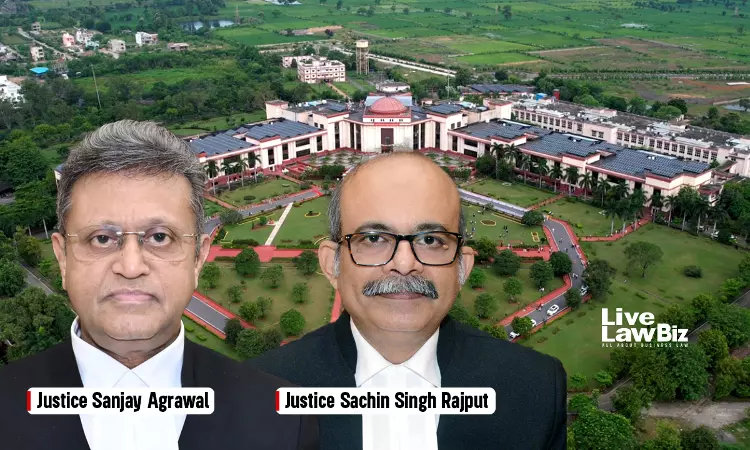
The Chhattisgarh High Court on 16 April held that the Income Tax Department cannot invoke summary processing powers under Section 143(1)(a) of the Income Tax Act, 1961 to disallow claims involving debatable legal issues, including employee contributions towards ESI and EPF, as such adjustments fall outside the limited scope of prima facie scrutiny.
A Division Bench of Justices Sanjay K. Agrawal and Sachin Singh Rajput allowed the appeal filed by Maa Harsiddhi Infra Developers Pvt Ltd against the orders passed by the AO, Commissioner of Income Tax (Appeals), and the Income Tax Appellate Tribunal. It held:
“the Assessing Officer should not have resorted to the provisions contained under Section 143(1)(a) of the Act of 1961… as on the date of issuance of intimation order… the subject issue was highly debatable.”
The dispute arose from Assessment Year 2019-20, where the taxpayer's return was processed under Section 143(1)(a), which permits only limited adjustments such as correction of arithmetic errors or disallowance of clearly inadmissible claims.
The Assessing Officer disallowed Rs. 32.77 lakh claimed as deduction on account of delayed deposit of employees' contributions towards ESI and EPF under Section 36(1)(va), which allows deduction only when such contributions are deposited within the prescribed statutory due dates.
The Developer challenged the disallowance, arguing that at the time of the intimation order dated 27 February 2020, the legal position on the allowability of such delayed deposits remained unsettled, with conflicting High Court rulings and the issue pending before the Supreme Court, which was later settled in Checkmate Services Pvt Ltd (October 2022).
The High Court noted that divergent judicial opinions at the relevant time made the issue “highly debatable” and therefore unsuitable for adjustment under Section 143(1)(a). It also relied on settled Supreme Court principles holding that summary processing cannot be used to adjudicate contentious legal questions.
Distinguishing summary processing under Section 143(1)(a) from scrutiny assessment under Section 143(3), the Court held that only scrutiny proceedings permit detailed examination of disputed claims, and that the Assessing Officer exceeded jurisdiction by making the disallowance at the intimation stage.
Rejecting the Revenue's contention on retrospective application of the Supreme Court's ruling in Checkmate Services, the Bench clarified that the issue concerned jurisdiction under Section 143(1)(a), not the retrospective effect of the final legal position.
Accordingly, the High Court set aside the disallowance and all consequential appellate orders.
For the Appellants: Mr. Vaibhav Tiwari, Advocate
For the Respondents: Mr. Ajay Kumrani, Advocate