
INCOME TAX

Calcutta HC Upholds ₹752 Cr. Relief For Syama Prasad Port, Says Actuarial Contributions Not Limited
The Calcutta High Court on 21 August upheld the deletion of tax disallowances totalling over Rs.752 crore from the assessment of Syama Prasad Mookherjee Port, Kolkata, (formerly Kolkata Port Trust) and dismissed the Revenue's appeal against the Income Tax Appellate Tribunal (ITAT), Kolkata's order. A Division Bench comprising Justices Rajarshi Bharadwaj and Uday Kumar observed that extraordinary contributions to approved superannuation and gratuity funds made to meet actuarial shortfalls cannot...
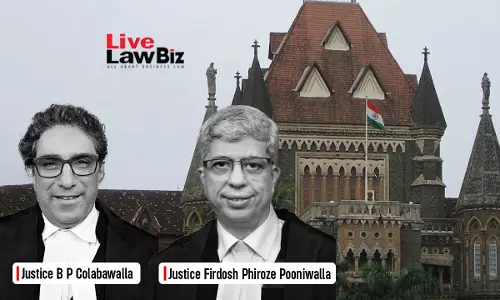
Taxpayer Cannot Be Denied TDS Credit For Deductor's Failure To Deposit Tax: Bombay High Court
The Bombay High Court on 5 August held that TDS credit cannot be denied to a taxpayer merely because the person who deducted the tax failed to deposit it with the Central Government, once actual deduction of tax from the income or payment is established. A Division Bench of Justices B.P. Colabawalla and Firdosh P. Pooniwalla observed that the default of the deductor cannot prejudice the deducted and directed the Income Tax Department to verify claims and grant TDS credit where actual deduction...

AO Can't Reopen Scrutinised Issue On Mere Change Of Opinion Without Tangible Material: Gujarat High Court
The Gujarat High Court on 19 August held that an Assessing Officer (AO) cannot reopen an assessment on an issue already specifically examined during the original scrutiny merely on a change of opinion, unless fresh tangible material shows that income had escaped assessment because of suppression of material facts. A Division Bench of Justices A.S. Supehia and Vaibhavi D. Nanavati allowed a writ petition filed by Loonchand Dhanraj HUF and quashed the reassessment proceedings initiated through a...
Delhi ITAT Allows Foreign AE As Tested Party Under RPM In ₹13.42 Crore Transfer Pricing Case
The Delhi Bench of the Income Tax Appellate Tribunal (ITAT) on 19 August held that a foreign Associated Enterprise (AE) can be selected as the tested party under the Resale Price Method (RPM) for back-to-back merchant trading transactions where it is the least complex entity and reliable comparable data is available. A Bench comprising Judicial Member Satbeer Singh Godara and Accountant Member Manish Agarwal dismissed the Revenue's appeal against the deletion of a Rs. 13.42 crore transfer...

Reassessment Objections Must Be Raised Before Assessing Officer First: Telangana High Court
The Telangana High Court on 11 August declined to interfere with reassessment proceedings against Nitin Enterprises at the preliminary stage, holding that objections concerning the jurisdiction and validity of the reassessment must first be raised before the Assessing Officer and, if necessary, pursued through the statutory appellate remedies. A Division Bench comprising Justices P. Sam Koshy and Narsing Rao Nandikonda held that proceedings initiated through a notice under Section 148A and the...

Telangana High Court Holds Share Premium From Non-Resident Is Capital Receipt, Quashes ₹44.07 Cr Demand
The Telangana High Court on 11 August held that the share premium received by Escientia Advanced Sciences Pvt. Ltd. from a non-resident shareholder on a fresh issue of equity shares is a capital receipt and cannot be treated as taxable income. A Division Bench comprising Justices P. Sam Koshy and Narsing Rao Nandikonda allowed the company's writ petition and quashed a Rs. 44.07 crore tax demand raised for assessment year 2019-20. The judges held: "..the premium received by the petitioner on...

Income Tax Department Can't Retain Tax Collected Twice On Same Income: Telangana High Court
The Telangana High Court has held that the Income Tax Department cannot retain tax collected twice on the same income and that the Commissioner must exercise powers under Section 264 of the Income Tax Act, 1961. The provision enables revision of an assessment to provide relief against over-assessment, even where the mistake is attributable to the taxpayer. A Division Bench comprising Justices P. Sam Koshy and Narsing Rao Nandikonda made the observation while allowing a writ petition filed by...
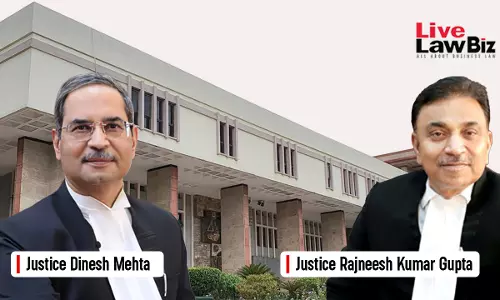
Delhi High Court Sets Aside Income Tax Penalty For Furnishing Inaccurate Income Particulars Over Defective Notice
The Delhi High Court has held that a penalty imposed under Section 271(1)(c) of the Income Tax Act, 1961, cannot be sustained if the notice issued to the assessee fails to specify the particular limb under which the penalty proceedings are proposed.The division bench of Justices Dinesh Mehta and Rajneesh Kumar Gupta rejected the Revenue's appeal against an ITAT order which had set aside the penalty imposed on Vitasta Estates.It noted that Section 271(1)(c) contemplates two distinct grounds for...

Husband Cannot Claim Capital Gains Exemption For Property In Wife's Name: Punjab & Haryana High Court
The Punjab and Haryana High Court on 12 August held that capital gains exemption under Section 54 of the Income Tax Act cannot be claimed where a residential property is sold and the proceeds are reinvested in another residential property purchased solely in the name of the taxpayer's wife. A Division Bench of Justices Deepak Sibal and Rupinderjit Chahal dismissed an appeal filed by Subh Karan Yadav, a retired government employee, against the order of the Income Tax Appellate Tribunal (ITAT)...

Gujarat High Court Quashes Reassessment Against Adani Exports For AY 2010-11
The Gujarat High Court has quashed reassessment proceedings against Adani Exports for AY 2010-11. It found that the Assessing Officer had relied on an unamended partnership deed while reopening the assessment, despite the assessee having specifically informed him that the deed had been amended to remove the obligation to pay interest on partners' capital.A Division Bench comprising Justice A.S. Supehia and Justice Vaibhavi D. Nanavati held that the amended partnership deed expressly provided...

Merely Because No Income Was Booked, Business Expenses Cannot Be Disallowed: Gujarat High Court
The Gujarat High Court has recently ruled that expenses incurred on business projects cannot be disallowed merely because no income was booked against them for the relevant year. The court noted that if the Revenue's case was that no income had been booked, it had to determine whether the assessee had failed to account for that income or had not treated a particular receipt as income.“Merely because no income has been booked against the same, it would not result into disallowance of such...

No Income Tax On RFCTLARR Land Acquisition Compensation: Andhra Pradesh High Court
The Andhra Pradesh High Court on 7 August held that compensation paid for compulsory acquisition of land under the Right to Fair Compensation and Transparency in Land Acquisition, Rehabilitation and Resettlement Act, 2013 (RFCTLARR Act) is exempt from income tax, except in cases covered by Section 46 of the Act. A Single Bench comprising Justice Tarlada Rajasekhar Rao set aside the executing court's orders permitting deduction of tax from compensation awarded to landowners and remanded the...