
'Prejudice From Delay Ignored': Delhi High Court Cuts Insolvency Professional's Suspension To Period Undergone
Shivangi Bhardwaj
6 Feb 2026 10:53 PM IST
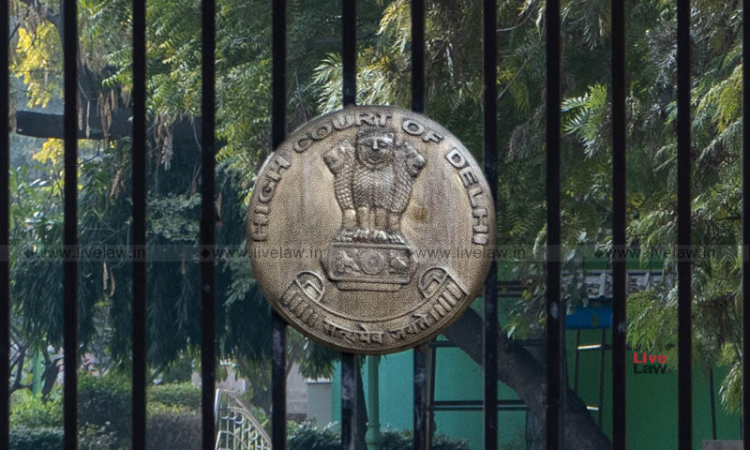
Delhi High Court
Holding that prolonged delay in disciplinary proceedings had already caused serious prejudice, the Delhi High Court has reduced a one-year suspension imposed by the Insolvency and Bankruptcy Board of India (IBBI) on insolvency professional Vikas Prakash Gupta to the period already undergone.
Justice Sachin Datta underscored that “Administrative authorities are required to act within a reasonable period, and any prolonged delay must be justified by cogent reasons.”
While noting that the applicable regulations only require the IBBI's Disciplinary Committee to “endeavor” to conclude proceedings within 60 days, the court held that this could not be read as granting unfettered discretion to act after an inordinate lapse of time.
In the present case, the show cause notice against Gupta was issued on April 5, 2024, but the final order suspending his registration was passed only on April 25, 2025. During this period, Gupta's Authorisation for Assignment (AFA) stood automatically suspended, preventing him from accepting fresh professional assignments.
The court observed that “the cumulative effect of the delay has resulted in the petitioner effectively suffering a bar from professional assignments for a period of almost two years,” even though the Disciplinary Committee ultimately imposed a suspension of only one year.
Significantly, the High Court found that “the Disciplinary Committee, while imposing the penalty of one year's suspension, failed to account for the prejudice already suffered by the petitioner on account of the prolonged pendency of proceedings.”
The disciplinary action arose from allegations that Gupta, who served as resolution professional in the corporate insolvency resolution process of Kamachi Industries Ltd., violated IBBI regulations by receiving consolidated fees instead of ensuring that payments for support services were made directly to the approved support service provider, as resolved by the committee of creditors.
While the Disciplinary Committee held Gupta guilty of violating IBBI circulars and provisions of the Code of Conduct, the High Court noted that there was no finding that he had retained any amount for personal gain or diverted funds for unauthorised purposes.
The court recorded that material placed on record showed that the sums earmarked for support services were paid to the concerned team members and that the issue related to the mode of disbursement rather than misuse of funds. These mitigating circumstances, the court said, were ignored by the Disciplinary Committee.
Emphasising the principle of proportionality, the High Court held that the penalty imposed was excessive in the facts of the case.
While emphasizing that writ courts generally do not step in to re-examine disciplinary decisions, the High Court said intervention becomes necessary when material factors are ignored or when the punishment imposed is disproportionate.
In view of this, the court reduced the one-year suspension to the period already undergone and held that the suspension would stand lifted with effect from the date of the judgment.
For Petitioner: Advocates Satyajit Sarna, Sudev Juneja, Mohit Negi, and Debarchan De
For Respondents: Advocates Amrita Singh, Prasang Sharma, and Sanket Khandelwal for IBBI; CGSC Rakesh Kumar with Advocate Sunil for UOI.