
SARFAESI Enforcement Cannot Be Invoked After Debt Is Extinguished Under IBC: Orissa High Court
Kirit Singhania
20 April 2026 5:51 PM IST
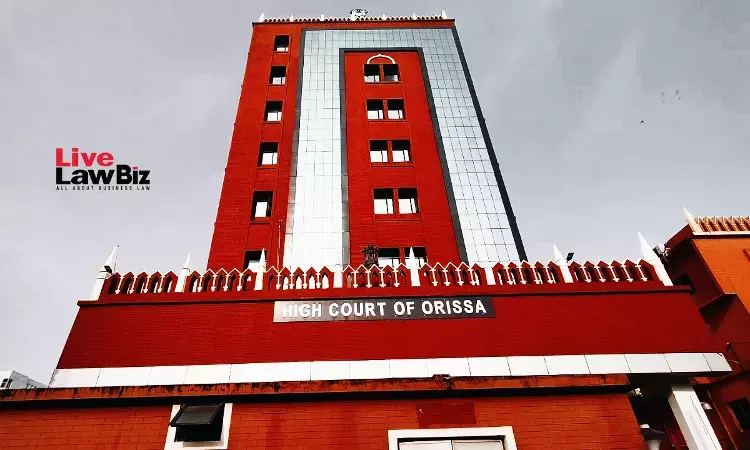
The Orissa High Court has held that Section 31 of the SARFAESI Act cannot operate as an independent source of enforcement power once a resolution plan under the Insolvency and Bankruptcy Code extinguishes the underlying debt.
Section 31 excludes certain secured assets and transactions from the Act's enforcement mechanism, meaning SARFAESI recovery powers do not apply to them.
A Single Judge Bench of Justice Sanjeeb K. Panigrahi allowed a writ petition by Sree Metaliks Limited, Keonjhar against the State Bank of India (SBI), holding that the bank could not appropriate the deposit after the debt stood satisfied. It held:
“Section 31 of the SARFAESI Act cannot be construed as a reservoir of enforcement power detached from the existence of a subsisting and legally recoverable debt. The scheme of the Act predicates enforcement of security interest upon the continued existence of a financial liability. Once the debt has been assigned and thereafter resolved and satisfied in accordance with an approved Resolution Plan under the Insolvency and Bankruptcy Code, 2016, the very foundation for invocation of ancillary or derivative rights ceases to exist.”
The dispute arose from assignment agreements dated 27 June 2014 and 27 February 2015, under which State Bank of India transferred the loan account of Sree Metalik Ltd to Edelweiss Asset Reconstruction Company.
Authorities initiated the Corporate Insolvency Resolution Process (CIRP) on 30 January 2017 before the NCLT, Kolkata Bench. The NCLT approved the resolution plan on 7 November 2017, and the NCLAT upheld it on 13 December 2018.
The bank appropriated the petitioner's fixed deposit upon its maturity in July 2021. The assignee creditor later received full payment under the resolution framework and issued a “No Dues Certificate” on 22 April 2025.
The Court held that SBI lacked legal authority to retain or appropriate the fixed deposit after extinguishment of the debt and ruled that the action amounted to unlawful deprivation of property under Article 300A of the Constitution. It stated:
“The continuation of lien in absence of a subsisting enforceable debt is alleged to be without authority of law and violative of Article 300-A of the Constitution. Where the action impugned is demonstrably without legal foundation and results in unlawful deprivation of property, relegating the Petitioner to an alternative forum would amount to perpetuating further illegality. In such circumstances, the alternative remedy cannot be regarded as efficacious so as to oust or restrict the constitutional jurisdiction of this Court under Article 226.”
Accordingly, the High Court allowed the writ petition and directed SBI to release the fixed deposit along with accrued interest to the petitioner within eight weeks.
For Petitioners: Senior Advocate Sidharth Ray with Advocates Kshirod Kumar Sahoo
For Opposite Party: Advocates Dilip Kumar Mohapatra, Shibani Shankar Pradhan