
Suit Filed During IBC Interim Moratorium Attracts Rejection Of Plaint Provision Under CPC: Calcutta High Court
Kirit Singhania
10 July 2026 9:32 AM IST
The Calcutta High Court has held that a court cannot entertain a suit instituted during the operation of an interim moratorium under the Insolvency and Bankruptcy Code where the statutory bar applies.
It ruled that once the embargo is brought to the court's notice, the court must act in accordance with the law. Where the statutory conditions are met, the plaint must be rejected.
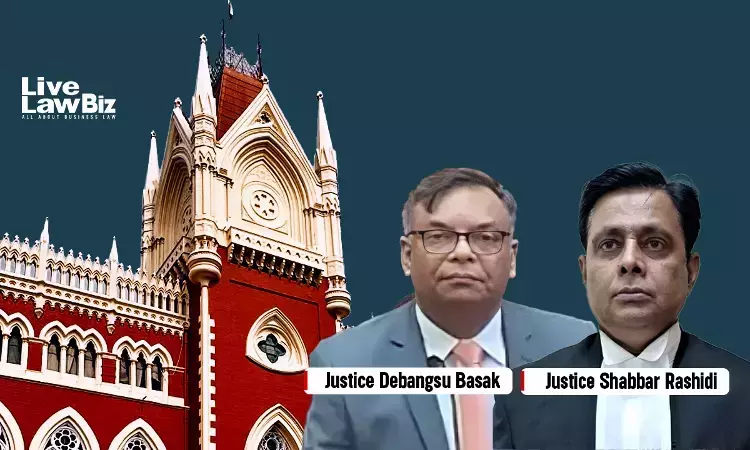
A division bench of Justice Debangsu Basak and Justice Md. Shabbar Rashidi set aside a February 5, 2026 judgment of a Single Judge. The Single Judge had rejected an application by Ambootia Tea Exports Pvt. Ltd. (corporate debtor) and its directors seeking rejection of the plaint. It had instead decreed Sri Rani Sati Abasan Pvt. Ltd.'s (the lender) money recovery suit on admission.
The court observed, "Once the embargo is drawn to the attention of the Court, such Court has to take notice of the same and deal with the suit in accordance with the provisions of Section 96 of the Insolvency and Bankruptcy Code, 2016. In other words, if the suit is required to be stayed an order of stay should be passed. If Section 96(1)(b)(ii) of the Insolvency and Bankruptcy Code, 2016 gets attracted then the suit is required to be dealt with under Order VII Rule 11 (d) of the Code of Civil Procedure, 1908 and be dismissed."
Sri Rani Sati Abasan Pvt Ltd filed the money recovery suit on December 12, 2022 against Ambootia Tea Exports Pvt Ltd and two of its directors. The company and its directors argued that insolvency proceedings against the two directors had been revived by the National Company Law Appellate Tribunal on May 27, 2022.
The appellate tribunal had set aside the National Company Law Tribunal's earlier order dismissing those proceedings. They argued that the interim moratorium was therefore in force when the suit was instituted. As a result, the suit could not have been filed.
Sri Rani Sati Abasan argued that the interim moratorium did not extend to the corporate borrower. It submitted that the suit could, at the very least, continue against the company.
On the amendment introduced in 2026, the court held that it could not govern the dispute because it came into force after the suit had already been filed.
The court held,"Section 96(4) of the Insolvency and Bankruptcy Code, 2016 came into effect on and from May 26, 2026. Since, such provisions have come into force subsequent to the filing of the suit, we are not in a position to adjudicate upon the rival contention on the application of Section 96(4) of the Insolvency and Bankruptcy Code, 2016 to the factual matrix of the present case."
The court found that the interim moratorium was operating when the suit was instituted. It held that Sri Rani Sati Abasan could not have filed the suit. The court also could not have validly received it because of the statutory embargo.
The bench was not persuaded by the argument that the suit should survive against the company alone. It held that the plaint could not be split between different defendants merely because the statutory bar applied to some of them.
The court observed, "The plea that, the plaint should be dissected between the defendant no. 1 and the other defendants cannot be accepted since, when the suit was filed, it was one plaint. It is not a case of the plaint not disclosing a cause of action against some of the defendants. No knowledge of the pendency of proceeding under the Insolvency and Bankruptcy Code, 2016 so far as the respondent is concerned, is of no consequence since, the embargo is one of statute."
Setting aside the impugned judgment and decree, the court held that the suit could not have been instituted while the statutory embargo remained in force. It further held that the court could not have validly received the suit during that period.
For Appellant: Sakya Sen, Sr. Adv, Abhirup Chatterjee, Rishov Das, Advocates
For Respondent: Tilak Kr. Bose, Aniruddha Mitra, Sr. Advocates, Deepnath Roychowdhuri, Debraj Sahu, Bhaskar Dewadi, Jyoti Routh, Ankita Baid, Tamoghna Saha, Advocates