
Personal Insolvency Moratorium Does Not Stay Cheque-Bounce Proceedings Against Directors: Bombay High Court
Shilpa Soman
19 Aug 2026 7:09 PM IST
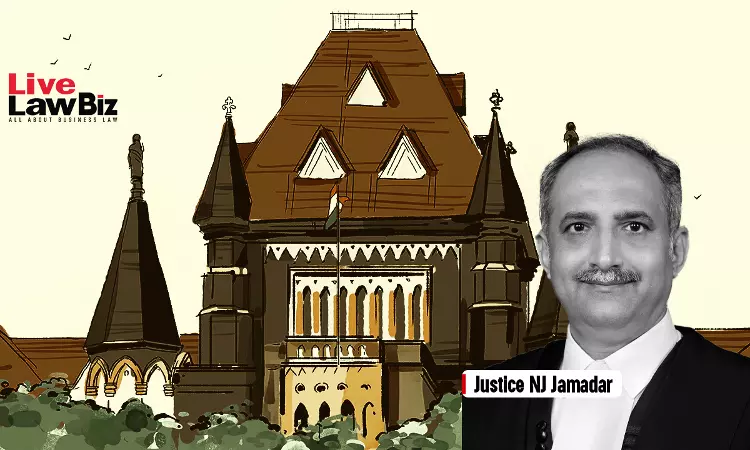
The Bombay High Court has held that personal insolvency proceedings initiated by a company director do not require cheque-bounce proceedings against the director to be stayed where the dishonoured cheque was issued towards the company's debt.
Justice N. J. Jamadar observed, “To put it in other words, the debt referred to in Section 96 must be a debt of the person by or against whom the insolvency resolution process is initiated under Sections 94 or 95, as the case may be.”
The ruling concerned whether the interim moratorium under Section 96 of the Insolvency and Bankruptcy Code, 2016 could stay proceedings under Sections 138 and 141 of the Negotiable Instruments Act, 1881, against directors and other persons responsible for a company's affairs.
Section 138 deals with cheque dishonour, while Section 141 extends liability to persons in charge of and responsible for the conduct of a company's business. Section 96 provides an interim moratorium on pending legal proceedings in respect of the debts of a person undergoing personal insolvency proceedings.
In the representative case, National Spot Exchange Limited had filed a cheque-bounce complaint against Mohan India Private Limited and its directors, including Jagmohan Garg.
Under a Settlement Award, ₹771 crore became payable by Mohan India in 13 instalments. After the company defaulted on the instalments, it issued a ₹30 crore cheque towards the liability. The cheque was returned unpaid with the remarks “funds insufficient” and “account freezed”.
Garg later filed an application under Section 94 of the IBC before the National Company Law Tribunal, Delhi for initiation of his insolvency resolution process and sought a stay of the complaint under Section 96.
He argued that the cheque had been issued towards discharge of the debt and that the moratorium covered the prosecution. NSEL opposed the plea, arguing that the debt belonged to Mohan India and was not Garg's personal debt.
It submitted that Garg was being prosecuted as a natural person under Section 141 because of his role as a director and person responsible for the company's affairs.
The Magistrate rejected the request for a stay, holding that the “debt” covered by Section 96 did not govern Garg's liability under Section 141. Garg then approached the High Court.
The court agreed that the company's debt remained its own and did not become the personal debt of its directors merely because they could be prosecuted under Section 141.
The court relied on the Supreme Court's decisions in Ajay Kumar Radheyshyam Goenka v. Tourism Finance Corporation of India and Rakesh Bhanot v. Gurdas Agro Pvt Ltd, which recognised that insolvency proceedings do not by themselves bring cheque-bounce proceedings against responsible directors to an end.
The court also considered Dineshchand Surana v. UCO Bank, where questions concerning the application of the personal insolvency moratorium to the compensatory aspect of Section 138 proceedings were referred to a larger Bench.
The court held that the reference did not require the cheque-bounce trial to be stayed. The court noted that the criminal proceedings could continue, although the moratorium could apply to recovery of compensation ordered against an individual director.
“Therefore, the principal submission on behalf of the Applicants / Petitioners that the trial itself is required to be stayed during the currency of the interim moratorium under Section 96 of IBC does not find support, even from the decision in the case of Dineshchand Surana (supra)”, the court ruled.
The court also rejected the argument that the pending larger bench reference required the proceedings to remain on hold, observing that the earlier Supreme Court rulings continued to hold the field unless modified or altered.
The petitions and applications were dismissed, the rule was discharged, and the interim orders were vacated. The court also rejected a request to continue the stay, noting that the complaints had been pending for almost 10 years.
For Applicants: Senior Advocate Sudeep Pasbola; Advocates Abhiraj Rao, Vinay J Bhanushali, Sanmit Vaze, Diksha Sharma, Aakanksha Nehra, Anuj Jhaveri, Mihir Modi, Rishi Bhuta, Vaishnavi Javheri, Pratham Jain, Parth Govilkar, Prateek Dutta, Maitrayee Ganediwala, Ankita Bamboli, Saakshi Jha, Karishma Rajesh, Kashish Singhi, Khushboo shah, Faizan shaikh, Neha Patil, Ashish Dubey, Sujata, Steve Fernandes and Dilip Shukla
For Respondents: Advocates Arvind Lakhawat, Nimeet Sharma, Vinit Vaidya, Jalpa Shah, Himani Narula and D J Haldankar, APP