
GST Department Cannot Bypass ₹2-Crore Appeal Limit Citing Cascading Effects: Delhi High Court
Kapil Dhyani
27 Oct 2026 5:22 PM IST
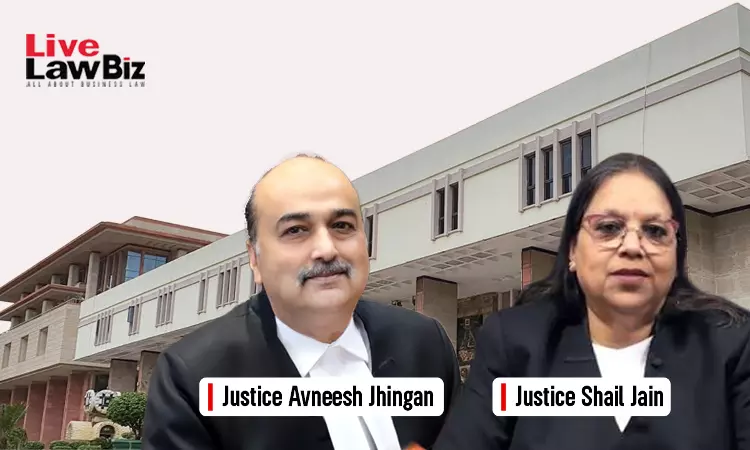
The Delhi High Court has dismissed a batch of appeals filed by the GST Department against travel companies, holding that the department cannot bypass the prescribed monetary limit for filing appeals merely by citing the cascading effect of the issues involved.
The division bench of Justices Avneesh Jhingan and Shail Jain held that appeals involving amounts below ₹2 crore are not maintainable before the High Court unless they fall within the specific exceptions prescribed under the Central Board of Indirect Taxes and Customs (CBIC) instructions.
The Court clarified that the exceptions permit appeals below the prescribed monetary limit where the constitutional validity of a provision of an Act or Rule is challenged or where a notification, instruction, order or circular has been held illegal or ultra vires.
"The reference in clause 4 of the instructions dated 22.08.2019 is in fact to paragraph 3 of the instructions dated 17.08.2011 which provides only two exceptions as discussed above and no exception for cascading effects or bunch matters is there"
The appeals were filed against a CESTAT order setting aside service tax demands raised against travel companies for services rendered as air travel agents.
Department contended that the monetary limit should not apply because the issues involved had a cascading effect. It relied on Supreme Court and High Court decisions to argue that matters involving recurring issues or common questions of law could be entertained irrespective of the amount involved.
Rejecting the submission, the High Court observed that the applicable instructions did not recognise cascading effects or the involvement of similar issues in multiple cases as exceptions to the monetary limits.
The Court also disagreed with the view taken by the Gauhati High Court in Central Goods and Service Tax v. M/s Pan Parag India Limited, which had been relied upon by the department. It noted that the relevant instructions provided only the specified exceptions and did not create an additional exception for cascading effects or bunch matters.
It further observed that the department's reliance on the Supreme Court's decision in Commissioner of Income Tax v. Surya Herbal Limited was misplaced. The Supreme Court had not decided that the monetary-limit circular would cease to apply in cases involving cascading effects; it had merely granted liberty to the Income Tax Department to approach the High Court to raise that issue.
Finally observing that the departmental authorities were regularly filing appeals despite binding instructions intended to reduce litigation, the Court suggested that the department take up the matter with the Board or the Secretary to ensure uniform implementation of the instructions.
As such, it dismissed the appeals as not maintainable.
For Appellant: Advocates Aditya Singla, SSC with Arya Suresh Nair
For Respondent: Advocates Yogendra Aldak, Kunal Kapoor & Yatharth Tripathi