
Madras High Court Holds Cut Tobacco Processed With Jaggery Water Is Unmanufactured Tobacco
Manu Sharma
24 April 2026 8:05 PM IST
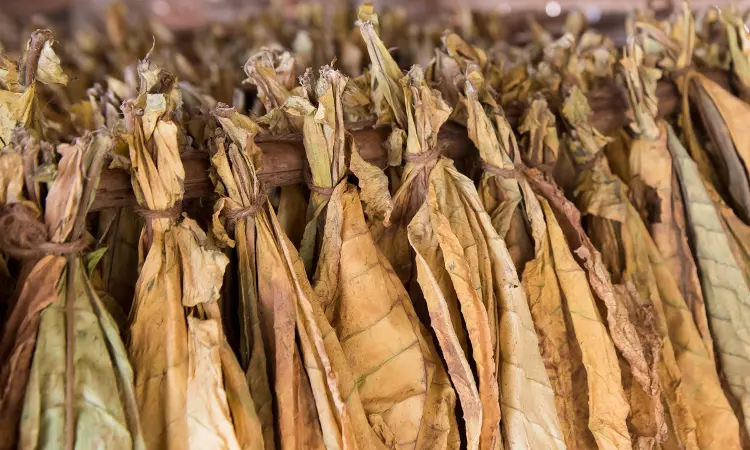
The Madras High Court has recently held that cut tobacco processed by curing with jaggery water and sold in cut form would be classifiable as unmanufactured tobacco, setting aside advance rulings that had described it as manufactured chewing tobacco and subjected it to a higher compensation cess under GST.
The court set aside the rulings of the Authority for Advance Ruling and the Appellate Authority for Advance Ruling, as well as a single judge's order that had upheld the description of the product as manufactured chewing tobacco.
A division bench of Justices G.R. Swaminathan and K. Rajasekar allowed an appeal filed by Arumugam, proprietor of Kavi Cut Tobacco.
“If the impugned decisions of the Authorities are allowed to stand, that would result in an invidious situation. Persons similarly placed would be paying compensation cess at different rates for similar products,” the court observed, calling it “an egregious breach of the equality principle.”
The appellant purchases raw dried tobacco leaves from wholesalers, removes stems and dust particles, cures the leaves using jaggery water to prevent decay, a process referred to as "liquoring," and then cuts and packs the leaves for sale under the brand name “Kulavi's Kavi cut tobacco.”
The appellant had contended that the product should be classified under “CETH 2401 20 90”, while the department described it under “CETH 2403 99 10” as manufactured chewing tobacco. The advance ruling authority and the appellate authority had accepted the department's stand, which was also upheld by a single judge.
The High Court noted that a similar issue had arisen in an earlier writ appeal involving a manufacturer adopting the same process.
“In the other writ appeal, we have held that the goods dealt with by the appellant would fall under 'CETH 2401 20 90' provided they continue to confine their activity to what was approved in Pachiappa Chettiar v. State of Madras,” the bench said.
The court held that allowing the impugned rulings to stand would result in similarly placed persons paying different rates of compensation cess for similar products.
The bench also reiterated that while advance rulings under GST are binding on the applicant and jurisdictional authorities, they can be challenged before the High Court.
However, the scope of judicial review in such cases is limited, and the court would primarily examine the decision-making process rather than reappreciate the merits.
The division bench accordingly set aside the orders passed by the advance ruling authorities and the single judge and allowed the writ appeal.
For Appellant: Senior Counsel V. Raghavachari for Joseph Prabakar
For Respondents: R. Nandakumar, Central Government Standing Counsel