
Taxpayer Must Be Heard Even If They Opt Out Of Personal Hearing Under GST Law: Gujarat High Court
Arvind Tiwari
28 April 2026 5:53 PM IST
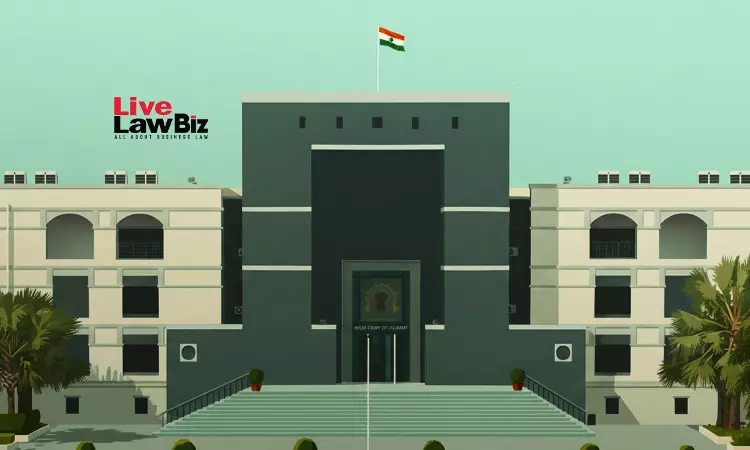
The Gujarat High Court recently quashed a GST demand against a registered taxpayer, holding that authorities must grant a personal hearing before passing an adverse order and cannot bypass this requirement even if the taxpayer opts out in a form.
A division bench of Justice A.S. Supehia and Justice Pranav Trivedi held that the statutory mandate governing adjudication has to be strictly followed.
The court said, “the option of no personal hearing taken by the petitioner, cannot override the effect of mandate given by the statutory provision in Section 75(4) of the GST Act.”
It further observed, “It was incumbent upon the authority to follow the mandate of Section 75(4) of the GST Act and grant opportunity of further hearing.”
The case arose after the petitioner, Komal Jayeshbhai Hemavat, a registered taxpayer under the Gujarat Goods and Services Tax Act, 2017, was subjected to a raid and seizure of her books of accounts. A show cause notice dated September 21, 2023 was issued to her, and she filed her reply on November 21, 2023 in the prescribed form.
While filing the reply, she selected “No” in the column relating to personal hearing. The tax authority thereafter passed an order dated December 30, 2023 under the provision dealing with cases of alleged tax short payment or wrongful input tax credit, without granting any personal hearing.
The State argued that since the petitioner had opted out of a personal hearing in her reply form, no further opportunity was required and the authority was justified in proceeding to decide the matter.
However, the government pleader fairly conceded before the Court that the law contemplates three opportunities of hearing before passing an adverse order and that none had been granted in the present case.
Rejecting this stand, the court held that the requirement of granting a hearing is mandatory and cannot be dispensed with on the basis of a selection made in a form.
It found that the order in challenge had been passed without a fair hearing, rendering it unsustainable in law.
The court relied on its earlier decision in Yadav Trailor Transport Co. v. Union of India, where it had held that passing an order without affording adequate opportunity of hearing is a clear breach of the principles of natural justice.
Reiterating the fundamental importance of right to be heard, the court observed,
“It is fundamental proposition of law that other side should be heard before any order is passed. The maxim of Audi Alteram Partem is broad enough to include the rule against bias since a fair hearing is must for it to be unbiased hearing. The essential ingredients of fair hearing is that a person should be served with a proper notice and should be given a right to hearing."
It accordingly set aside the order dated December 30, 2023 and remanded the matter to the adjudicating authority for fresh adjudication.It directed that a fresh order be passed within 12 weeks after affording the petitioner an adequate opportunity of hearing.
For Petitioner: Advocates Punit B Juneja
For Respondents: Advocates Tanushree Shrimal (for Respondent No.1) and Hetvi S Sancheti (for Respondent No. 2)