
Supplier's GST Default Cannot Automatically Trigger ITC Reversal: Punjab & Haryana High Court
Rajnandini Dutta
2 Oct 2026 3:43 PM IST
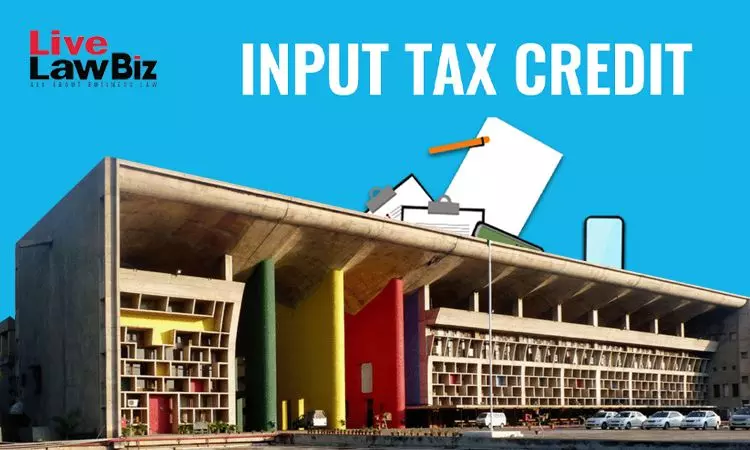
On 1 October, the Punjab and Haryana High Court held that Input Tax Credit (ITC) cannot be mechanically reversed merely because a supplier failed to deposit GST with the Government or because the supplier's registration was subsequently cancelled, including retrospectively.
A Division Bench of Chief Justice Ashwani Kumar Mishra and Justice Rohit Kapoor upheld the validity of Section 16(2)(c) of the CGST Act, which makes actual payment of tax to the Government a condition for claiming ITC. However, it clarified that the provision cannot be applied in isolation. The judges observed:
“The mere fact that the selling dealer has subsequently failed to deposit the tax with the Government cannot, by itself and without examination of the surrounding circumstances, result in mechanical reversal of the ITC.”
The petitions arose from cases where purchasers paid GST to suppliers, claimed ITC on the transactions and later faced reversal because the suppliers had not deposited the tax with the Government. In some cases, the suppliers' registrations were also cancelled retrospectively. The purchasers argued that they had no practical means of ensuring that suppliers subsequently deposited the tax collected from them.
The Revenue, however, argued that ITC is a statutory benefit and not an absolute or vested right, and that Section 16 makes actual payment of tax to the Government a condition for claiming credit. It relied on Maruti Enterprises v. Union of India, where the Gujarat High Court upheld Section 16(2)(c), a ruling subsequently affirmed by the Supreme Court in Bhandari Scrap Traders v. Union of India.
The Court noted that authorities had invoked Section 16(2)(c) in a “routine and mechanical manner” merely because a selling dealer's registration had been cancelled. It said officers must examine invoices, proof of actual movement of goods or services and other supporting material. It also noted that the GST framework did not fully implement the originally contemplated automated matching of purchaser and supplier returns.
It said, “buyers cannot be held endlessly liable to trace out the whereabouts of suppliers from whom purchases were made years ago.” It declined to strike down or read down Section 16(2)(c), observing that “upholding the validity of the provision, however, does not conclude the matter.”
Further, the Bench held that Section 16(2)(c) cannot by itself justify automatic ITC reversal whenever a supplier defaults. The proper officer must examine the genuineness of the transaction, the nature and reason for the supplier's default, the evidence produced by the purchaser and the proceedings against the supplier. The purchaser continues to bear the burden under Section 155 and may establish the transaction through invoices, e-way bills, transport receipts, weighbridge slips, stock and consumption records and other evidence.
It also observed that retrospective cancellation of a supplier's registration, nil or short payment of tax, or a departmental alert may trigger an inquiry but cannot, by themselves, justify reversal. Officers must examine the reason and effective date of cancellation and its impact on the particular transaction. They must also consider whether tax relating to the same supply has already been deposited or recovered to prevent the same tax from being realised twice.
On allegations of fraud, wilful misstatement or suppression under Section 74, the Court referred to the Supreme Court's decisions in G.R. Infra Projects Limited Ratlam v. State of Madhya Pradesh and Tata Steel Limited v. Union of India. It held that the foundational facts constituting fraud must appear in the show-cause notice. It observed:
“The fraud of the selling dealer does not, by itself, become the fraud of the purchasing dealer, unless the notice discloses the facts connecting the purchasing dealer with such fraud.”
The judges also held that authorities cannot cancel a purchasing dealer's GST registration, “much less with retrospective effect”, merely because it claimed ITC from a supplier whose registration was subsequently cancelled. Such cancellation requires an independent ground under Section 29(2). They directed proper officers to reconsider the individual cases. Petitioners at the show-cause notice stage may file replies or supplementary replies within eight weeks, while cases in which adjudication orders have already been passed must be reconsidered after a personal hearing and followed by fresh reasoned orders.
The Bench also also directed the authorities to halt fresh coercive recovery until they make fresh decisions. They must adjust or refund amounts already recovered or ITC already reversed, with admissible interest, as warranted by those decisions. It stated that the Department may continue proceedings against defaulting suppliers in accordance with law.
Accordingly, the High Court disposed of the petitions.
Appearances: Senior Advocate Sandeep Goyal appeared and advanced submissions for the petitioners; Advocate Puneet Agrawal and Advocate Urvashi Dhugga also advanced submissions for the petitioners. Senior Standing Counsel Sourabh Goel advanced submissions for the Revenue.