
Madras High Court Holds Later Clarifications Cannot Take Away 7% Drawback On Bus Bodies, Quashes Denial
Mehak Dhiman
4 Aug 2026 4:28 PM IST
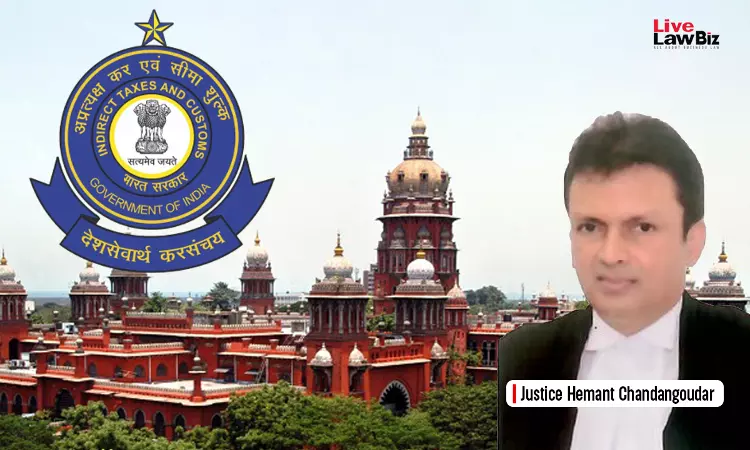
The Madras High Court on 30 July held that Customs authorities cannot deny exporters the benefit of a beneficial drawback circular through later clarifications unless the original circular granting the concession has been withdrawn, quashing orders rejecting 7% brand rate drawback claims on the bus body portion of exported passenger buses.
Justice Hemant Chandangoudar allowed the petitions filed by Ashok Leyland Limited and set aside the revisional orders dated 8 March 2022 and the CBEC communications denying the drawback benefit, holding that the authorities could not impose fresh conditions through subsequent clarifications that diluted the benefit granted under the earlier circular. He held:
“The second respondent-Board possesses the power to issue binding instructions for uniform implementation of the fiscal statutes. However, a clarificatory communication cannot impose substantive conditions which are inconsistent with an existing beneficial circular. Where two circulars operate simultaneously, they must be harmoniously construed so as to give effect to both, unless one has been expressly withdrawn.”
The case concerned exports of fully built passenger buses by Ashok Leyland Limited, where the company manufactured the chassis while independent small-scale industrial units fabricated the bus bodies.
In 1988, the Government issued a circular on 5 December permitting exporters to claim 7% brand rate drawback on the cost of bus bodies without producing detailed duty-paid documents. The circular recognised the difficulty faced by exporters in obtaining such records from independent body builders. The benefit was later reaffirmed through another circular dated 18 September 2003.
The dispute arose after CBEC issued communications stating that exporters claiming benefits under the Duty Entitlement Pass Book (DEPB) Scheme could not simultaneously claim the simplified 7% drawback. Based on these communications, the department rejected drawback claims, withdrew earlier approvals and initiated recovery proceedings.
The Court held that the department's action was unsustainable as the 1988 circular remained in force and had never been withdrawn. It ruled that subsequent clarifications could not introduce conditions that effectively took away the benefit available under the earlier circular.
It also rejected the department's allegation that exporters had received a “double benefit”, observing that the authorities failed to produce material showing that the DEPB benefit and the 7% brand rate drawback reimbursed the same duty incidence. It held that assumptions without examining the actual duty involved could not justify denial of drawback.
Further, the Bench held that the authorities could not insist on production of duty-paid documents since the purpose of the 1988 circular was to dispense with that requirement due to practical difficulties faced by exporters. It stated:
“Since the respondents have failed to establish that the DEPB benefit and the brand rate drawback relate to the same duty incidence, the very foundation of the impugned proceedings disappears. Once the allegation of duplication fails, the respondents could not deny the benefit available under the Circular dated 05.12.1988, particularly when the said Circular continued to remain in force and stood reaffirmed by the Circular dated 18.09.2003.”
On recovery proceedings, the Court held that authorities were empowered under the Drawback Rules to recover drawback amounts wrongly granted. However, it clarified that such proceedings must be initiated within a reasonable time and that the limitation period under Section 28 of the Customs Act (which prescribes the time limit for recovery of customs duty) would not apply.
Accordingly, the High Court quashed the revisional orders dated 8 March 2022 and the CBEC communications denying the drawback benefit. However, it clarified that the relief would apply only to exports made during the period when the 1988 circular, as reaffirmed in 2003, remained operative before the impugned communications and demand notices were issued.
For Petitioner: Mr. N.Murali, Advocate
For Respondent: Mr. K.S.Ramaswamy, Standing Counsel