
GST | Provisional Freezing Of Bank Accounts Cannot Be Justified Solely Through Affidavit-In-Reply: Bombay High Court
Rajnandini Dutta
19 Oct 2026 10:04 AM IST
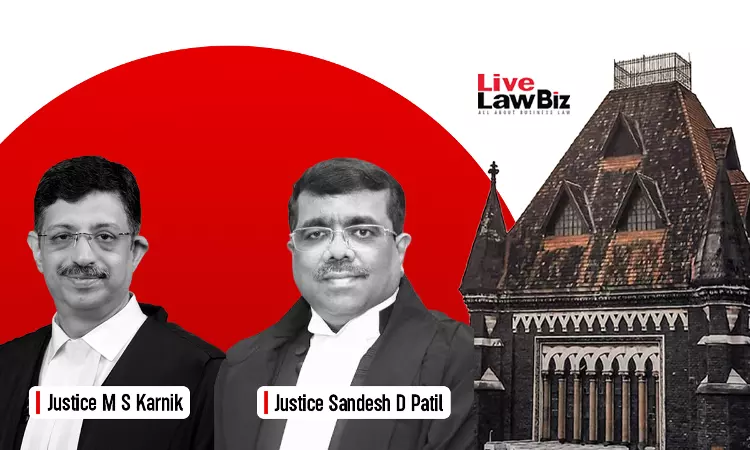
The Bombay High Court has observed that GST authorities cannot justify provisional attachment of bank accounts through affidavits-in-reply when the attachment orders themselves do not record the required opinion or establish any GST liability of the company.
“Further, the orders of provisional attachment cannot be justified through affidavits-in-reply. Neither the impugned orders nor the affidavit-in-reply contain any 'opinion'. The same is indicative of only official inquiry. There is no material on record to show that there is any GST liability on the petitioner,” the court observed.
A Division Bench of Justice M.S. Karnik and Justice Sandesh D. Patil was hearing a petition filed by 1Pay Mobileware Private Limited, an RBI-authorised payment aggregator, challenging the provisional attachment of its bank accounts by the Directorate General of GST Intelligence (DGGI).
The attachment was ordered during an investigation into alleged GST evasion linked to an organised online money gaming syndicate.
The authorities suspected that fictitious merchant entities were using 1Pay's platform to route and layer funds generated through online gaming activities without paying the applicable GST.
1Pay argued that it provided payment aggregation services to merchants and customers, much like other digital payment platforms. It pointed out that government organisations, including IRCTC, the Institute of Chartered Accountants of India (ICAI), MHADA and the University of Mumbai, used its services.
The company submitted that the attachment had disrupted payments to these organisations. It also argued that the action had severely affected its business.
The GST authorities alleged that 1Pay had failed to cooperate with the investigation and furnish relevant transaction records. They claimed that around 88 merchants using its platform were non-existent or non-functional and were allegedly involved in online money gaming.
The authorities also submitted that the preliminary investigation indicated GST evasion exceeding ₹1,000 crore.
The court found that the attachment orders failed to identify any specific GST liability against 1Pay or explain its alleged role in the tax evasion. They also contained no material to show that the company was a taxable person covered by Section 122(1A) of the Central Goods and Services Tax Act, 2017.
The orders did not specify the transactions involved, explain how GST was evaded, or disclose the identities and transaction details of the 88 merchants under investigation.
The court also held that money in 1Pay's escrow account, collected from customers and meant for merchants and other beneficiaries, was held in trust and could not be attached under Section 83 of the CGST Act.
Relying on the Supreme Court's ruling in Radha Krishan Industries v. State of Himachal Pradesh, the Bench reiterated that provisional attachment requires tangible material. It ruled that the authorities could not fill gaps in their orders through affidavits-in-reply.
The Bench quashed the attachment orders and subsequent orders continuing the attachment.
For Petitioner: Senior Advocate Darius Shroff, along with Advocates Ishaan V. Patkar, Sujit Lahoti, Parth P. Shah, Kedar Nayak and Diya Chordia,
For Respondent: Advocates Jitendra B. Mishra, Sangeeta Yadav, Umesh Gupta and Ashutosh Mishra appeared for the respondents.