
GST | Proceedings Under Sections 73, 74 Can Co-Exist If They Concern Distinct Infractions: Delhi High Court
Kapil Dhyani
18 Sept 2026 8:02 PM IST
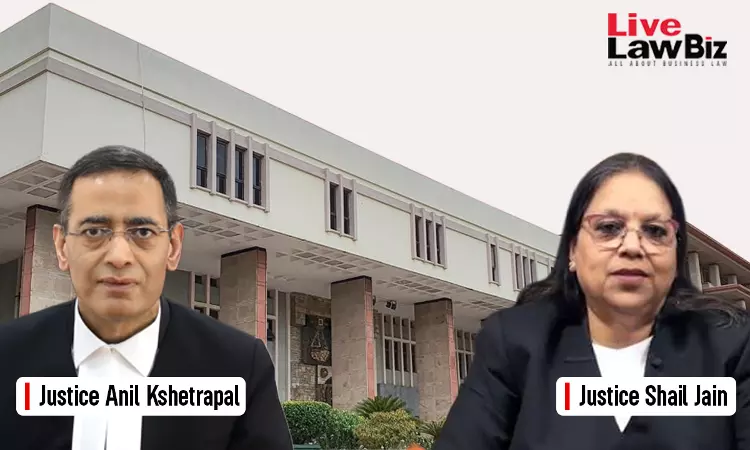
The Delhi High Court has held that proceedings under Sections 73 and 74 of the Central Goods and Services Tax Act, 2017 (CGST Act) can co-exist where they concern distinct liabilities or contraventions.
The Division Bench of Justices Anil Kshetarpal and Shail Jain made the observation while dismissing a plea filed challenging proceedings initiated by the Central GST authorities under Section 74 of the CGST Act in relation to alleged inadmissible Input Tax Credit (ITC) availed by Petitioner.
Petitioner had contended that the Central GST proceedings were barred by Section 6(2)(b) of the CGST Act, since the State GST authorities had previously initiated proceedings under Section 73 concerning ITC claimed from the same supplier.
The Court, however, held that the bar under Section 6(2)(b) would operate only where the subsequent proceedings concern the same liability or contravention.
It noted that the State GST proceedings had been initiated under Section 73 for the financial year 2017-18 and included a demand concerning ITC claimed from M.R. Enterprises.
The subsequent Central GST proceedings under Section 74 on the other hand were founded upon investigation and intelligence regarding alleged fraudulent availment of ITC through invoices which were allegedly not accompanied by actual supply of goods.
“Same subject matter” under Section 6(2)(b) has to be understood with reference to the particular liability, deficiency or contravention sought to be adjudicated, the Court said.
It added that distinct infractions would not become the same subject matter merely because they relate to the same assessee, the same period or involve a similar tax liability.
The Court observed that while there was a factual nexus between the two sets of proceedings, the nature of the allegation forming the basis of the subsequent proceedings was materially different.
Petitioner had also argued that both sets of proceedings concerned the same financial year and the same ITC amount of ₹6.12 lakh.
Rejecting the argument, the Court held that these circumstances could not by themselves establish the identity of the subject matter.
“For the statutory bar under Section 6(2)(b) to operate, it is necessary to establish identity of the liability or contravention which forms the subject matter of the two proceedings,” the Court observed.
It further held that the mere change in the statutory provision invoked cannot be used to circumvent Section 6(2)(b). At the same time, the applicability of the provision cannot be determined merely by comparing the statutory provisions under which the proceedings were initiated; the underlying liability and contravention have to be examined.
In the present case the court found that Petitioner had not placed sufficient material to establish that the alleged contravention concerning bogus transactions and fraudulent availment of ITC without actual supply of goods had already been adjudicated upon by the State GST authority.
As such, the Court dismissed the petition with liberty to Petitioner to avail the statutory remedy.
For Petitioner: Advocate Rakesh Kumar
For Respondents: Advocates Monica Benjamin, SSC with Laiba Arif, Prerika Narang,