
GST | Disputed SCN Service, Personal Hearing Issues Cannot Be Raised In Writ Plea: Delhi High Court
Kapil Dhyani
18 Sept 2026 8:23 PM IST
The Delhi High Court has declined to exercise its writ jurisdiction over pleas by two directors of Sterne India Pvt. Ltd. challenging a ₹27.11 crore GST penalty.
The court held that their claims over service of the show cause notice (SCN) and denial of personal hearing involved factual issues that could be examined by the statutory appellate authority.
According to the court, these grievances did not justify bypassing the remedy of appeal available under Section 107 of the Central Goods and Services Tax Act, 2017
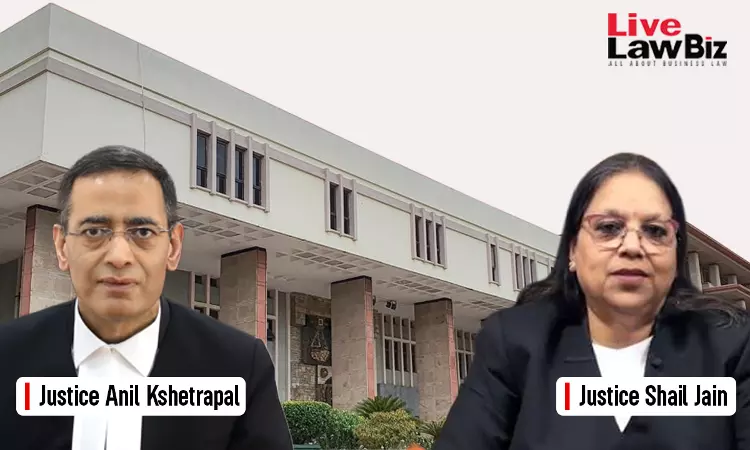
The division bench of Justices Anil Kshetarpal and Shail Jain was hearing petitions filed by Rishiraj Singh Rathore and Khushnud Khan, directors of Sterne India Pvt. Ltd., challenging an order passed under Section 122(1A) of the CGST Act, 2017.
The proceedings arose from a Directorate General of GST Intelligence (DGGI) investigation into alleged fraudulent availment and passing on of input tax credit through fake invoices without corresponding supply of goods or services.
Petitioners did not dispute that they had a statutory remedy of appeal under Section 107 of the CGST Act. They nevertheless approached the High Court, contending that the proceedings suffered from a jurisdictional error as no SCN had been served upon them individually. They also claimed that the notices for personal hearing had not been properly served.
The High Court however noted that the SCN did name both petitioners as noticees in their individual capacity as directors, calling upon them to show cause why penalty should not be imposed upon them.
Whether the notice was actually served upon them, and the manner in which it was served, the Court said, is a matter requiring examination of the records and allied material.
Similarly, on the allegation of denial of personal hearing, the Court said that determining whether the petitioners had been denied an effective opportunity would require scrutiny of the hearing notices, their mode of service and the timeline of their issuance and receipt.
The Court further clarified that even if the grievance regarding personal hearing were ultimately accepted, such an infirmity would be “curable” and would not go to the root of jurisdiction so as to justify bypassing the statutory appellate remedy.
Petitioners had also argued that relegating them to the appellate authority would not be fruitful because the authority did not possess the power to remand the matter for fresh consideration.
The High Court however held,
“The absence of a power to remand does not exempt the Appellate Authority of jurisdiction to entertain the Appeal, to consider the grounds now sought to be urged before this Court. The power to decide an Appeal on merits, upon a fresh and independent appreciation of the record, is distinct from the power to remand, and the want of the latter does not translate into an incapacity to exercise the former.”
As such, the Court declined to exercise its writ jurisdiction and relegated the petitioners to the remedy of appeal.
For Petitioner: Advocates Kishore Kunal, Runjhun Pare and Akshay Agarwal.
For Respondents: Advocates Monica Benjamin, SSC with Advocates Laiba Arif and Prerika Narang