
Delhi High Court Rejects Challenge To GST Rule Making Supplier Tax Payment A Condition For ITC
Kapil Dhyani
23 Sept 2026 1:15 PM IST
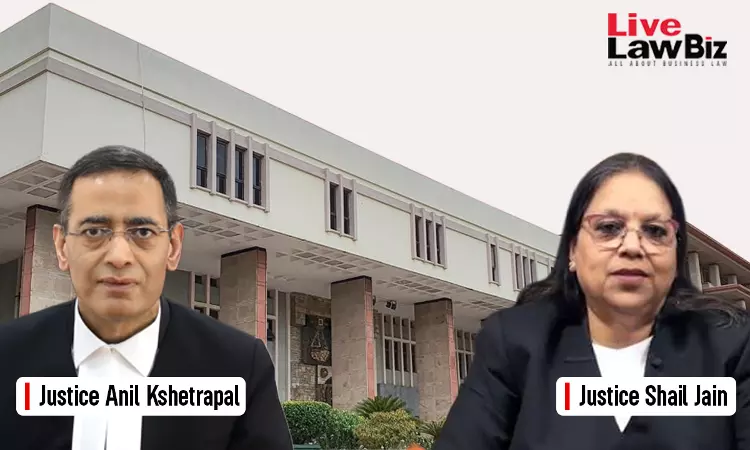
The Delhi High Court has rejected a challenge to the constitutional validity of Section 16(2)(c) of the Central Goods and Services Tax (CGST) Act, 2017, which makes payment of tax by the supplier a condition for availing Input Tax Credit (ITC).
The Division Bench of Justices Anil Khetarpal and Shail Jain held that the provision has already been upheld by the Supreme Court and that a recipient seeking ITC must establish, through cogent material, that the tax charged on the supply was actually deposited by the supplier.
“Insofar as the challenge to the constitutional validity of Section 16(2)(c) of the Act of 2017 is concerned, the issue is no longer res integra. The provision has specifically been upheld by the Supreme Court in Bhandari Scrap Traders v. Union of India, wherein the Court rejected the argument that the provision must be read down merely because the supplier may default. The condition is neither arbitrary nor disproportionate, inasmuch as it merely requires the recipient to establish, through cogent material, that the tax charged has been actually deposited by the supplier,” it observed.
The Court was dealing with a petition filed by a Cement firm challenging a show-cause notice and consequential order confirming a GST demand of around ₹7.26 crore.
The dispute arose after the Directorate General of Goods and Services Tax Intelligence (DGGI) had conducted a search at Petitioner's premises following information regarding fraudulent availment of ITC on the strength of fake and goods-less invoices.
Subsequently, another show-cause notice was issued under Section 73 of the CGST Act alleging wrongful availment of ITC from certain suppliers whose GST registrations had subsequently been cancelled.
Petitioner challenged the consequential order before the High Court, contending that its reply had not been properly considered and that it had not been afforded an effective opportunity of personal hearing.
Petitioner had also challenged the constitutional validity of Section 16(2)(c) insofar as it denies ITC to a bona fide recipient on account of non-payment of tax by the supplier.
Petitioner contended that a bona fide recipient could not reasonably be expected to monitor or ensure the tax compliance of an independent supplier. It was also argued that the provision could not be mechanically invoked in the absence of any allegation of fraud, collusion or lack of bona fides.
Rejecting the constitutional challenge at the threshold, the High Court noted that the Supreme Court had rejected the argument that Section 16(2)(c) should be read down merely because the supplier may default.
The Court further noted that the impugned proceedings were based on the petitioner's GSTR-3B, GSTR-1, GSTR-2A and e-way bill data, which disclosed that ITC had been availed from suppliers whose registrations stood cancelled prior to the dates of the invoices.
Whether the petitioner had actually discharged its burden of proving receipt of goods and actual payment of tax by the suppliers, the Court said, would require examination of transport records, delivery challans and payment trails.
It thus refused to exercise its writ jurisdiction and relegated the Petitioner to statutory appellate remedy under Section 107 of the CGST Act.
For Petitioner: Advocates R. P. Singh, Yash Aggarwal, Nirmal Dixit, Aman Sinha, Rahul Ranjan, Anant Vijay and Purva Dewangan
For Respondents: Kamal Kant Jha, CGSC along with Priya Singh, GP, Deepak Singh Rawat, Nikhil Kumar and Aakriti, Advs. Sumit K. Batra and Priyanka Jindal