
Delhi HC Refuses To Quash ₹47.93 Lakh GST Demand, Says Common Supplier Alone Doesn't Bar Parallel Proceedings
Kapil Dhyani
2 Oct 2026 12:02 PM IST
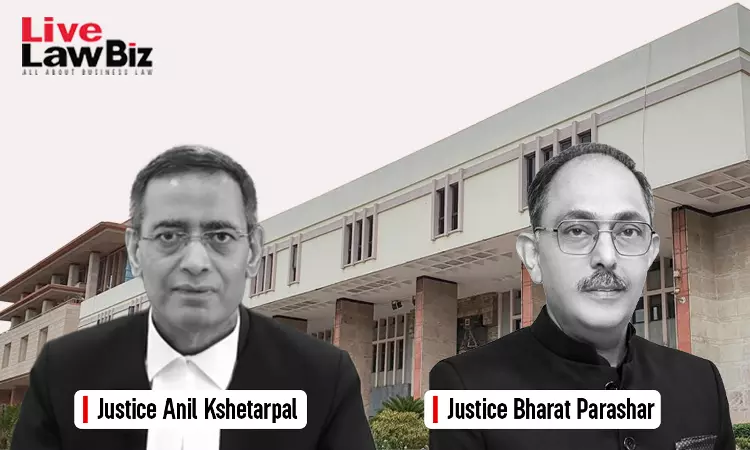
The Delhi High Court has refused to interfere with a ₹47.93 lakh GST demand against a taxpayer, holding that the mere fact that State and Central GST proceedings involved the same supplier does not, by itself, attract the bar against parallel proceedings under Section 6(2)(b) of the Central Goods and Services Tax (CGST) Act.
The Division Bench of Justices Anil Kshetarpal and Bharat Parashar held that the expression “same subject matter” under Section 6(2)(b) has to be determined by examining the relevant tax period, particular transactions and invoices, precise Input Tax Credit (ITC) involved, allegations in the respective notices and the liability sought to be determined by each authority.
“The challenge based upon Section 6(2)(b), therefore, cannot be accepted merely on the basis of the broad assertion that the same supplier was involved in the earlier State proceedings. The statutory provision requires identity of the subject matter and not merely identity of an assessee, supplier or broad factual background,” it observed.
The demand against Petitioner arose from allegations that Petitioner availed ITC on the strength of invoices without actual receipt of goods.
Petitioner argued that the Central GST authorities could not have initiated proceedings since the State GST authorities had already undertaken proceedings concerning ITC allegedly availed from the same supplier. Reliance was placed on Section 6(2)(b) of the CGST Act, which bars initiation of proceedings on the same subject matter by another authority.
The High Court however observed that Section 6(2)(b) does not prohibit every subsequent proceeding merely because the same assessee had earlier faced proceedings before another GST authority.
“The relevant proceedings have to be examined with reference to the tax period, the particular transactions and invoices involved, the precise ITC forming the subject matter of the demand, the allegations made in the respective notices and the liability which each authority has sought to determine,” the Court held.
It also noted that the State proceedings relied upon by Petitioner concerned different financial years and different notices.
The Court further declined to accept Petitioner's contention that the demand was confirmed on grounds travelling beyond the Show Cause Notice.
For context, Petitioner argued that while SCN proceeded on the allegation that goods had not been received, the adjudication order also relied upon non-payment of tax by the supplier under Section 16(2)(c) of the CGST Act.
The Court however noted that the adjudication order had independently recorded a finding that the recipient entities had not physically received the goods and had instead received “goods-less invoices”, specifically relying upon Section 16(2)(b). Therefore, the order did not rest exclusively on the alleged non-payment of tax by the supplier.
As such, the Court dismissed the petition with liberty to Petitioner to avail the statutory remedy.