
Bombay High Court Quashes GST Action Over Infra Company's Corporate Guarantees Issued Without Consideration
Rajnandini Dutta
9 May 2026 9:39 AM IST
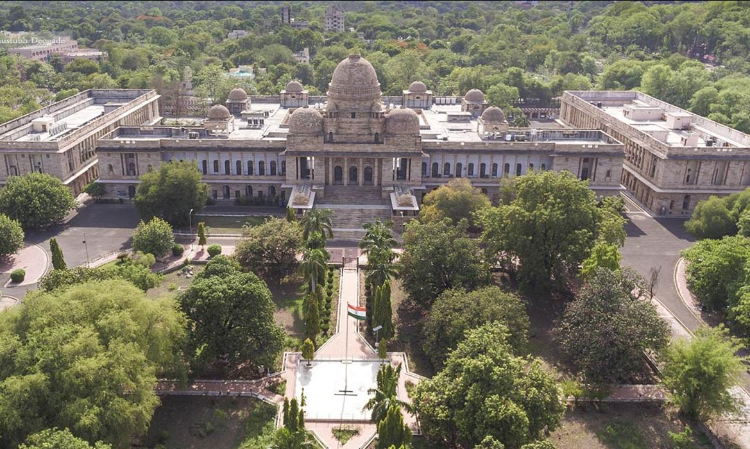
The Bombay High Court has held that D.P. Jain & Co. Infrastructure Pvt. Ltd. cannot be subjected to GST for corporate guarantees it issued to State Bank of India and Bank of Maharashtra to secure loans granted to its group companies, as the company received no consideration for furnishing those guarantees.
A Division Bench of Justice Urmila Joshi-Phalke and Justice Nivedita P. Mehta observed:
“There was no flow of consideration for the rendering of services. Therefore, taxability does not arise There was no consideration for the corporate guarantees were issued by the Petitioner on behalf of the companies.”
The court relied on the Supreme Court's ruling in Commissioner of CGST & Central Excise v Edelweiss Financial Services Ltd. to hold that issuance of corporate guarantees without consideration would not fall within the ambit of taxable service.
The Court noted:
“Admittedly, all three corporate guarantees in the present case, wherein specific clause is “the corporate guarantor hereby declares and agrees that the corporate guarantor has not received and shall not receive any security, fee, commission or any other consideration from the borrower for giving this deed so long as any monies remain due and payable by the borrower to the lender under the common loan agreement and the other finance documents”. This clause itself shows that, the supply was not for consideration"
D.P. Jain & Co. Infrastructure Pvt. Ltd., engaged in highway infrastructure construction, had furnished corporate guarantees for loans extended to related entities executing infrastructure projects, including DPJ Pollachi HAM Project Pvt. Ltd., D.P. Jain Bangalore Chennai Expressways Pvt. Ltd., and D.P. Jain TOT Toll Roads Pvt. Ltd.
The guarantee deeds expressly stated that D.P. Jain had neither received nor would receive any security, fee, commission, or other consideration for furnishing the guarantees.
The company told the Court that State Tax authorities had earlier investigated it for the period 2017–18 to 2022–23, examined its books, financial statements, and guarantee documents, but did not raise any GST demand on the guarantees.
Subsequently, the Directorate General of GST Intelligence initiated fresh proceedings alleging non-payment of GST.
During the dispute, the Centre inserted Rule 28(2) in the CGST Rules through a 2023 notification and later issued a circular stating that corporate guarantees provided by a person on behalf of related entities, including by a holding company for a subsidiary, would be treated as taxable supply of service even without consideration.
D.P. Jain challenged the proceedings, the circulars, and the amended rule, arguing that GST could not be imposed where there was no consideration, and that a circular could not create a tax liability not contemplated by the statute.
The Court noted that the petitioner was not in the business of commercially providing guarantees and distinguished corporate guarantees from bank guarantees issued in the ordinary course of banking business.
“Corporate guarantee is actually an in-house guarantee and is not issued to customers generally.”
The Court said such guarantees are often issued by group entities to safeguard the financial health of associate enterprises rather than as a commercial service rendered for payment.
Relying on Edelweiss, the court held that taxability requires a flow of consideration for rendering the service.
Since the guarantee deeds recorded the absence of consideration, and in light of the Supreme Court's ruling, the proceedings could not be sustained.
For Petitioner: Advocates Bharat Raichandani with R.K. Joshi
For Respondents: Advocate Kunal Nalamwar for the Respondent Nos. 2 to 4 & AGP A.J. Gohokar for the Respondent No. 5 & 6/State.