
Bombay High Court Quashes ₹133.60 Crore GST Penalty Each On Shemaroo Executives
Rajnandini Dutta
25 Feb 2026 3:24 PM IST
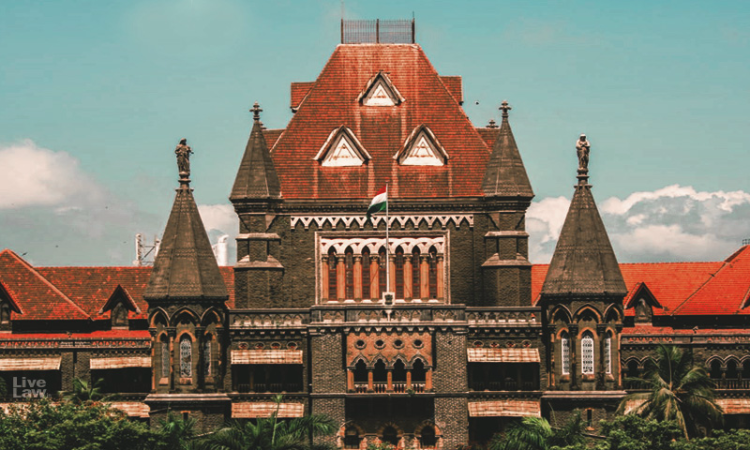
The Bombay High Court has recently quashed penalties of Rs.133.60 crore each imposed on the Chief Financial Officer, Chief Executive Officer and Joint Managing Director of Shemaroo Entertainment Ltd., holding that the statutory requirements necessary to fasten personal GST liability were not satisfied.
The Court found that the penalty provision invoked by the department could not be applied in the absence of proof that the officers had retained the benefit of the impugned transactions and that the transactions were conducted at their instance.
A Division Bench of Justice G.S. Kulkarni and Justice Aarti Sathe observed that the law does not recognise any implied principle of vicarious liability under the relevant penalty provisions. Relying on its earlier decision, the Court quoted, “It is ill-conceivable to read and recognize into the provisions of Section 122 and Section 137 of the CGST Act any principle of vicarious liability being attracted. There could be none.”
The proceedings arose from allegations that Shemaroo Entertainment Ltd. had wrongly availed input tax credit of about Rs. 70.25 crore and passed on ineligible credit of about Rs. 63.35 crore. Show cause notices were issued to the company and separately to its senior officers. An order dated February 1, 2025 imposed penalties of Rs. 133.60 crore each on the three officials under Section 122(1A) of the Central Goods and Services Tax Act.
Before the High Court, the officers argued that Section 122(1A) must be read conjointly with Section 122(1), which expressly applies to a “taxable person”, meaning a person registered or liable to be registered under GST. They contended that they were employees and not taxable persons in their individual capacity.
They further argued that the statute requires proof that the individual retained the benefit of the impugned transaction and that the transaction was conducted at that person's instance. They also submitted that Section 122(1A), which came into force on January 1, 2021, could not be applied to transactions dating back to July 2017. The revenue argued that the expression “any person” in Section 122(1A) was wide enough to include senior officers managing the company.
Examining the law, the court held that Section 122(1A) cannot be read in isolation and must be construed with Section 122(1), since it refers to transactions covered under specific clauses of that sub-section. The Bench identified what it described as a two-fold requirement. First, the person must retain the benefit of the transaction.
Second, the transaction must be conducted at that person's instance. “Unless such two-fold requirement is fulfilled, it would not be possible to recognize any jurisdiction being available,” the Court observed.
On facts, the Court found that the impugned order did not record any specific finding that the officers had retained any benefit of the alleged transactions. “In the absence of any such material and findings, we do not find as to how the jurisdictional requirement of applicability of Section 122(1A) can at all be said to be present,” the Bench held.
The Court also accepted the plea on retrospective application. Referring to Article 20(1) of the Constitution, it observed, “A person cannot be penalized under the law/provision which was not in force for the period in which such alleged acts are stated to have been committed.”
Holding that the basic jurisdictional ingredients were absent and that retrospective penal application was impermissible, the High Court allowed the writ petition and quashed the penalties imposed on the officers.
For Petitioners: Advocates Abhishek A. Rastogi with Pooja M. Rastogi, Meenal Songire, Aarya MoreAppearance
For Respondents: Advocates Ram Ochani with Sangeeta Yadav