
Andhra Pradesh High Court Quashes GST Detention Over Expired E-Way Bill After Vehicle Breakdown
Mehak Dhiman
27 July 2026 5:02 PM IST
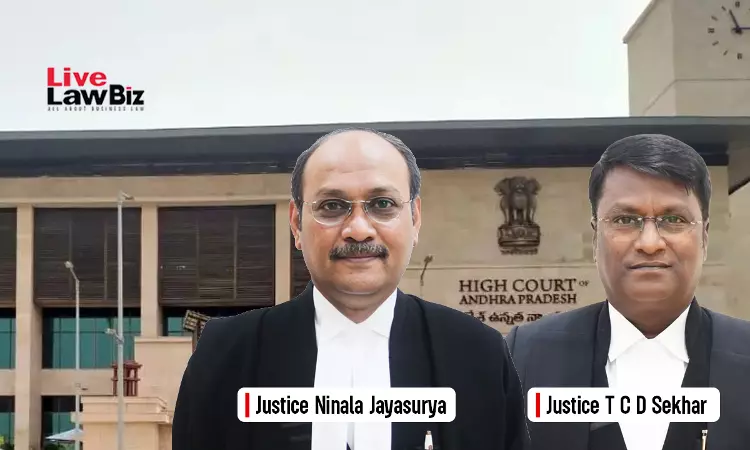
The Andhra Pradesh High Court on 16 July held that GST authorities cannot invoke detention proceedings merely because an e-way bill had expired when the delay in delivery of goods was caused by a vehicle breakdown and there was no evidence of tax evasion.
A Division Bench of Justices Ninala Jayasurya and T.C.D. Sekhar allowed the writ petition filed by SLV Elite Spaces LLP and directed the GST authorities to drop further proceedings initiated under Section 129 of the GST Act (which provides for detention, seizure, and release of goods and vehicles in certain cases). The judges held:
“On over all consideration of the case on hand, it is apparent that there is no evasion of tax on the part of the petitioner. In such circumstances, continuation of proceedings against the petitioner may not be proper, especially when this Court has already directed the 4th respondent to release the vehicle and the goods”.
SLV Elite Spaces LLP, challenged a detention order issued in Form GST MOV-06 dated 14 April 2026. The vehicle carrying TMT boxes was detained after the GST authorities found that the e-way bill had expired at 11:59 p.m. on 13 April 2026.
The consignment was being transported from Vizianagaram to Suryaraopet, Vijayawada, with the required documents. After reaching Vijayawada within the validity period of the e-way bill, the vehicle developed a mechanical breakdown while being checked at a weighbridge and was parked at Bhavanipuram for reissuance of the e-way bill.
During this period, the authorities inspected and detained the vehicle, citing expiry of the e-way bill. The petitioner contended that there was no intention to evade tax and that the delay occurred only due to the mechanical issue.
The State filed a counter affidavit. However, during the hearing, the Government Pleader informed the Court that the vehicle and goods had already been released pursuant to the interim order passed by the High Court.
The Court noted that the detention order referred only to the expiry of the e-way bill and did not mention any other violation. It held that there was no material indicating any attempt to evade tax.
Further, the Bench observed that the vehicle had reached Vijayawada on 13 April 2026 itself and could not proceed to the destination due to the breakdown. It noted that the distance between Bhavanipuram and Suryaraopet was less than 8 kilometres and that both locations fell within Vijayawada. It observed:
“...the subject vehicle reached Vijayawada on 13.04.2026 itself, but could not reach the destination as it was broke down. Further, the distance between Bhavanipuram and Suryaraopet is less than 8 km., and keeping in mind that both Bhavanipuram and Suryaraopet are located in Vijayawada, the action of the 4th respondent in invoking Section 129 of the GST Act may not be proper”.
Accordingly, the High Court allowed the writ petition and directed the fourth respondent to drop all further proceedings initiated against SLV Elite Spaces LLP.
For the Petitioner: B. Abhay Siddhanth Mootha, Advocate.
For the Respondents: Government Pleader for Commercial Taxes.