
Gujarat High Court Admits Ford India Plea Against GST Demands Based On E-Way Bill Discrepancies
Arvind Kumar Tiwari
15 Sept 2026 4:57 PM IST
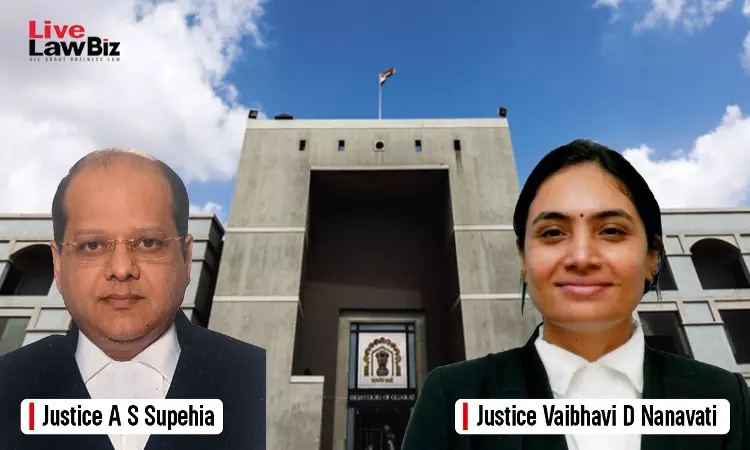
The Gujarat High Court on 3 September admitted connected writ petitions filed by Ford India Private Limited challenging show-cause notices and Orders-in-Original issued under Section 74 of the Central Goods and Services Tax Act, 2017, concerning alleged discrepancies between taxable values and e-way bill data.
A Division Bench of Justices A.S. Supehia and Vaibhavi D. Nanavati found that the adjudicating authority had expressed its inability to reconcile the voluminous data despite the material Ford India had furnished. The judges observed:
“Prima facie, we are of the opinion that the impugned Orders-in-original depict the inability of the adjudicating authority in closely analyzing the details of delivery channels, corresponding e-way bills, invoices, etc., as he himself has expressed his inability to undertake such exercise, as there is no mechanism to understand this.”
The petitions arose from audit queries issued by the Director General of Audit (Central), Ahmedabad, alleging suppression of taxable value when compared with e-way bill data. Ford India submitted that it had furnished documentary material to the Range Officer and that the authorities communicated the alleged discrepancies to it without following the procedure under Section 61 of the CGST Act.
Ford India also challenged the Revenue's invocation of the extended five-year period under Section 74, arguing that it had not suppressed any facts. It submitted that the adjudicating authority had failed to properly consider the details set out in paragraph 15.3 of the Orders-in-Original and had rejected the material on the ground that it could not ascertain how the supplies appeared in the relevant returns.
The company further pointed out that the adjudicating authority had not asked it to furnish additional invoices or e-way bills despite demands of approximately Rs. 4.57 crore in one petition and Rs. 1,936.67 crore in the connected matter.
The Revenue opposed the petitions. Senior Standing Counsel Hetvi H. Sancheti submitted that Ford India had received an opportunity to provide the relevant e-way bills and invoices, but discrepancies remained even after scrutiny.
Relying on Section 155 of the CGST Act and Section 61 read with Rule 99 of the CGST Rules, the Revenue argued that Ford India bore the burden of establishing that it had not wrongly availed input tax credit. It also contended that the authorities did not have to invoke Section 61 before initiating proceedings under Section 74.
The Court, however, noted that the Orders-in-Original themselves recorded the adjudicating authority's inability to analyse the material furnished by Ford India. While examining more than 2,000 invoice entries for financial year 2018-19 in the MS Excel data supplied by the company, the authority recorded that it could not ascertain which invoices contained the alleged error or how Ford India subsequently reconciled them in its returns.
The authority similarly said it could not analyse the supporting documents forming part of the books of account. The judges also noted that the adjudicating authority had never asked Ford India to furnish additional material.
Further, the judges considered the company's approximately 4.5 lakh e-way bills and 2.5 lakh invoices and prima facie found that their volume did not indicate an intention to suppress or evade GST liability. They observed:
“The petitioner was never called upon to supply any additional material by the adjudicating authority, and as informed to us, there are almost 4.5 lakhs e-way bills and 2.5 lakhs invoices, which would suggest that there was no intention of the petitioner to suppress or evade the liability of payment of the GST.”
Accordingly, the High Court admitted the petitions and issued Rule, with the Revenue waiving service. Given the complexity of the amounts involved and the extensive exercise required to analyse the invoices and e-way bills, it held that the initial audit action was necessary. It also ordered that the ad-interim relief granted on 5 February 2026 would continue until it finally disposed of the petitions.
Counsel for the Petitioner: Mr. Mihir Joshi, Senior Advocate, with Manish Mishra, Ankur Mittal, Sameer Samal and Dhwani Vyas, for J. Sagar Associates
Counsel for the Respondents: Ms. Hetvi H. Sancheti, Senior Standing Counsel