
GST&VAT&CST

MP High Court Dismisses Builder's Plea Seeking Refund Of Differential GST On Account Of Upward Rate Revision
The Madhya Pradesh High Court has dismissed writ petition by a builder seeking reimbursement or refund of differential 6% GST on account of increase in rate (from 12% to 18%) on government works contract w.e.f. July 18, 2022. Pursuant to the recommendation of the 47th GST Council Meeting which approved suggestions of the Group of Ministers on Rate Rationalization, increased GST rate (from 12% to 18%) on works contract was notified vide Notification No. 03/2022 Central Tax (rate) dated...
CBIC Notifies Officer-Wise Monetary Limits For Tax Determination & Penalty Proceedings Under GST Regime
The Central Board of Indirect Taxes and Customs (CBIC) has issued Circular No. 254/11/2025-GST dated 27 October 2025, clarifying the assignment of “proper officers” for issuing show cause notices (SCNs) and passing orders under Sections 74A, 75(2) and 122 of the Central Goods and Services Tax Act, 2017. The Board noted that until now, no specific officers had been designated for; tax determination under Section 74A,re-assessment under Section 75(2) where charges of fraud are not...

S.74(5) | GST Proceedings Can Be Closed On Payment Of 15% Pre-SCN Penalty Where Tax Already Deposited Prior To SCN: Delhi High Court
The Delhi High Court recently allowed Delhi Sales Corporation to deposit pre-SCN penalty contemplated under Section 74(5) of the Goods and Services Tax Act, despite issuance of show cause notice under Section 74(8).This, after a division bench of Justices Prathiba M. Singh and Shail Jain noted that the Petitioner-Corporation had already deposited tax and interest in terms of Section 74(5).For context, section 74 pertains to Determination of tax not paid or short paid. It contemplates issuance of...
Educational Consultancy Services For Foreign Universities Qualify As Export Of Service, Entitled To GST Refund: Delhi High Court
The Delhi High Court has held that foreign education consultancy services to students in exchange for admission based commission from foreign universities qualify as 'export of services'.A division bench of Justices Prathiba M. Singh and Shail Jain thus held that Global Opportunities Private Limited will be entitled to claim GST refund on export of services under Section 54 of the Central Goods and Services Tax (CGST) Act, 2017.The Court further added that the entity cannot be termed as a mere...

GSTN Issues Advisory On How To Add Valid Bank Account Details On GST Portal
The Goods and Services Network (GSTN) has issued advisory on furnishing bank account details to avoid suspension of their GST Registration and disruption of business activities. As changes with respect to Rule 10A will be implemented on the GST Portal soon, GSTN clarified that taxpayers who have not yet furnished the bank account details till date to do so at the earliest. As per Rule 10A, taxpayers are required to furnish valid bank account details within a period of 30 days from the...
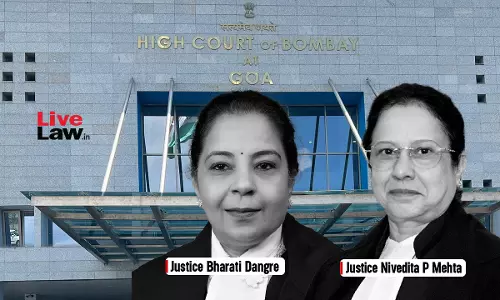
GST Act | IGST Refund Doesn't Bar Compensation Cess Refund: Bombay HC Calls Department's Interpretation Of S.16(3)(b) “Completely Illogical”.
The Bombay High Court has directed the Department to refund the Input Tax Credit (ITC) of Compensation Cess to the assessee observing that a manufacturer exporting goods is entitled to refund of unutilized Input Tax Credit(ITC) of Compensation Cess, as Section 16(3)(b) of the integrated Goods and Services Tax Act, 2017 must apply to both the Integrated Goods and Services Tax (IGST) and Compensation Cess. The Division Bench of Bombay High Court at Goa comprising of Justice Bharati...

GST | Assessee Must Be Given Personal Hearing Since SCN Lacked Reasons: Delhi High Court Quashes Demand Against Stock Broker
The Delhi High Court has set aside the demand raised against a stock broker, noting that both the show cause notice as well as the final order were bereft of any reasons, disabling the broker to make effective representation.“It is seen that the SCN actually does not give any reasons…Even the impugned order does not give any reasons,” a division bench of Justices Prathiba M. Singh and Shail Jain observed.The Petition was filed by M/s RBC Financial Services Pvt. Ltd., engaged in stock broking and...

Suspension Of State Tax Officer For Delayed Report Unjustified When Authority Failed To Act In GST Fraud Case: Allahabad High Court
The Allahabad High Court has held that where loss is caused to the State, a State Tax Officer may not be suspended for mere delay in submitting a report. Justice Vikas Budhwar held that this would be especially impermissible in a case where the authority to act on the report in time chooses not to do so.He held that, despite the fact that the petitioner submitted the report with delay, the authority to take action was the Assistant Commissioner. It was held that the petitioner could not be...

GST Authorities Cannot Assume Jurisdiction For Passing Adverse Orders For Work Concluded Under VAT Regime: Allahabad High Court
The Allahabad High Court has held that GST Authorities cannot claim jurisdiction for levying tax, penalty, and interest on work that was concluded prior to the implementation of the GST Act. Notices were issued to the petitioner, a work contractor, for the Financial Year 2018-19 under the GST Act. The petitioner was unable to reply to the notices in time. Consequently, an ex-parte order was passed, levying tax, penalty and interest on him. Aggrieved, he sought relief before the High...
GST Department To Re-Inspect Changed Place Of Business Before GST Registration Cancellation: Delhi High Court
The Delhi High Court, in a matter concerning retrospective cancellation of registration despite having amended place of business, directed “The GST Department may re-inspect the new premises of the Petitioner and obtain a physical inspection report.” The Division Bench, comprising Justice Prathiba M. Singh and Justice Shail Jain stated that the officials of the GST Department ought to have re-inspected the new premises for Show Cause Notice proceedings to continue. It was also noted...

CGST Act | Bombay High Court Stays GST Demand Order Over Delayed Service Of Showcause Notice
The Bombay High Court granted ad-interim relief to the assessee by staying the operation of a GST Demand Order The Bench of Justice B.P. Colabawalla & Amit S. Jamsandekar was hearing a writ preferred by the assessee seeking to quash the GST demand order challenging the Show Case Notice to be time barred per Section 73(2) and 73(10) of the Central Goods and Services Tax (CGST) Act, 2017. The Petitioner argued that the Show Cause Notice did not follow the mandatory provisions...
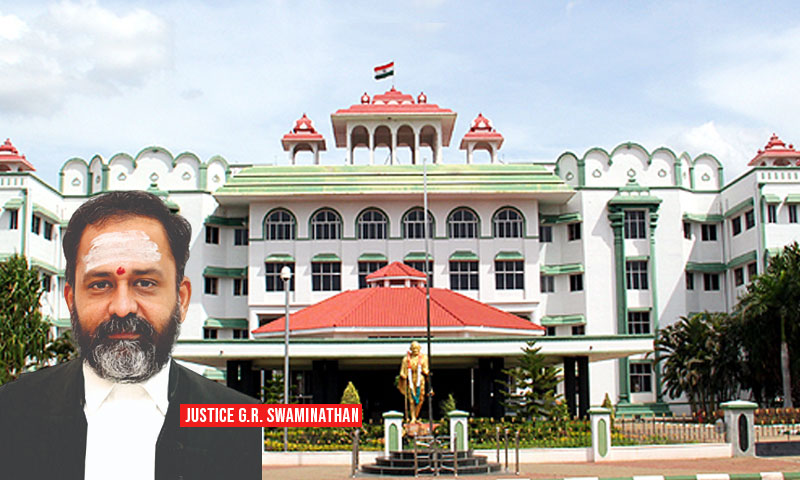
Use Of Word 'Determined' In SCN Shows Pre-Determination; S.74 Invocation Unsustainable: Madras High Court Quashes GST Demand
The Madras High Court has held that using the word 'Determined' in the show cause notice (SCN) betrays an element of pre-determination on the part of the authority. The bench highlighted that the show cause notice must clearly specify whether the assessee is being charged with fraud, suppression or wilful misstatement to invoke section 74 of the Tamil Nadu Goods and Services Tax Act, 2017. The bench stated that the authority has used the word “determined”. There is an ocean of...