
CESTAT Cannot Reject Taxpayer Appeals Below ₹2 Lakh On Monetary Limit Alone: Allahabad High Court
Upasna Agrawal
2 Feb 2026 11:24 AM IST
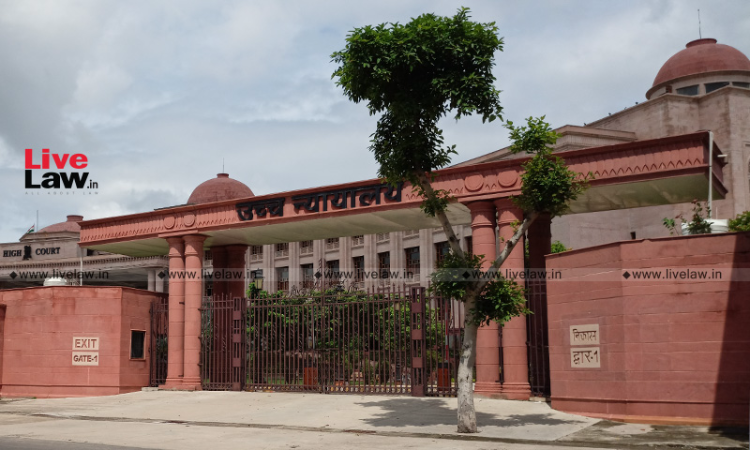
The Allahabad High Court recently held that the Customs, Excise and Service Tax Appellate Tribunal cannot mechanically reject a taxpayer's appeal on the ground that the amount involved is below ₹2 lakh. The Court said such appeals are maintainable as a rule and may be refused only in exceptional cases.
The ruling was delivered by a Division Bench of Justice Saumitra Dayal Singh and Justice Indrajeet Shukla.
Explaining the law, the bench said, "Thus, while appeals filed by the revenue, below the monetary limit prescribed in the litigation policy, may be declined to be entertained by way of rule, the assessees appeal may be declined to be entertained only by way of a rare exception to the rule that such appeal would remain maintainable at the hands of the assessee, unless he chooses to withdraw."
The case arose after a taxpayer filed a service tax appeal before the CESTAT, Allahabad bench, challenging an order passed by the Commissioner of Central Excise and CGST, Kanpur. The Tribunal dismissed the appeal solely on the ground that the fine or penalty involved was less than Rs 2 lakh. The appeal was rejected on a date when the assessee was not represented, and the Tribunal did not record any reason beyond the monetary limit.
Before the High Court, the assessee argued that the appeal had been dismissed without a hearing and without assigning reasons. The revenue maintained that the Tribunal was entitled to apply monetary limits while deciding whether to entertain appeals involving small amounts.
The High Court rejected the tribunal's approach and drew a clear distinction between appeals filed by the revenue and those filed by taxpayers.
It noted that the Union government is entitled to frame a litigation policy to avoid filing low-value appeals. As the Bench observed, “the Union as a litigant has an absolute right to frame its litigation policy to restrict institution of frivolous appeals.”
However, the Court stressed that this policy cannot be used to deny a taxpayer their statutory right to appeal. It clarified that “the right of appeal given to an assessee is not subject to or conditional to the consent of the Tribunal” and may be regulated but not curtailed by a quasi-judicial authority.
The bench also underlined that although the tribunal has discretion to refuse to entertain low-value appeals filed by taxpayers, that discretion “may not be exercised routinely” and must be exercised only after hearing the taxpayer and recording reasons.
Finding that the tribunal had dismissed the appeal ex parte and without justification, the High Court held that “an error of law has crept in.”
The tribunal's order was set aside, and the matter was remitted back to the CESTAT to hear and decide the appeal afresh in line with the law laid down by the court.
For Appellants: Advocates Akashi Agrawal
For Respondent: Advocates Dhananjay Awasthi, Saumitra Singh