
Denial Of Cross-Examination Justified Under Excise Act When Statements Are Corroborated: Delhi High Court
Kapil Dhyani
2 March 2026 9:37 PM IST
The Delhi High Court has held that the right of cross-examination under Section 9D of the Central Excise Act, 1944 is not absolute, and may be lawfully denied in fact-specific circumstances, particularly where the witnesses are closely connected to the assessee and the allegations are supported by independent corroborative evidence.
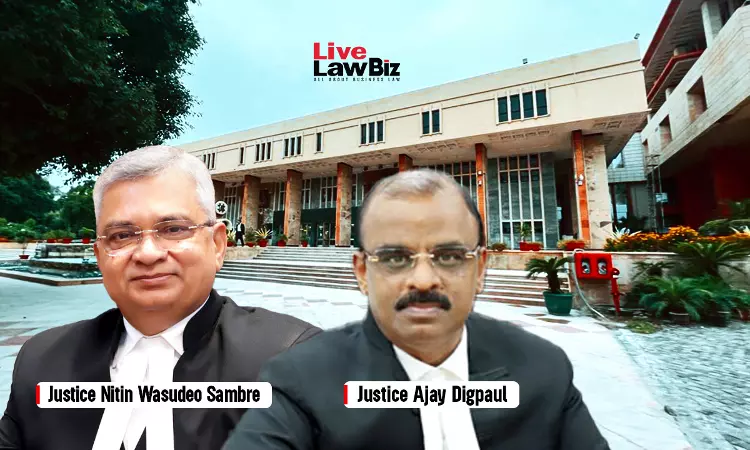
A Division Bench of Justices Nitin Wasudeo Sambre and Ajay Digpaul thus dismissed the appeal filed by an assessee, holding that neither the adjudicating authority nor the Customs, Excise and Service Tax Appellate Tribunal (CESTAT) had erred in denying cross-examination of witnesses.
The excise proceedings arose from allegations of illegal manufacture and clearance of pan masala/ gutkha.
The Department relied on statements recorded during investigation from employees/workers and a co-noticee, along with documentary and circumstantial evidence such as recovery of material, electricity consumption data, employment-related documents and rental agreements.
The Appellant-assessee contended that the entire adjudication stood vitiated as the statements were relied upon without granting an opportunity of cross-examination, in violation of Section 9D.
Rejecting the challenge, the High Court observed that cross-examination, though an important procedural safeguard, is not an indefeasible right in every case.
In the case at hand, it specifically noted that co-noticee and the employees were related to the Appellant having common financial interest either in the form of employer-employee or that of the blood relation.
“In such an eventuality, it is not expected that the witnesses will dare to depose against the appellant. That being so, the denial of cross examination can be said to be justified and appropriate In wake of above, it is apparent that the entire proceedings against the appellant are based on un-retracted statements of the witnesses, corroborative evidence in the form of recovery of material, energy details, employment related documents and rental agreements etc.,” the Court said.
It added, “In wake of above, it cannot be said that while passing the orders impugned, the respondent had failed to understand or consider the very object of Section 9D of the Central Excise Act, 1944 and has illegally denied the opportunity of cross-examination of the witnesses.”
Reliance was placed on Patel Engineering Ltd. Vs. Union of India (2014) where the Bombay High Court held the principles of natural justice are not a strait-jacket formula. Which principles of natural justice or which facet of the same is applicable, depends upon the nature of the lis, the statute under which an adjudication is undertaken and several other factors.
As such, the High Court dismissed the appeal and upheld the impugned orders.
For Appellant: Advocate Prem Ranjan Kumar
For Respondent: Harpreet Singh, Senior Standing Counsel with Advocate Jatin Kumar Gaur