
Litigant Cannot Blame Counsel For 968-Day Delay In Customs Appeal Without Explaining Inaction: Delhi High Court
Kapil Dhyani
19 Aug 2026 9:29 AM IST
The Delhi High Court has held that a litigant cannot seek condonation of an inordinate delay by merely blaming their counsel for failing to communicate an order, especially when the litigant themselves remained inactive and made no enquiry about the outcome of the proceedings for nearly three years.
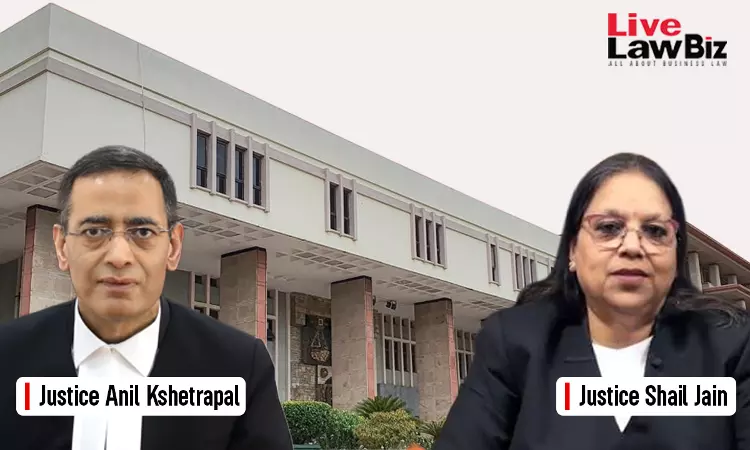
The Division Bench of Justices Anil Kshetarpal and Shail Jain dismissed three customs appeals challenging CESTAT 's refusal to condone a delay of approximately 968 days in filing appeals against recovery and penalty order.
The Court held that the appellants had failed to establish “sufficient cause” for the prolonged delay.
By the impugned order dated December 7, 2021, the customs authorities re-determined the declared value in the Appellant's Bills of Entry, directed recovery of differential customs duty and imposed penalties.
The Department stated that the order was dispatched to the address available on record. It was also emailed on December 14, 2021 to the counsel who had represented the appellants during the adjudication proceedings, while a corrigendum was subsequently sent to the same email address. The Department further relied on the display of the order on the notice board.
The Appellants however contended that they had not been served with the order and came to know about it only when proceedings to freeze their bank accounts were initiated on February 27, 2024. They said that, after pursuing the matter with the Department, they received a copy of the order by email on July 2, 2024 and filed appeals before CESTAT on August 1, 2024.
As the appeals were filed beyond the prescribed period, Appellants sought condonation of a delay of approximately 968 days.
CESTAT rejected their applications, taking into account the email communication of the order to their counsel and the fact that they had made no attempt for nearly three years to ascertain the outcome of the adjudication proceedings.
Before the High Court, Appellants argued that they should not be made to suffer because their erstwhile counsel had failed to inform them about the order. They relied on the principle that an innocent litigant who has acted diligently should not be prejudiced because of a default by counsel.
The High Court however found that principle inapplicable to the facts before it.
It noted that the Appellants had participated in the adjudication proceedings through counsel and were admittedly aware of those proceedings. Once the hearings had concluded, no material was produced to show that they made any enquiry between December 2021 and February 2024 regarding the outcome.
“Even if the said assertion is accepted at its highest, it does not explain why, after the hearing had concluded in November 2021, no enquiry was made for nearly three years regarding the outcome of proceedings of which the appellants admittedly had knowledge,” the Court observed.
“The plea of omission on the part of the counsel, therefore, does not by itself explain the entire period of delay,” it added.
The court also noted that the same counsel to whom the impugned order had been emailed was subsequently engaged to file the appeals and the applications for condonation of delay.
CESTAT had specifically asked the counsel to explain why the email communication had not been disclosed in the applications and whether the Appellants had been informed about the order. No explanation was furnished.
Reiterating that a satisfactory explanation must cover the entire period of delay, the Court dismissed the appeals.
For Appellants: Advocates Abhas Mishra, Hukam Chand, & Shruti Jindal
For Respondent: Advocates Anushree Narain SCC, Apurv Yadav, and Naman Choula