
Karnataka High Court Revives Inquiry Against Tax Officers Over Wrong Customs Duty Exemption
Mehak Dhiman
5 Nov 2026 3:58 PM IST
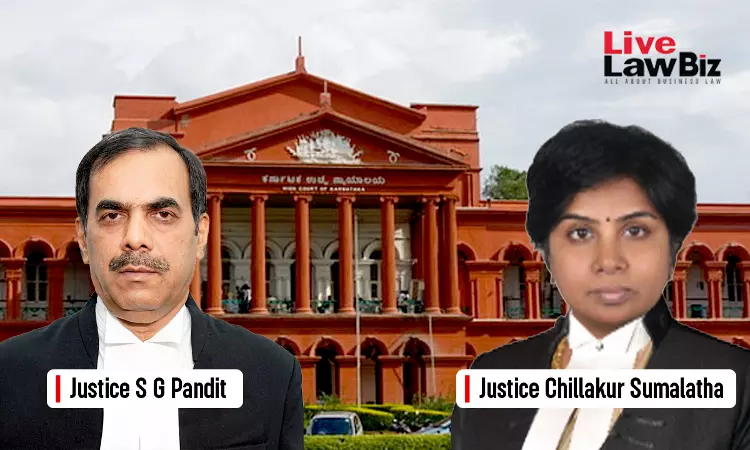
The Karnataka High Court on 29 October revived disciplinary proceedings against three Central Tax Superintendents over the alleged wrongful grant of customs duty exemption to imported tugs, setting aside the Central Administrative Tribunal's (CAT) orders quashing the proceedings.
A Bench comprising Justices S.G. Pandit and Chillakur Sumalatha allowed three writ petitions filed by the Union of India and the concerned tax authorities, holding that the Tribunal could not examine the merits of the disciplinary charges at the threshold and that the allegations must be tested in a departmental inquiry. It said:
“...It is for the Enquiry Officer to find out as to whether the exemption notification was wrongly applied or whether it was intentionally applied being aware of goods imported is finished goods i.e., Mid size Boat. Learned counsel for respondents had contended that there is no allegation of corruption or loss caused…”
The proceedings arose from the clearance of two tugs imported by Temba Shipyards Limited (TSL). The Department alleged that the officers had cleared the vessels at a nil rate of duty by applying Customs Notification No. 21/2002 dated 1 March 2002, which provided exemption for raw materials and parts used in the manufacture of goods.
The Department contended that the notification was wrongly applied because the imported goods were finished products, namely tugs, and not raw materials or parts. The charge memoranda dated 22 November 2013 alleged that the officers had failed to detect the incorrect exemption claim and assess the goods at the applicable rate of duty, thereby extending financial accommodation to the importer.
The CAT had quashed the charge memoranda, holding, among other things, that the charges lacked a factual foundation and that no loss had been caused to the Government, since the duty would effectively be paid to one wing of the Government and received by another.
Setting aside the CAT's orders, the High Court relied on the Supreme Court's decisions in Union of India v. Kunisetty Satyanarayana and Secretary, Ministry of Defence v. Prabhash Chandra Mirdha. It reiterated that a charge-sheet ordinarily does not give rise to a cause of action and that its correctness must be examined in the disciplinary inquiry.
The Bench distinguished between the assessment of duty and the application of an exemption notification. It observed that the question was whether the officers had wrongly applied the notification despite knowing that the imported goods were finished products. Whether their conduct amounted to misconduct and whether it caused any loss to the Government were matters for the Enquiry Officer to determine on the basis of evidence.
Further, the judges noted that the duty demand against Temba Shipyards was still pending before the Customs, Excise and Service Tax Appellate Tribunal (CESTAT). The CAT could not have returned findings on the officers' alleged misconduct or the existence of any loss to the Government while those issues remained to be examined in the appropriate proceedings.
Moreover, the Bench noted that an inquiry report had already been submitted in one of the matters. However, the officer, Badas, alleged that he had not received a proper opportunity to defend himself and that the Department had not supplied documents sought for his defence.
It directed the Department to conduct a de novo inquiry from the stage of recording evidence, after supplying the documents sought by Badas or providing him sufficient opportunity to inspect the relevant records. It directed that the inquiry be completed within six months from the date of uploading of the order on the High Court's website.
Accordingly, the High Court allowed all three writ petitions and set aside the CAT's orders. It directed the Department to proceed with the disciplinary inquiries in the other two matters and complete them within six months.
For Petitioner: Advocate Jeevan J. Neeralgi
For Respondent: Advocate N.G. Phadke