
Indian-Registered Vehicle Returning From Overseas Trip Not A Fresh Import: Bombay High Court
Rajnandini Dutta
1 Oct 2026 9:25 PM IST
An Indian-registered vehicle does not become a fresh foreign import merely because it is brought back to India in a shipping container after an overseas road trip, the Bombay High Court has ruled.
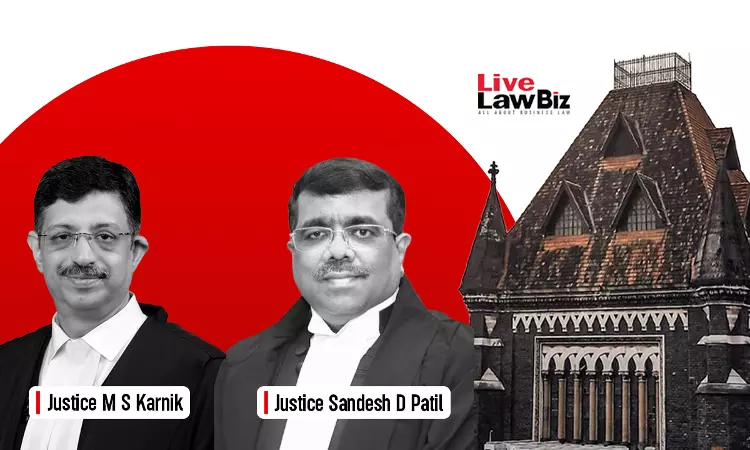
A Division Bench of Justice M.S. Karnik and Justice Sandesh D. Patil held that a Mahindra Thar belonging to Russian national Denis Vanin had legally left India as a private conveyance for travel. Its subsequent placement in a maritime container for safe transit back to India did not transform it into international trade cargo.
“The vehicle in question is an Indian-registered asset and not a fresh foreign import. The vehicle left India legally as a conveyance for travel under Chapter VI of the Act, and its temporary placement inside a maritime cargo container for transit safety does not transform a domestic personal vehicle into an item of international trade cargo under Chapter VII.”, it ruled.
Vanin purchased the Mahindra Thar in Goa on August 12, 2022, for personal use and paid the applicable domestic GST and road taxes.
He drove the vehicle out of India through the Sanauli land border into Nepal on July 5, 2024. He then travelled through China, Kazakhstan, Russia, Georgia, and Armenia before reaching Iran.
From Bandar Abbas, the vehicle was placed in a protective shipping container for maritime transit. It was loaded onto a vessel on November 13, 2024, and reached Nhava Sheva on November 17.
The issue arose when Customs required Vanin to file a Bill of Entry before releasing the vehicle. Vanin maintained that he was willing to file the document but could not do so electronically because the ICEGATE system required a commercial Import-Export Code (IEC) and/or GSTIN.
He submitted that he did not have a GSTIN because it had not been required when the vehicle was allowed to leave India and the vehicle was being used only for personal travel.
Customs maintained that the Bill of Entry had to be filed in the prescribed form.
The court examined how the vehicle had originally left India. Customs had allowed Vanin to cross the Sanauli border with the vehicle as a private conveyance carrying only passenger luggage.
Section 43(1) of the Customs Act exempts private conveyances carrying only passenger luggage from cargo reports and departure clearances. The court found nothing on record to show that Vanin was required to complete any additional compliance when Customs cleared the vehicle for departure from Sanauli.
The bench also considered Section 51 of the Customs Act, which applies to commercial goods. It observed that Section 51 is in Chapter VII, while Vanin's vehicle had left India as a private conveyance under Chapter VI.
The court also referred to paragraph 3 of CBIC Circular No.45/2018-Customs, which states that a reference to Section 51 in an exemption notification does not deny tax benefits where Section 51 was legally inapplicable when the item left India.
The court then considered the difficulty Vanin faced in filing the Bill of Entry electronically. It noted that ICEGATE required an IEC and/or GSTIN, while the petitioner maintained that such a requirement had not applied when the vehicle was allowed to leave India.
“Expecting the petitioner to perform a condition which is an impossibility is violative of the established principle that the law does not compel the performance of an impossibility,” the court observed.
The bench permitted Vanin to file the Bill of Entry without an IEC and/or GSTIN. If electronic filing was not possible, Customs was directed to accept the vehicle papers physically and permit a manual Bill of Entry.
It also allowed Customs to verify whether Vanin had claimed any export benefits, drawback or export incentives in relation to the vehicle.
The court directed that the Thar be released unconditionally on furnishing a necessary bond. Vanin would have to cooperate with any subsequent adjudication if a demand for penalty or detention charges was raised.
The petition was allowed with no order as to costs.
For Petitioner: Advocates Vaishnavi Tiwari with Amit K. Dwivedi
For Respondents: Adv. Ram Ochani with Adv. Sangeeta Yadav