
Amendment Allowing Customs Duty Exemption For Machinery Installed In Premises Applies Retrospectively: Gujarat High Court
Rajnandini Dutta
19 March 2026 2:04 PM IST
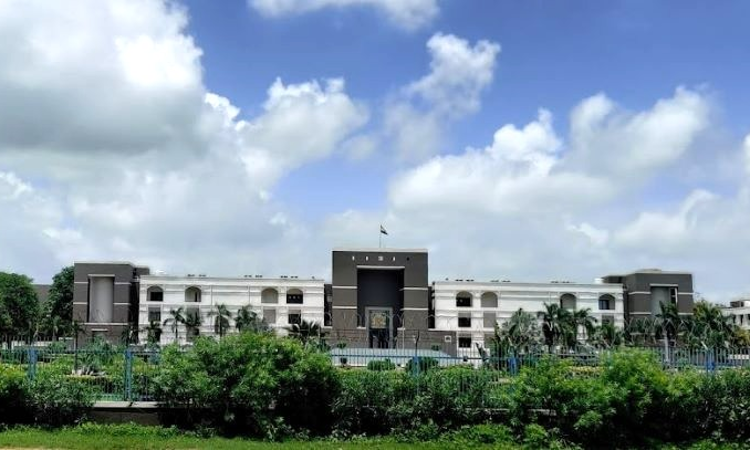
The Gujarat High Court has held that an amendment to a customs exemption notification under the Export Promotion Capital Goods (EPCG) scheme, which allowed installation of imported machinery in the importer's “factory or premises," will apply retrospectively, and exemption cannot be denied merely because the machinery was installed outside the factory.
Allowing an importer's appeal, a Division Bench of Justice A.S. Supehia and Justice Pranav Trivedi observed that the benefit earlier denied due to the absence of the word “premises” must be extended after the amendment made by substitution, stating:
“Thus, the benefit which ought to have been granted or has accrued in favour of the importers at the relevant time in the present case in the year 1995, but was not extended only for the absence of the word 'premises' is sought to be subsequently extended by substituting the words 'importer's factory' or 'premises' vide Notification No. 42/98-Cus dated 30.06.1998. The intention of the legislature does not appear to be that the benefit accruing from the Notification No.42/98-Cus dated 30.06.1998 would only be prospective in nature as the notification nowhere mentions that the same will apply prospectively only.”
The bench further held that exemption notifications enlarging the scope of benefit must be interpreted beneficially once eligibility is established, observing:
“Thus, as held by the Apex Court in the aforesaid decision once the party is held eligible for obtaining the benefits of the amended notification being an exemption notification it should receive beneficial construction and it would be highly unfair if the benefit to such importer is taken away and if that be so, the intention of the statute would have been expressly worded that it has to be given only a prospective effect.”
The court was hearing a tax appeal filed by Atlas Dye Chem Industries challenging the orders of the Commissioner (Appeals) and the Customs, Excise and Service Tax Appellate Tribunal (CESTAT), which had confirmed duty demand by denying the benefit of exemption under a notification issued under the EPCG scheme.
The appellant had imported machinery in 1995 under the EPCG scheme, which allowed concessional customs duty subject to the condition that the imported capital goods must be installed in the importer's factory. The machinery, however, was installed in a testing laboratory located at the company's registered premises.
The department issued a show cause notice demanding duty on the ground that installation in the laboratory violated the condition requiring installation in the factory. The demand was confirmed by the adjudicating authority and later upheld by the Commissioner (Appeals) and the CESTAT, which held that the condition in force at the time required installation strictly in the factory and that the later amendment to the notification could not be applied retrospectively.
Before the High Court, the appellant argued that the government had amended the notification in 1998 by substituting the condition and widening the requirement to allow installation in the importer's “factory or premises”, and therefore the benefit could not be denied merely because the word “premises” was absent in the original notification.
The High Court agreed, holding that the amendment was made by substitution and therefore replaced the earlier condition, and that the authorities had erred in treating the amendment as prospective.
Setting aside the orders of the CESTAT and the Commissioner (Appeals), the Court directed the authorities to extend the exemption benefit to the appellant along with consequential relief within 12 weeks.
For Appellant: Advocate Mihir H Pathak.
For Respondents: Advocate C.B. Gupta.