
Delhi High Court Refuses To Condon 694 days Customs Appeal Delay Over Wife's Illness
Kapil Dhyani
13 Oct 2026 2:37 PM IST
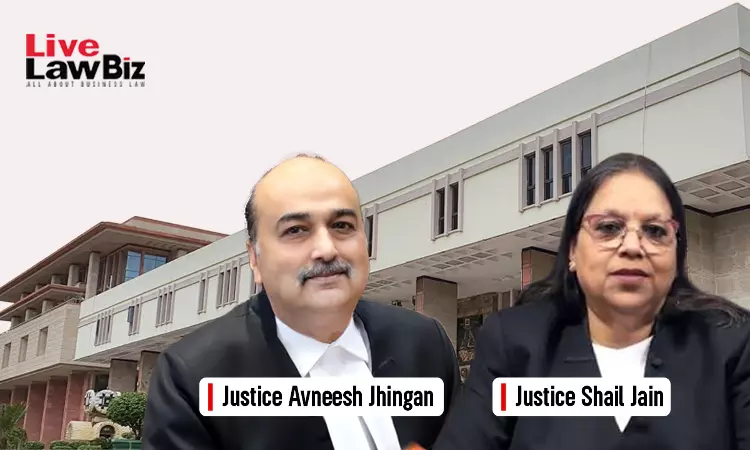
The Delhi High Court has refused to condone a delay of 694 days in filing a customs appeal, observing that the appellant continued his business despite his wife's illness but made no effort for two years to ascertain the outcome of the proceedings.
The Division Bench of Justices Avneesh Jhingan and Shail Jain dismissed the appeal filed against CESTAT order rejecting Appellant's application seeking condonation of delay.
Appellant had submitted that his wife was undergoing treatment for cancer since December 2021 and that the counsel who appeared before the adjudicating authority had failed to communicate the order to him.
Appellant was granted opportunities to explain when the order had been received by his counsel and why he had not been apprised of the order for nearly two years.
The counsel subsequently filed an affidavit stating that he had received the order on December 22, 2021 and had attempted to contact the appellant through his mobile phone, but in vain.
The Tribunal eventually rejected the application.
The High Court observed,
“Even assuming the explanation of the appellant to be true, the record indicates that the appellant was carrying on business despite the sickness of his wife. For two years despite the efforts made by learned counsel via mobile to contact the appellant, no step was taken by the appellant to enquire about the outcome of the proceedings.”
The Court further noted that Appellant became active only after coercive recovery measures were initiated and his bank accounts were frozen.
It referred to the Supreme Court's decisions in Oriental Aroma Chemical Industries Ltd. v. Gujarat Industrial Development Corporation and Rajneesh Kumar v. Ved Prakash, which emphasise that while a liberal approach may be adopted for condoning short delays, a stricter approach is warranted in cases of inordinate delay.
The court particularly relied on the principle that a litigant cannot simply shift the entire blame for an inordinate delay onto his lawyer and is expected to remain vigilant about his own rights and pending proceedings.
It also referred to the Supreme Court's decision in Pathapati Subba Reddy v. Collector (LA), observing that the existence of “sufficient cause” is a condition precedent for condoning delay and that such condonation cannot be granted mechanically.
“The factual findings recorded by the tribunal do not suffer from factual or legal error. No substantial question of law arises,” the Court held and dismissed the appeal.
For Appellant: Advocates Harpreet Singh, Sumit K. Batra, Suhani Mathur & Manish Khurana
For Respondent: Advocates Shubham Tyagi, SSC with Navruti Ojha