
Customs Can't Club Demands Against Multiple Parties To Meet Monetary Limit For Appeal: Delhi High Court
Kapil Dhyani
10 Nov 2026 9:57 AM IST
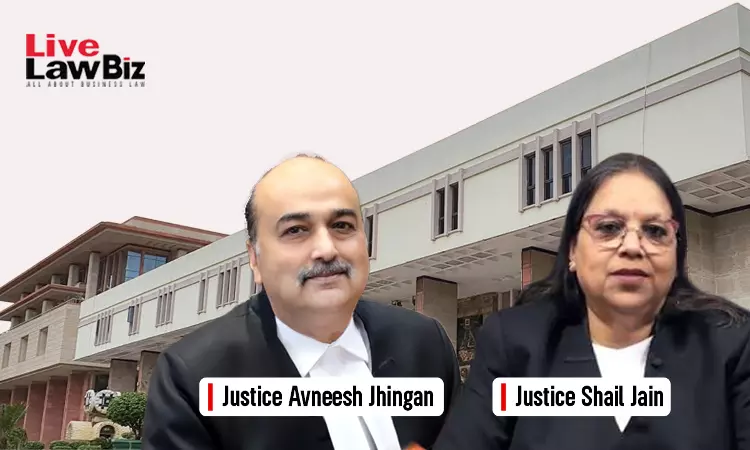
The Delhi High Court has held that where a common adjudication order under the Customs Act involves multiple parties, the Customs Department cannot club the demands raised against them to satisfy the monetary threshold prescribed for filing an appeal before the High Court.
The Division Bench of Justices Avneesh Jhingan and Shail Jain observed that each appeal arising from a composite adjudication order must be treated as a separate case for determining whether it meets the monetary limit fixed by the Central Board of Indirect Taxes and Customs (CBIC).
The Court rejected the Customs Department's contention that the cumulative monetary demand arising from a common order should be considered instead of the amount involved in each individual appeal.
“...no scope for the Department to re-agitate the issue contrary to the instructions and contend that the cumulative demand created by the OIO should be considered instead of the amount involved in each appeal,” the Court observed.
The ruling came while dismissing two appeals filed by Customs against a CESTAT order.
The appeals involved M.D. Overseas Ltd. and New Kailash Jewellery House and were disposed of through a common order as they raised a similar issue.
At the outset, counsel appearing for the respondents raised a preliminary objection regarding the maintainability of the appeals in view of the CBIC instructions dated November 2, 2023, which prescribe a monetary threshold of ₹1 crore for filing appeals before High Courts.
Opposing the objection, the Customs Department argued that the impugned order was a composite order covering all the noticees. It contended that the cumulative monetary effect of the order should therefore be considered, rather than examining the amount involved in each appeal separately.
The High Court examined the instructions issued by the Board from time to time governing the monetary limits for departmental appeals.
It noted that the issue of applying monetary thresholds to appeals arising from composite adjudication orders had already been addressed through instructions dated December 26, 2014.
Those instructions clarified that where a Tribunal passes a common order disposing of matters involving more than one party, each appeal filed against that order would constitute a separate case for applying the prescribed monetary limit.
The Court further referred to the instructions dated December 17, 2015, which had enhanced the monetary limits for departmental appeals to ₹10 lakh before CESTAT, ₹15 lakh before High Courts and ₹25 lakh before the Supreme Court.
Subsequently, the CBIC issued revised instructions on November 2, 2023, increasing the monetary threshold to ₹50 lakh for CESTAT, ₹1 crore for High Courts and ₹2 crore for the Supreme Court.
The Court noted that the revised instructions retained three exceptions under which adverse judgments could be challenged irrespective of the monetary amount involved.
These exceptions concern cases where the constitutional validity of a statutory provision is under challenge, where a notification, instruction, order or circular has been held illegal or ultra vires, and where classification or refund issues of a legal or recurring nature are involved.
Addressing the Department's argument regarding the cumulative demand, the Court observed that the 2014 instructions had specifically dealt with the situation where an adjudicating authority passes a common order involving several parties.
“It was clarified that in cases involving a composite order where the Department contemplates filing appeal, each appeal in itself shall be a separate case subject to threshold limit,” the Court said.
As such, the Court dismissed both appeals as not maintainable.
For Appellant: Samiksha Godhiyal, SSC-CBIC with Advocates Tenzing N. Bhutia and Rithwik Narayanan
For Respondent: Advocates Pradeep Jain, Sambhav Jain and Gouri Aggarwal