
Customs Adjudication Limitation Clock Restarts After Interim Stay Ends: Delhi High Court
Kapil Dhyani
9 Sept 2026 9:27 AM IST
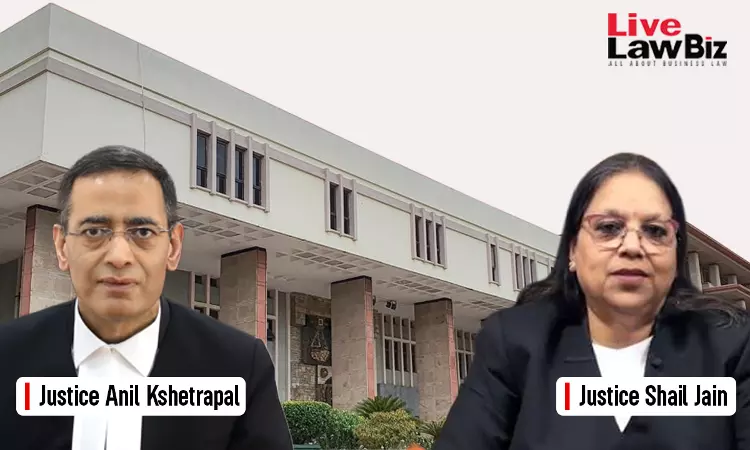
The Delhi High Court has held that where a pending court proceeding and an interim order prevent customs authorities from proceeding with adjudication, the limitation period prescribed under Section 28(9) of the Customs Act, 1962, is to be reckoned from the date on which the circumstance contemplated under Section 28(9A) ceases to exist.
The Division Bench of Justices Anil Kshetarpal and Shail Jain made the observation while dismissing a petition challenging a customs adjudication order that confirmed a demand of approximately ₹20.18 crore in differential customs duty.
Petitioners, engaged in importing duty-free copper rods under Advance Authorisation Licences and exporting value-added products, were alleged to have diverted the imported raw material into the domestic market without fulfilling their export obligations.
Customs had issued a show-cause notice dated June 24, 2022 under Section 28(4) read with Section 28AAA of the Customs Act, proposing recovery of approximately ₹11.11 crore from one Petitioner and ₹9.06 crore from another.
Petitioners primarily challenged the subsequent adjudication order on limitation, contending that the show-cause notice was required to be adjudicated within one year under Section 28(9)(b). They argued that the proceedings had become time-barred since the adjudication order was passed only on November 29, 2024.
The Department however submitted that Petitioners had themselves sought deferment of adjudication on account of the pendency of an earlier writ petition concerning extension of the export obligation period. An interim order in that proceeding had restrained the Department from taking coercive action against the Petitioners. The proceedings were consequently transferred to the Call Book on August 18, 2023.
The High Court held that the Call Book transfer itself was not the source of exclusion of the limitation period. Rather, the statutory consequence flowed from Section 28(9A), which specifically contemplates situations where the proper officer is unable to determine the duty because an appeal or proceeding is pending before a High Court or an interim stay order is operating.
“Section 28(9A) is a non-obstante provision, dealing with two facets. Firstly, it addresses a situation where the proper officer is unable to determine the amount of duty or interest under sub-section (8) for any of the reasons enumerated in clauses (a) to (d). Secondly, where such a circumstance arises, the reasons for non-determination are to be communicated to the person concerned, and the period prescribed under sub-section (9) is to be reckoned from the date on which the relevant circumstance ceases to exist. Therefore, the provision does not, make the Call Book transfer itself the source of any extension; rather, the statutory consequence flows from the existence of the circumstance contemplated hereinabove.”
The court noted that the earlier writ petition was dismissed on December 8, 2023. It therefore held that the two-year period contemplated under Section 28(9), including the applicable statutory framework, had to be reckoned from that date.
For Petitioners: Advocates Deepak Gandhi and Ms. Ida Bhatnagar, Advs.
For Respondents: Advocates Arjun Malik, SSC along with Ms. Mayuri Makhija, Adv. for R-1.