
CESTAT Chennai Says Suzuki Hayabusa Imported Via Two Ports Form One Vehicle, Upholds ₹10.36 Lakh Duty
Rajnandini Dutta
8 Oct 2026 3:04 PM IST
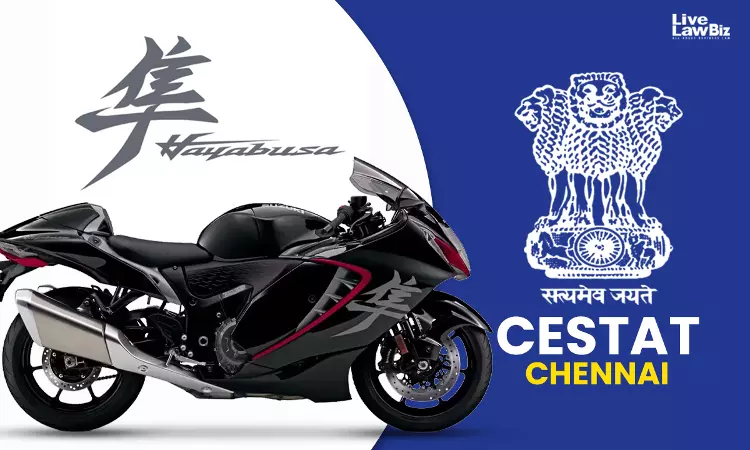
The Chennai Bench of the Customs, Excise and Service Tax Appellate Tribunal (CESTAT) on 6 October held that importing a motorcycle in separate parts through different ports cannot defeat the customs duty and restrictions applicable to a complete vehicle when the evidence establishes that the consignments form a single motorcycle.
A Bench comprising Judicial Member Ajayan T.V. and Technical Member M. Ajit Kumar partially allowed an appeal filed by R. Dewakar, proprietor of Sri Vinayaka Enterprises, against the customs demand on a Suzuki Hayabusa that he imported in dismantled form through Chennai and Tuticorin ports. The Tribunal observed:
“We are of the firm opinion that the true character of a transaction cannot be defeated by a formal division of one composite import into separate Bills of Entry, where the evidence establishes that the division was intended to avoid the duty and the restrictions applicable to the article in fact imported.”
The dispute arose from two consignments that the Directorate of Revenue Intelligence (DRI) investigated after their import in December 2006. Dewakar imported the engine and chassis of the Suzuki Hayabusa through Tuticorin Port, while the remaining motorcycle parts arrived through Chennai Port within four days. The consignments came from the same supplier in Singapore, but different importers declared them as motorcycle spare parts.
Customs authorities found that the parts, when assembled, constituted a Suzuki GSX 1300 R motorcycle. They consequently treated the consignments as a complete motorcycle, rejected the declared value, demanded additional customs duty and imposed penalties.
Dewakar challenged the order, arguing that two legally separate entities owned the consignments and that Customs could not club them for assessment. He also argued that Customs could not rely on statements recorded during the investigation as substantive evidence without following the procedure under Section 138B of the Customs Act.
The Tribunal rejected the classification challenge, relying on matching manufacturer's markings, inspection reports and a foreign registration number plate to find that the consignments comprised parts of the same previously registered motorcycle. It held that importing the parts separately could not defeat the duty and restrictions applicable to the complete vehicle.
Further, the Bench upheld the additional customs duty of approximately Rs. 10.36 lakh, along with interest, and the confiscation of the goods. However, it set aside the direction making two persons jointly and severally liable for the duty, holding that Customs must fix the liability on the actual importer.
On the evidentiary issue, Judicial Member Ajayan T.V. held that Customs could not rely on statements recorded by its officers as substantive evidence without complying with Section 138B. Technical Member M. Ajit Kumar, in a separate opinion, disagreed that Customs must examine every person who gave a statement, holding that the requirement depended on the circumstances and whether the failure caused prejudice.
Both members, however, agreed that the independent evidence sufficiently supported the customs demand.
Considering the nearly two decades that had passed since the imports, the Tribunal reduced the penalties to Rs. 50,000 for each consignment. It also reduced the redemption fines to Rs. 40,000 for the Chennai consignment and Rs. 60,000 for the Tuticorin consignment, if the goods had not already been redeemed.
Accordingly, the CESTAT disposed of the appeal with these modifications.
For the Appellant: Advocate Satish Sundar
For the Respondent (Customs Department): O.M. Reena, Authorised Representative