
CESTAT Bangalore Holds Aerosol Generator Not Controlling Device, Allows ITC Appeal Against Higher Duty
Mehak Dhiman
4 May 2026 2:07 PM IST
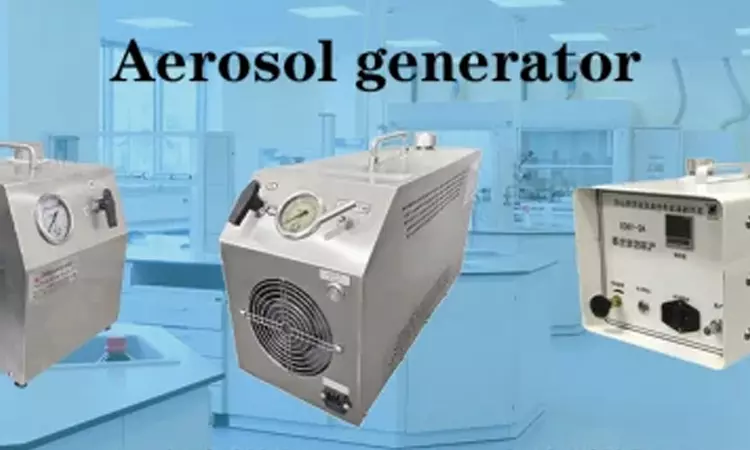
The Bangalore Customs, Excise & Service Tax Appellate Tribunal (CESTAT) on 30 April held that no higher customs duty is payable on the imported “Monodisperse Aerosol Generator”, and set aside the Department's demand for differential duty along with interest and penalty.
The Division Bench comprising Judicial Member P.A. Augustian and Technical Member Pullela Nageswara Rao was hearing ITC Limited's appeal against an order of the Commissioner (Appeals), which had upheld reclassification of the product under a heading attracting higher duty. It held:
“...the product in dispute is an aerosol generator, which is used for producing mono-disperse droplets and aerosol particles for physical and chemical analysis. The impugned Product does not operate in isolation and forms a key component of the entire System apparatus, without the said equipment the system will be unable to generate its physical analysis experimental data. Once the aerosol is generated, the product has no in-built mechanism to measure, control or maintain its parameters on its own.”
The dispute pertained to the import of a “Monodisperse Aerosol Generator” used as part of a research and development system for physical and chemical analysis.
ITC had classified the product as an analytical instrument under Customs Tariff Heading (CTH) 9027. In contrast, the Department treated it as a controlling device under CTH 9032, attracting higher duty and raising a demand by invoking the extended period of limitation.
The company contended that the product is only one component of a larger system and does not independently measure or control parameters. It argued that classification should be based on the overall function of the system and that, since the issue was interpretational with full disclosure of facts, extended limitation could not be invoked.
The Tribunal agreed with ITC and held that the product does not perform any independent controlling function and is merely a part of an analytical system. It therefore found the reclassification adopted by the Department and the consequent higher duty demand unsustainable.
The Bench noted that the product has no means to constantly or periodically measure the actual value or parameters of the generated aerosol, which is a prerequisite for classification under Chapter Heading 9032. Hence, the entire system and its components, including the product, are classifiable under Chapter Heading 9027.
On limitation, the Tribunal observed that there was no suppression or wilful misstatement and also noted inconsistency in the Department's stand on classification in separate proceedings. It therefore held that invocation of the extended period and imposition of penalty were not justified. It observed:
“...the impugned product /goods are classifiable under Customs Tariff Item 90278090 as declared by the appellant.”
Accordingly, the CESTAT set aside the customs demand along with interest and penalty, and allowed the appeal.
For Appellant: Nischal Agarwal, Chartered Accountant
For Respondent: Vikalp Jain, Superintendent