
Gujarat High Court Quashes ₹41.53 Cr Excise Notice Against Jindal Saw, Backs Finality Of HPC Certificates
Arvind Kumar Tiwari
23 July 2026 2:32 PM IST
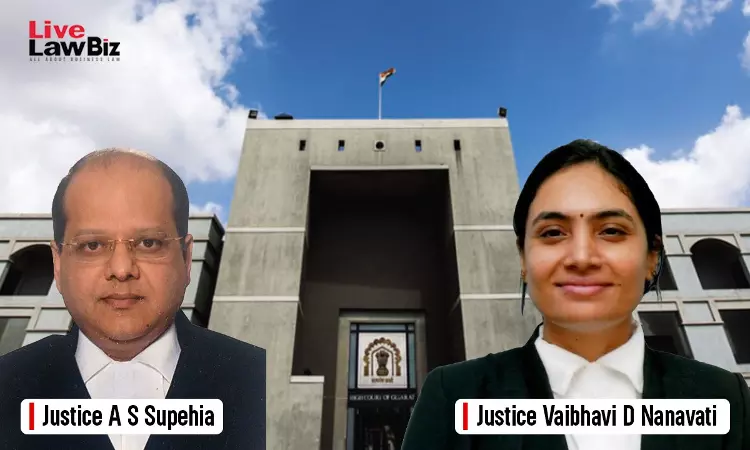
The Gujarat High Court on 15 July quashed a Rs. 41.53 crore central excise recovery notice issued to Jindal Saw Ltd., holding that the Commissioner of Central Excise had no jurisdiction to question eligibility certificates issued by the High Powered Committee under the exemption notification.
A Division Bench of Justices A.S. Supehia and Vaibhavi D. Nanavati held that allegations of fraud or misrepresentation in obtaining such certificates could only be examined by the statutory committee that had issued them and set aside the show cause notice dated 17 September 2008. The judges held:
“In our opinion the allegations about misrepresentation and fraud can only be examined by the High Powered Committee, formed under the subordinate/delegated legislation under the Act, which has issued the certificate, and the respondent has no jurisdiction to question the same in wake of the facts that the Committee, which has issued the certificates, has not doubted it.”
Jindal Saw established a steel pipe manufacturing and coating unit in Kutch under Notification No. 39/2001-CE, which granted central excise exemption to new industrial units set up in the earthquake affected areas of Gujarat.
After departmental officers physically verified the plant and machinery, the High Powered Committee issued certificates on 28 July 2003, certifying that the company had established a new industrial unit and satisfied the prescribed investment conditions. Relying on these certificates, Jindal Saw paid central excise duty on its clearances and received refunds aggregating Rs. 41.53 crore between August 2003 and February 2008.
On 17 September 2008, the Commissioner of Central Excise issued a show cause notice alleging that the company had obtained the exemption by misrepresenting that it had established a new unit. The notice sought recovery of the entire refund with interest and penalty by invoking Sections 11A (recovery of duty not levied or short levied), 11AB (interest on delayed payment of duty) and 11AC (penalty for fraud or suppression) of the Central Excise Act, 1944. The notice relied on a vigilance investigation, which alleged that the coating plant was not operational when the eligibility certificates were issued.
Jindal Saw argued that the Commissioner lacked jurisdiction to question certificates issued by the High Powered Committee, a statutory body constituted under the notification. It submitted that departmental officers had physically inspected the plant before the certificates were issued and that every refund claim had been sanctioned after verification by the jurisdictional authorities. The company further contended that the show cause notice sought to reopen settled issues nearly five years later without any legal basis.
The Revenue argued that the vigilance inquiry revealed that the company had obtained the certificates by misleading the authorities regarding installation of the new plant. It contended that the alleged fraud justified invoking the extended limitation period and recovering the refunds.
Rejecting the Revenue's contentions, the High Court noted that departmental officers had themselves inspected the plant, verified the investment in machinery and submitted their reports before the High Powered Committee issued the eligibility certificates. It observed that the Department had accepted the certificates and sanctioned the refund claims after scrutiny over several years. It found that the Commissioner had neither challenged the certificates before the High Powered Committee nor initiated any proceedings questioning their validity. The Bench held:
“The respondent No.3 has failed to point out that he had the authority and power to question the certificate issued by the High Powered Committee by alleging that the same are obtained by misleading the departmental officers. Thus, the show-cause notice questioning the certificate issued by the High Powered Committee is not only illegal but without jurisdiction and hence, requires to be interfered with in exercise of powers under Article 226 of the Constitution of India.”
The Bench also noted that, in separate proceedings concerning refund of education cess for the same period, the Department had not alleged fraud or misrepresentation against Jindal Saw.
Accordingly, the High Court held that the impugned show cause notice was arbitrary, without jurisdiction and an abuse of power, and quashed it.
For the Petitioner: Mr. R. Santhanam, Senior Advocate with Mr. Harshadray A. Dave, Advocate.
For the Respondents: Mr. Darshan M. Parikh and Ms. Hetvi H. Sancheti, Advocates